
Currently viewing
Housing Societies Coverage
Lahore’s Tragic Incident and a Bitter Question: Are Our Construction Laws Limited to Paper Only?
July 1, 2026
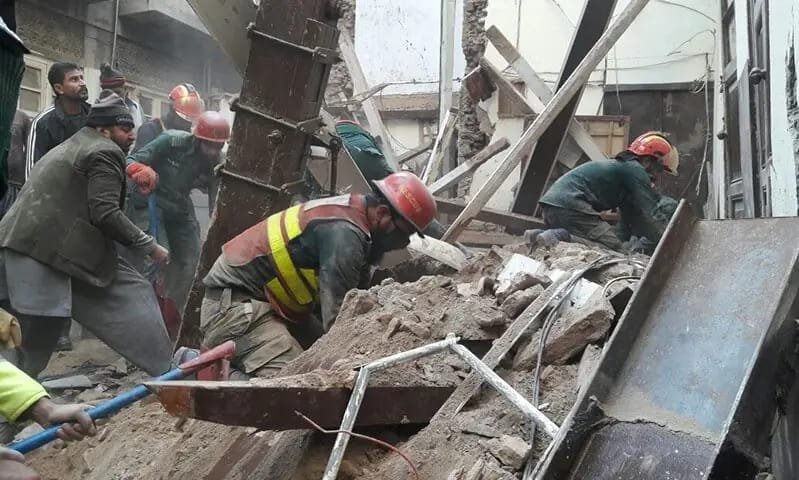
The loss of 15 innocent children after the roof of an under construction section collapsed in a building being used as a tuition center in Lahore is not only a heartbreaking tragedy but also a serious question mark over our construction system, building supervision and safety regulations. The incident is a stark reminder that a building is not merely a structure of bricks, cement and steel; it is also a trust involving human lives. Protecting those lives is the collective responsibility of the state, relevant institutions and property owners.
In a major city like Lahore, the Lahore Development Authority has clear building regulations for construction. Under these rules, every new construction or major alteration to an existing building requires an approved building plan, certified structural design, compliance with engineering standards and permission from the relevant authority. Alongside this, the Pakistan Building Code, earthquake resistant design, fire safety measures, emergency exits, load bearing capacity and basic construction quality standards also apply to every building.
Unfortunately, the situation on the ground often appears quite different. In many buildings, additional floors are constructed without approval, substandard material is used, work is carried out without the supervision of qualified engineers, and in some cases educational or commercial activities continue inside buildings where construction is still underway. Such negligence can trigger a major human tragedy at any moment.
What is particularly alarming is that safety standards should be even stricter in places where children are receiving education. If construction work is underway in a building, the presence of students, teachers or the general public should be restricted as much as possible. In addition, regular inspection of structural strength, safety certification, emergency evacuation planning and periodic checks by the relevant authorities are essential.
Effective coordination among the LDA, district administration, rescue agencies and municipal authorities is also crucial so that buildings violating construction laws, or posing risks to human life, can be identified in time. Merely drafting laws is not enough. Strict enforcement, continuous monitoring and immediate legal action against violators are the only ways to prevent such tragedies.
The Lahore tragedy is not just an accident; it is a collective warning. If construction regulations, building codes and safety standards are not implemented seriously, such incidents may, God forbid, happen again. The protection of human life is more important than any development project, and a safe building is ultimately the true mark of a civilized and responsible society.