
Currently viewing
Housing Societies Coverage
Pakistan’s Housing Crisis and Affordable Housing: Challenges, Facts and Possible Solutions
July 14, 2026
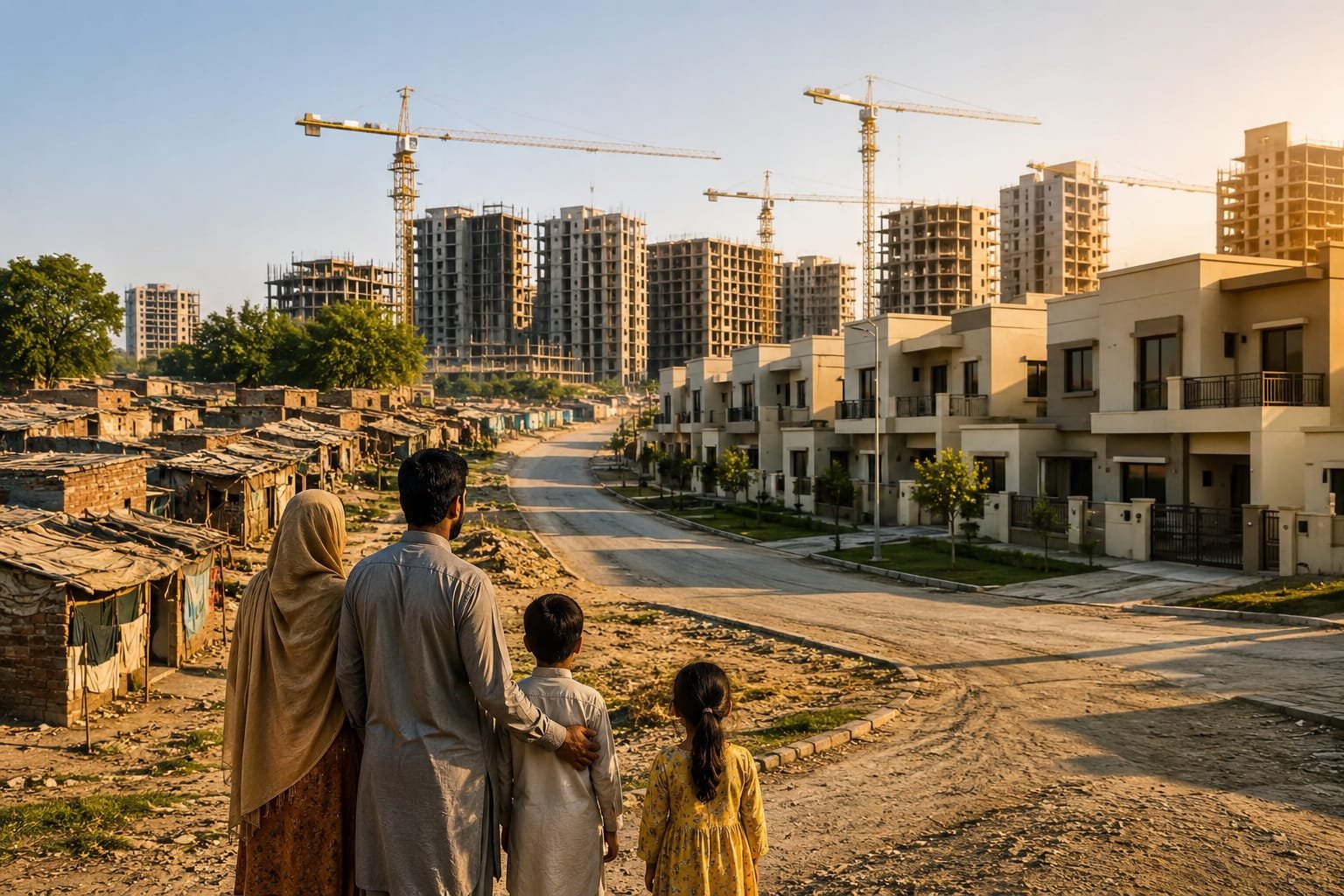
Pakistan is facing a serious housing challenge driven by rapid population growth, increasing urbanisation, inflation, rising construction costs and limited access to housing finance. For millions of families, owning a home has become increasingly difficult. Experts warn that demand for residential units is growing continuously, while new construction is not keeping pace with the country’s housing needs.
According to the Pakistan Bureau of Statistics, the country’s population has crossed 240 million, while the urban population is also expanding steadily. United Nations projections suggest that Pakistan’s urban population will continue to grow rapidly in the coming years, further increasing demand for housing. Various government and private-sector studies estimate that Pakistan already faces a shortage of more than 10 million housing units, while an additional 600,000 to 700,000 homes are required every year.
One of the main causes of the housing crisis is the continued increase in land and construction costs. In recent years, the prices of cement, steel, bricks, gravel, electricity, fuel and labour have risen significantly, making home construction far more expensive than before. The impact has been particularly severe on low- and middle-income families, who are increasingly unable to purchase or build homes.
Limited access to housing finance is another major challenge. Although the State Bank of Pakistan has introduced various measures to promote home financing, the overall size of the mortgage market remains extremely small compared with the national economy. In developed countries, housing finance accounts for a significant share of gross domestic product, while in Pakistan the ratio remains very low. As a result, most people depend on personal savings, which are often insufficient in an environment of high inflation.
Unplanned urban growth is also worsening the crisis. Major cities, including Karachi, Lahore, Faisalabad, Rawalpindi and Peshawar, are facing growing population pressure, but infrastructure, public transport, water supply, sewerage systems and urban planning have not expanded at the same pace. This has contributed to the growth of informal settlements, slums and illegal housing schemes, creating additional challenges for urban authorities.
Experts believe that the government, private developers, financial institutions and housing authorities must adopt a coordinated strategy to address the problem. Low-cost housing projects, affordable mortgage facilities, complete digitisation of land records, transparent regulations, public-private partnerships and vertical urban development could play an important role in reducing the housing shortage.
Pakistan’s real estate and construction sectors are also closely linked with dozens of other industries. Construction activity supports more than 70 related sectors, including cement, steel, tiles, electrical products, furniture, banking, transport and employment. Investment in housing therefore does more than meet residential needs; it also supports economic growth, job creation and wider business activity.
With consistent policies, stronger urban planning, transparent laws and sustained investment in affordable housing, Pakistan can significantly reduce its housing deficit. Such measures can also lay the foundation for more balanced, modern and sustainable urban development.