
Currently viewing
Housing Societies Coverage
Pakistan’s Real Estate Sector and the Crisis of Urban Planning
July 16, 2026
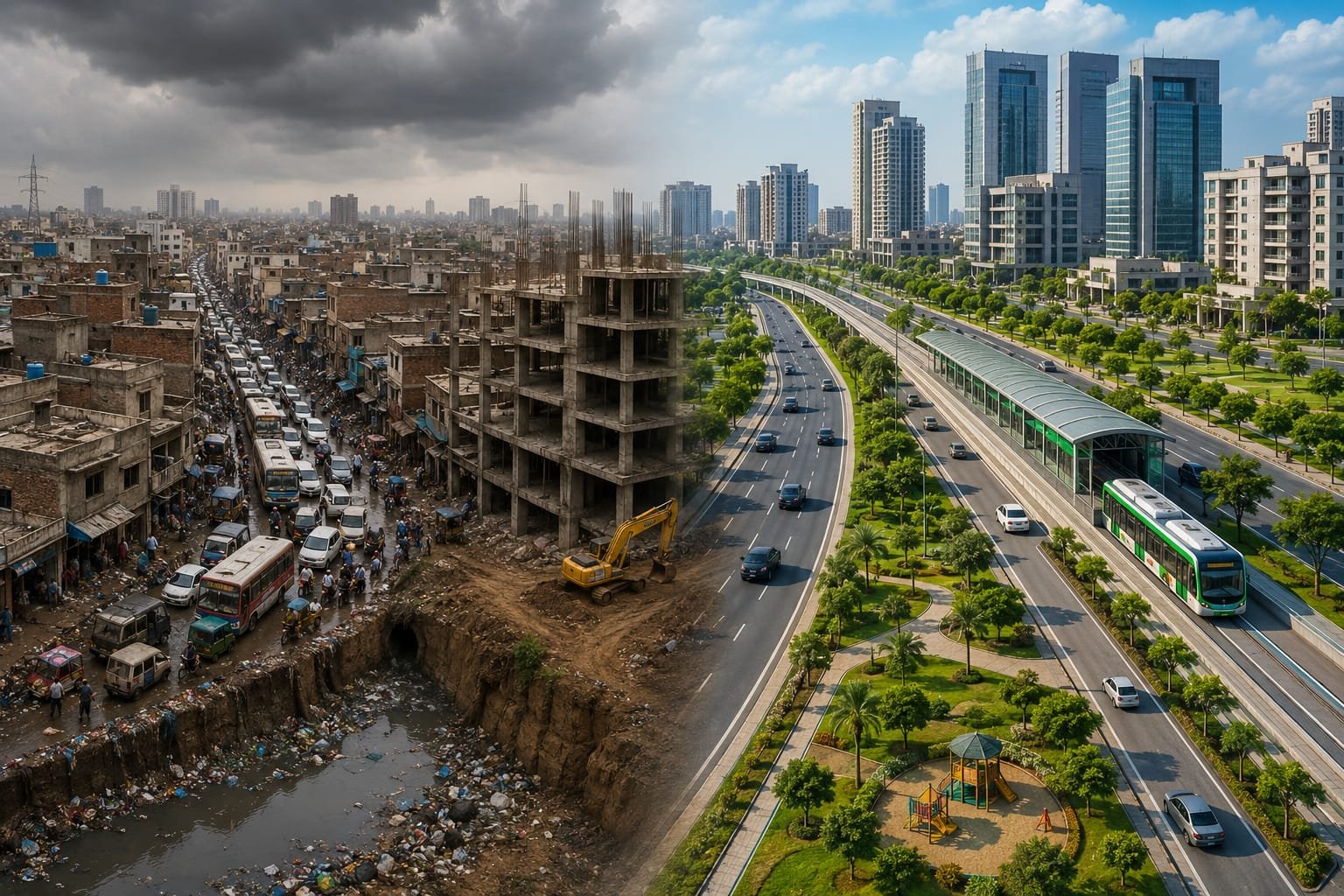
Pakistan’s real estate sector has expanded rapidly over the past two decades, but this growth has also brought serious challenges related to urban planning and basic infrastructure. Uncontrolled urban expansion, traffic congestion, water shortages, poor sewerage systems, weak waste management and the decline of green spaces are now affecting the quality of life in major cities. These problems are also limiting the sustainable growth of the real estate market.
According to the Pakistan Bureau of Statistics and various official estimates, nearly 40 percent of the country’s population now lives in urban areas. Every year, hundreds of thousands of people move from rural areas to cities in search of employment, education and better public services. However, the expansion of urban infrastructure has not kept pace with this population growth.
As a result, many housing developments have emerged without adequate roads, drainage systems, public transport, parks, schools and healthcare facilities. Residential projects may be completed, but essential services often remain unavailable or insufficient for years.
Unplanned expansion has become a major issue in Lahore, Karachi, Islamabad, Faisalabad, Peshawar and other large cities. In many areas, housing schemes are developed without proper arrangements for rainwater drainage, clean drinking water, electricity and gas. This creates long term difficulties for residents and can also reduce the future value of property.
Reports by the World Bank and the Asian Development Bank have repeatedly indicated that Pakistan requires billions of dollars in additional investment in urban infrastructure to meet the needs of its growing population. Climate change has made the situation even more serious. Heavy rainfall and repeated incidents of urban flooding in recent years have shown that drainage systems in many cities are no longer capable of handling present day requirements.
Balanced land use is another important part of urban planning. In developed countries, clear zoning laws separate residential, commercial, industrial, recreational and green areas. In Pakistan, these regulations are often poorly enforced. Commercial activity frequently spreads into residential neighbourhoods, increasing traffic, pollution, noise and pressure on local infrastructure.
Experts believe that Pakistan must promote smart city planning to meet future challenges. This should include efficient public transport, digital land management, better rainwater management, environmentally responsible construction, energy conservation and the protection of urban green spaces.
Approval of new housing schemes should also be linked to the availability of essential infrastructure. Developers should be required to provide roads, water supply, sewerage, drainage and public facilities before large scale sales or possession of plots begins.
If Pakistan makes urban planning a central part of its real estate policy, it can improve investor confidence and provide citizens with safer, healthier and better organised cities. A strong real estate market cannot be built on weak infrastructure. Sustainable urban development is therefore one of the most urgent priorities for Pakistan in the coming years.