
Currently viewing
Housing Societies Coverage
Speculation in Plot Trading: A Silent Crisis in Pakistan’s Real Estate Market
July 30, 2026
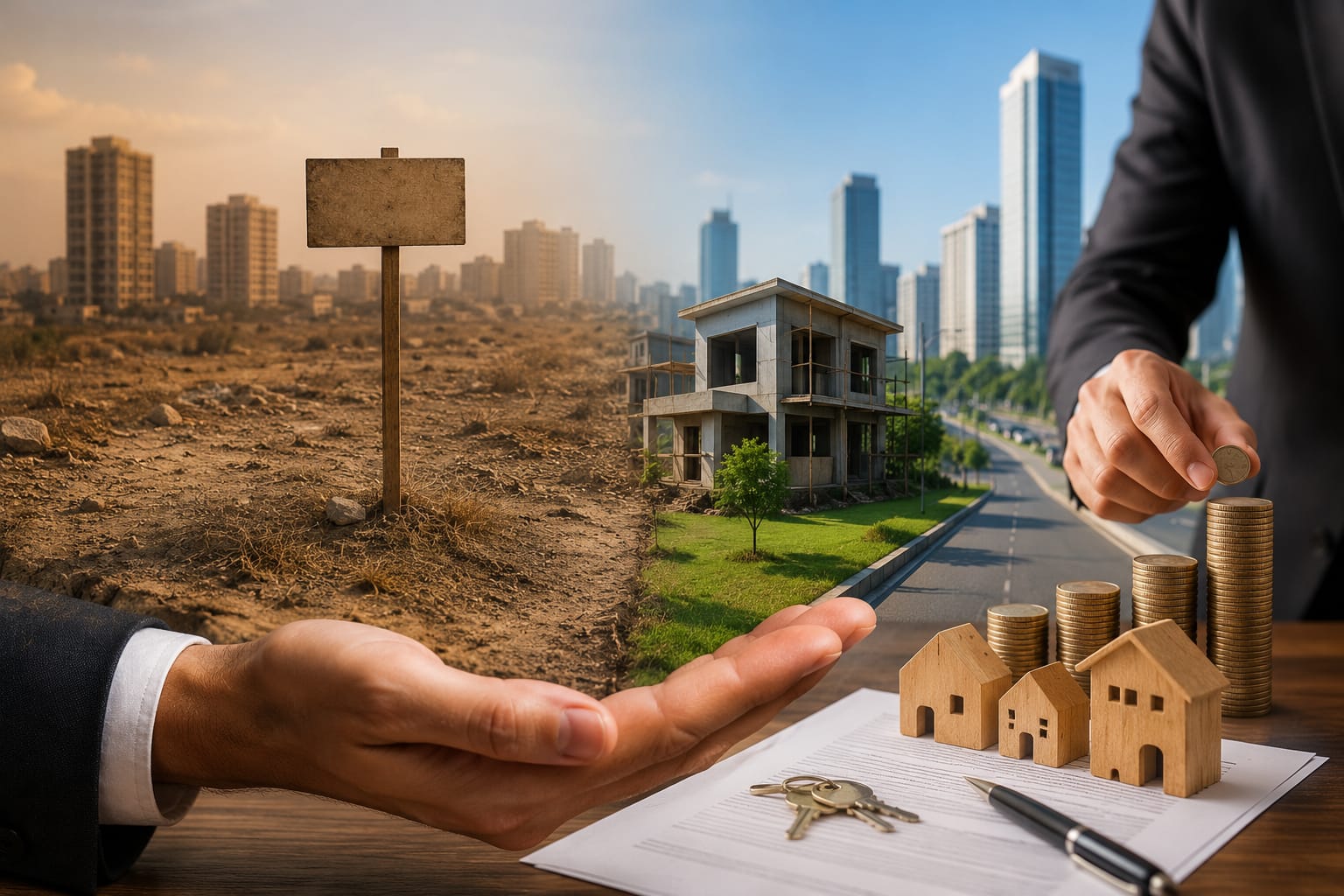
Real estate in Pakistan has long been regarded as a safe investment. However, in recent years, a growing trend has begun to disrupt the natural balance of the market. This trend is speculation, where land or plots are purchased not for construction, housing, or commercial use, but solely in the hope of reselling them at a higher price after a few months or years.
At first glance, it may appear to be a routine form of investment. But when large numbers of investors begin holding plots purely to benefit from price appreciation, the effects ripple across the entire economy, the housing sector, and ordinary citizens.
In several housing societies across Pakistan, thousands of plots remain undeveloped for years. A significant portion of these are held by investors whose only objective is capital gain. As a result, residential projects experience slow population growth, the provision of basic utilities is delayed, and many schemes remain partially or entirely uninhabited for extended periods.
Another major consequence of speculation is the artificial escalation of property prices. When a single plot is repeatedly traded, its value increases with each transaction, even though no physical development takes place. Prices are thus driven not by genuine demand and supply, but by artificial market behavior. The greatest burden falls on families seeking their first home, for whom property ownership becomes increasingly unaffordable with each passing year.
The construction industry is also affected. When capital is confined to land trading and construction activity remains stagnant, growth in allied industries such as cement, steel, bricks, tiles, wood, electrical goods, and other materials slows down. Instead of generating employment opportunities, capital remains locked in inactive assets.
Experts believe the solution lies not only in stricter regulations but also in improved policy design. The government and relevant institutions can introduce measures that encourage construction and discourage excessive speculation. These may include appropriate taxation on long-vacant plots, timely completion of development projects, full digitization of land records, transparent property transactions, and incentives for investors who actively engage in construction.
In addition, the availability of accurate market information is essential. If investors base their decisions on real data, development progress, and legal clarity rather than rumors or artificially inflated prices, the market can become more stable and transparent.
Pakistan’s real estate sector is a key pillar of the national economy. However, its sustainable growth depends on ensuring that investment is not limited to buying and selling cycles alone, but is also directed toward construction, housing development, industrial expansion, and urban infrastructure improvement. A balanced, transparent, and development oriented real estate market would ultimately benefit not only investors but also ordinary citizens and the national economy as a whole.