
Currently viewing
Housing Societies Coverage
Illegal Housing Societies: A Risky Game of Investment in the Name of Dream Homes
August 10, 2026
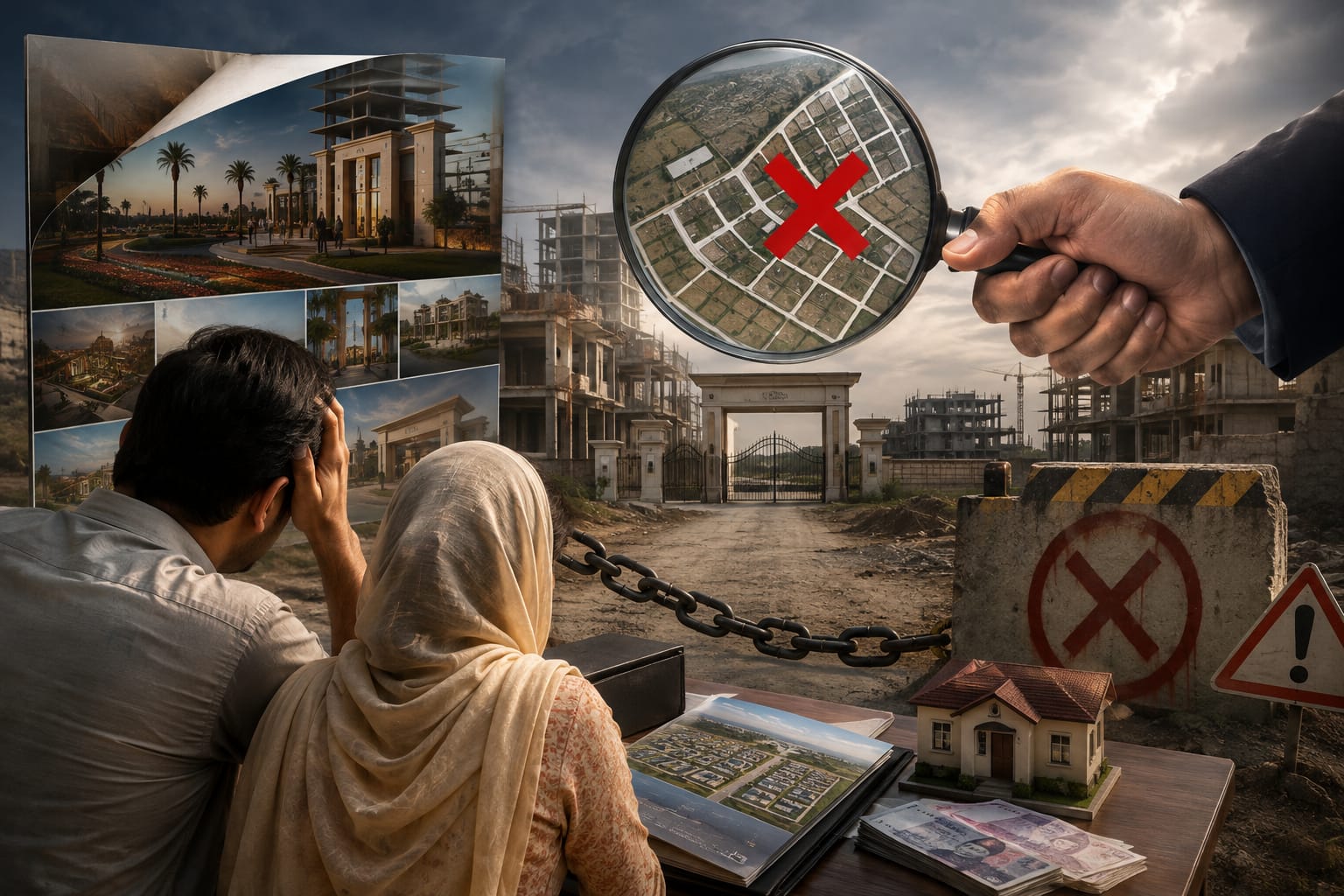
In Pakistan, owning a home is not merely a financial decision but a lifelong aspiration for millions of families. Some people purchase a five-marla plot through years of savings, others invest money earned through hard work abroad, and some even hand over their entire retirement savings to a housing scheme. The problem begins when, years later, it is discovered that the project in which the investment was made never had full approval from the relevant development authority.
This issue is no longer limited to a few questionable projects. According to reports surfaced in May 2026, the Planning Wing of the Capital Development Authority declared 99 housing and agro-farming projects in Zones III and IV of Islamabad as illegal or unauthorized, warning citizens against investing in them.
These figures raise a fundamental question: how do such a large number of projects reach the stage of collecting funds and running marketing campaigns?
According to the CDA, a formal legal framework exists for the planning and development of private housing and farm housing schemes in Islamabad, and the approval process consists of two stages. Simply purchasing land, presenting a map, or issuing an attractive advertisement does not prove that a project is fully approved.
This is precisely the distinction that ordinary buyers often overlook. Marketing campaigns showcase appealing visuals of gates, parks, mosques, schools, commercial areas, and wide roads. They also promise low prices, easy installments, and extraordinary future returns. Buyers purchase files, but rarely verify the legal status of the scheme, the extent of approved land, or whether the block in which they are being sold a plot is even part of an approved layout plan.
The Rawalpindi Development Authority also clearly advises citizens not to invest in illegal, fake, or unapproved housing societies. Interestingly and concerningly, the RDA has also urged people not to trust fake screenshots circulating on social media and to verify the status of any society directly through the official website.
The real issue is not only the existence of illegal projects but also a system in which an ordinary citizen can risk their life savings without fully understanding the legal status of a scheme.
For regulatory bodies as well, issuing notices alone is not enough. There must be an effective mechanism to stop the advertising, booking, and sale of plots or files in unapproved projects at an early stage. If a project raises large-scale funds from thousands of people through marketing without legal approval, later action cannot immediately return the lost capital to affected families.
The lesson for buyers is clear: in property investment, brochures, social media campaigns, celebrity endorsements, grand offices, or assurances from dealers should not be considered substitutes for legal approval. Verification of the NOC, approved layout plan, land ownership, and the legal status of the specific block must be obtained from the relevant development authority.
Pakistan’s real estate market needs investor confidence, but trust is not built on attractive advertisements alone. It requires transparent approvals, effective oversight, and a system in which an ordinary citizen does not have to choose between protecting their dream and safeguarding their life savings when setting out to buy a home.