
Currently viewing
Housing Societies Coverage
Pakistan’s Housing Shortage: A Growing Urban and Economic Challenge
August 11, 2026
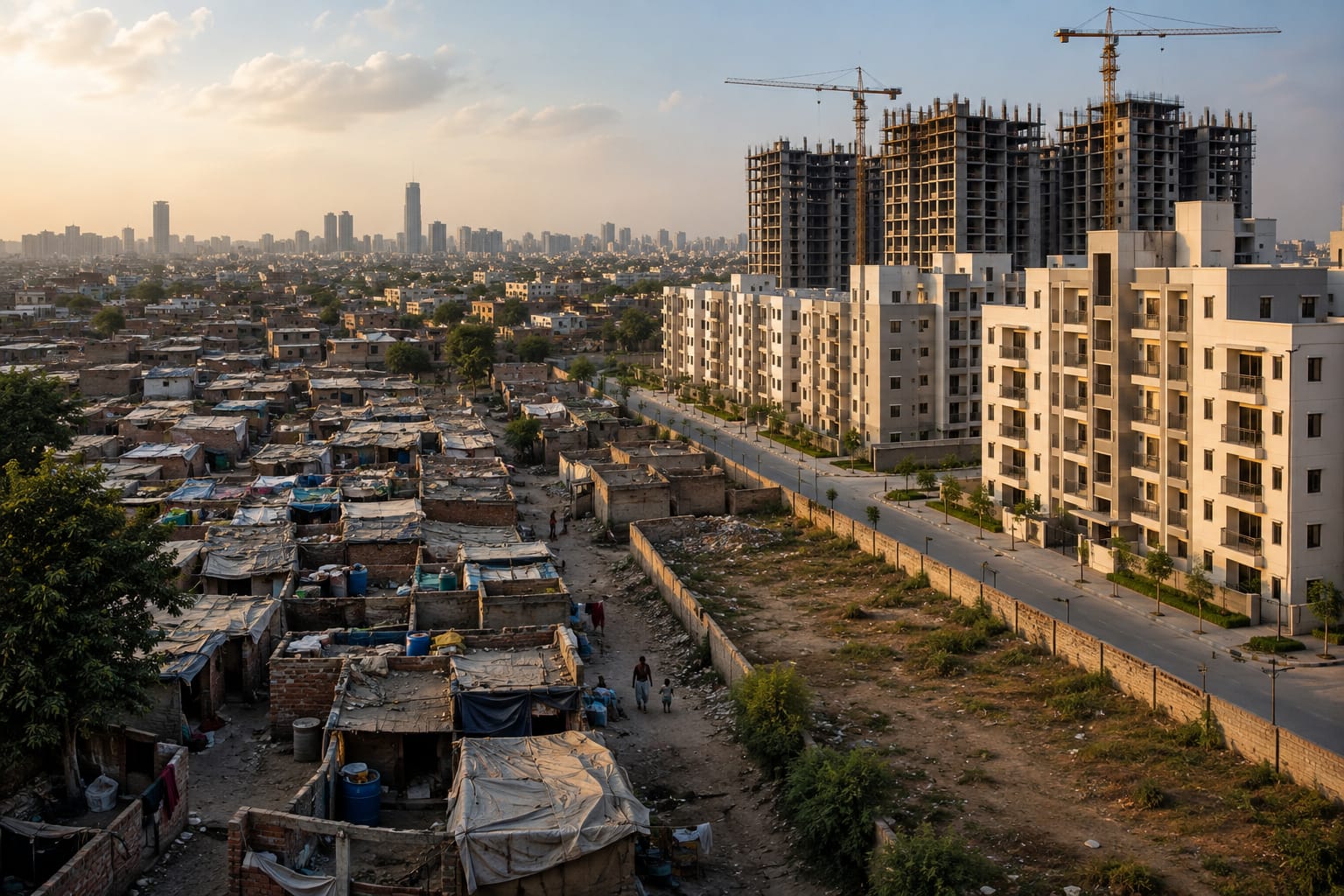
Pakistan’s housing crisis is becoming one of the country’s most serious development challenges. Rapid population growth, expanding cities, rising construction costs and limited access to housing finance have created a situation in which millions of families struggle to obtain adequate and affordable homes. Unless addressed through long term policy and institutional reform, the problem will place increasing pressure on Pakistan’s cities, infrastructure and household finances.
The scale of the demographic challenge is substantial. According to the Pakistan Bureau of Statistics (PBS), the 2023 Population and Housing Census was Pakistan’s first digital census and provides detailed information on population, households and housing conditions across the country. Pakistan’s population reached approximately 241.5 million in 2023, making the provision of adequate housing an increasingly complex national challenge.
A figure frequently cited in public debate is a national shortage of around 10 million housing units. This number, however, needs to be treated carefully. Researchers at the Pakistan Institute of Development Economics have challenged the conventional interpretation of the 10 million figure, arguing that housing deprivation cannot simply be equated with millions of families having no physical shelter. Housing inadequacy also involves overcrowding, poor quality structures and inadequate facilities. Therefore, Pakistan’s housing problem is better understood as a combination of shortage, affordability and inadequate housing conditions, rather than merely the absence of houses.
The affordability dimension is particularly serious. The World Bank has described affordable and accessible housing as being in high demand in Pakistan and has supported programmes aimed at increasing affordable housing supply, improving land tenure and expanding mortgage access for lower income households. In 2022, it approved $435 million for three initiatives covering housing finance, urban land systems and affordable housing in Punjab.
Access to finance remains another structural weakness. World Bank figures have previously shown just how underdeveloped Pakistan’s mortgage market has been: in 2018, mortgage finance represented only 0.25 percent of GDP, compared with a South Asian average of 3.4 percent at the time. The institution also reported that nearly one third of Pakistan’s population did not own homes.
The consequences extend well beyond individual households. When formal housing is unaffordable or unavailable, urban growth can shift toward informal settlements and poorly serviced peripheral areas. Cities then face greater pressure on roads, public transport, water supply, sewerage, electricity, schools and healthcare. At the same time, uncontrolled outward expansion can consume valuable agricultural land and substantially increase the cost of providing urban infrastructure.
Pakistan therefore needs to treat housing as essential national infrastructure rather than simply a real estate commodity. Increasing the number of housing units alone will not solve the problem. New homes must be affordable, properly located, legally documented, connected to employment centres and supported by transport and municipal services.
A sustainable response requires better land use planning, digitised and reliable land records, stronger regulation of housing developments, expansion of long term housing finance and incentives for private developers to produce genuinely affordable units. Rental housing should also become an important part of national housing policy instead of measuring success exclusively through homeownership.
Pakistan’s housing challenge has developed over decades and cannot be solved through a single housing scheme. What is required is a consistent national strategy that connects housing, land, finance, transport and urban planning. Without such reform, population growth will continue to widen the gap between the homes Pakistanis need and the homes they can actually afford.