Currently viewing
Housing Societies Coverage
From Facebook to TikTok: Is Social Media Changing the Way Property Is Bought and Sold in Pakistan?
August 13, 2026
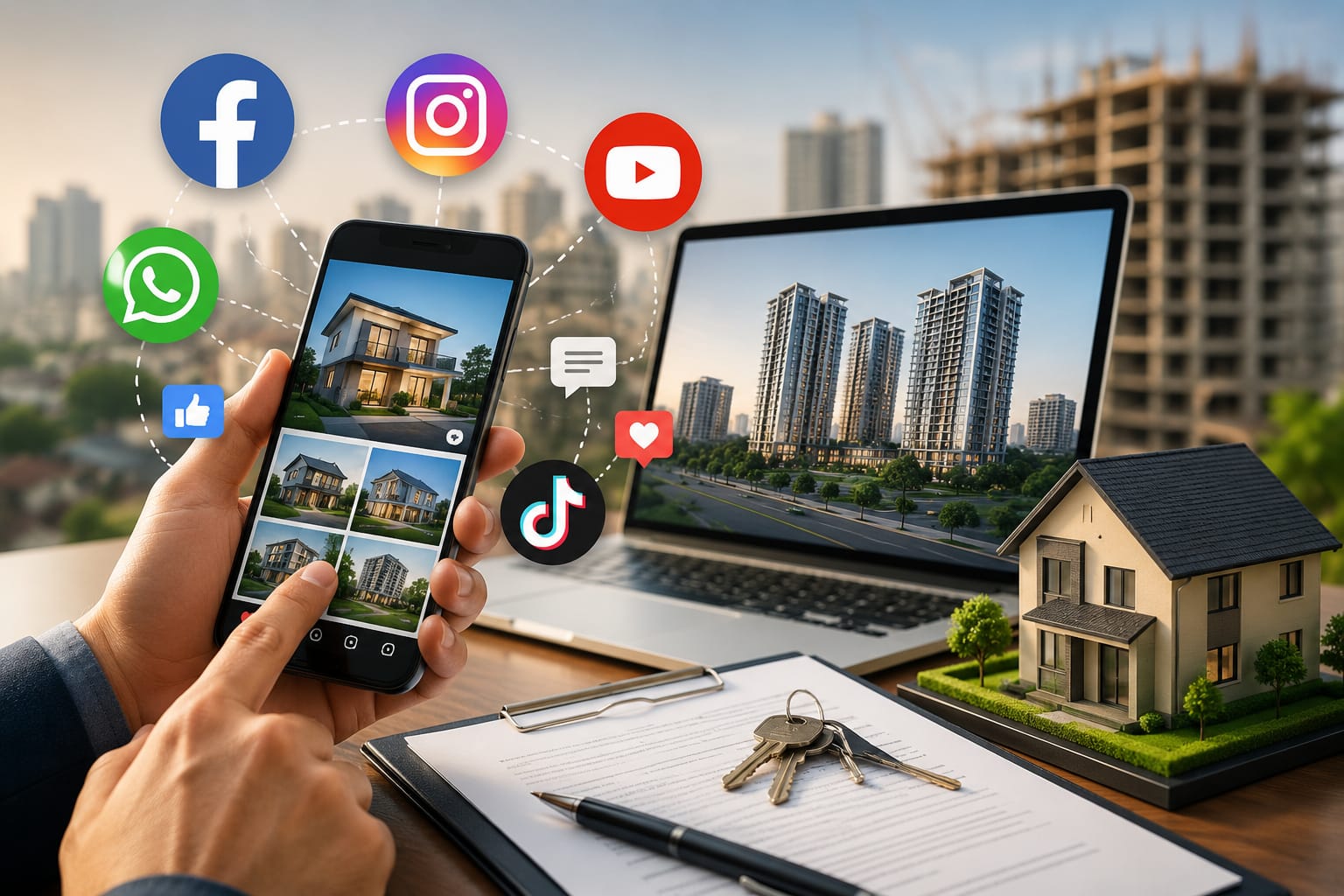
Real estate marketing in Pakistan is rapidly shifting away from traditional methods and towards social media platforms. Until a few years ago, property dealers, newspaper advertisements, banners and roadside signboards were among the main tools used to market houses, plots, shops and commercial buildings. Today, Facebook, YouTube, Instagram, TikTok and WhatsApp have become important channels for property promotion. The shift has given the real estate industry access to a much wider audience, but it has also raised new questions about transparency, credibility and consumer protection.
One of the biggest advantages of social media is its ability to connect property sellers and developers with thousands, and in some cases millions, of potential buyers within a short period of time. Images, videos, maps, prices and payment plans for housing societies, residential schemes and commercial projects can now be shared instantly. Overseas Pakistanis, in particular, are increasingly able to explore property opportunities and new developments without being physically present in the country.
Video marketing has also become a major feature of the industry. Property agents routinely produce video tours of houses, plots and commercial buildings, while drone footage is used to showcase housing projects, road networks and surrounding areas. Such content allows prospective buyers to form an initial impression of a location from their homes and enables agents to expand the reach of their marketing campaigns.
However, the rapid growth of social media marketing in real estate has a more troubling side. Not every online advertisement is accurate or trustworthy. In some cases, unapproved housing schemes, disputed land or properties with unclear legal status are promoted through professionally produced videos and attractive advertisements. Prices, locations, development progress and expected investment returns may also be exaggerated to attract buyers.
The risks become more serious when investors make decisions solely on the basis of a social media post or promotional video. Property is a major financial investment, which makes due diligence essential. Before making any payment, buyers should verify land ownership, approvals from the relevant development authority, the project's no-objection certificate, official records, and the legal status of the person or company offering the property for sale.
Another emerging issue is the growing use of celebrities and social media influencers to promote real estate projects. This raises an important question: when an influencer endorses a housing or commercial project, has its legal status actually been verified, or is the endorsement simply part of a paid advertising arrangement? The trend highlights the growing need for clearer rules on disclosure, advertising standards and accountability.
The answer is not to discourage social media marketing in Pakistan's real estate sector. Digital platforms are efficient, modern and increasingly important. The challenge is to make their use more transparent and responsible. Regulatory authorities need to monitor the online promotion of illegal or unapproved projects, while buyers must understand that a Facebook post, YouTube video or TikTok clip cannot replace proper legal verification.
The future of successful real estate marketing in Pakistan will therefore depend not only on attractive videos and ambitious claims, but also on accurate information, regulatory compliance and, above all, the confidence of buyers.