
Currently viewing
Housing Societies Coverage
Delays in Plot Possession Are Eroding Confidence in Pakistan’s Real Estate Market
August 20, 2026
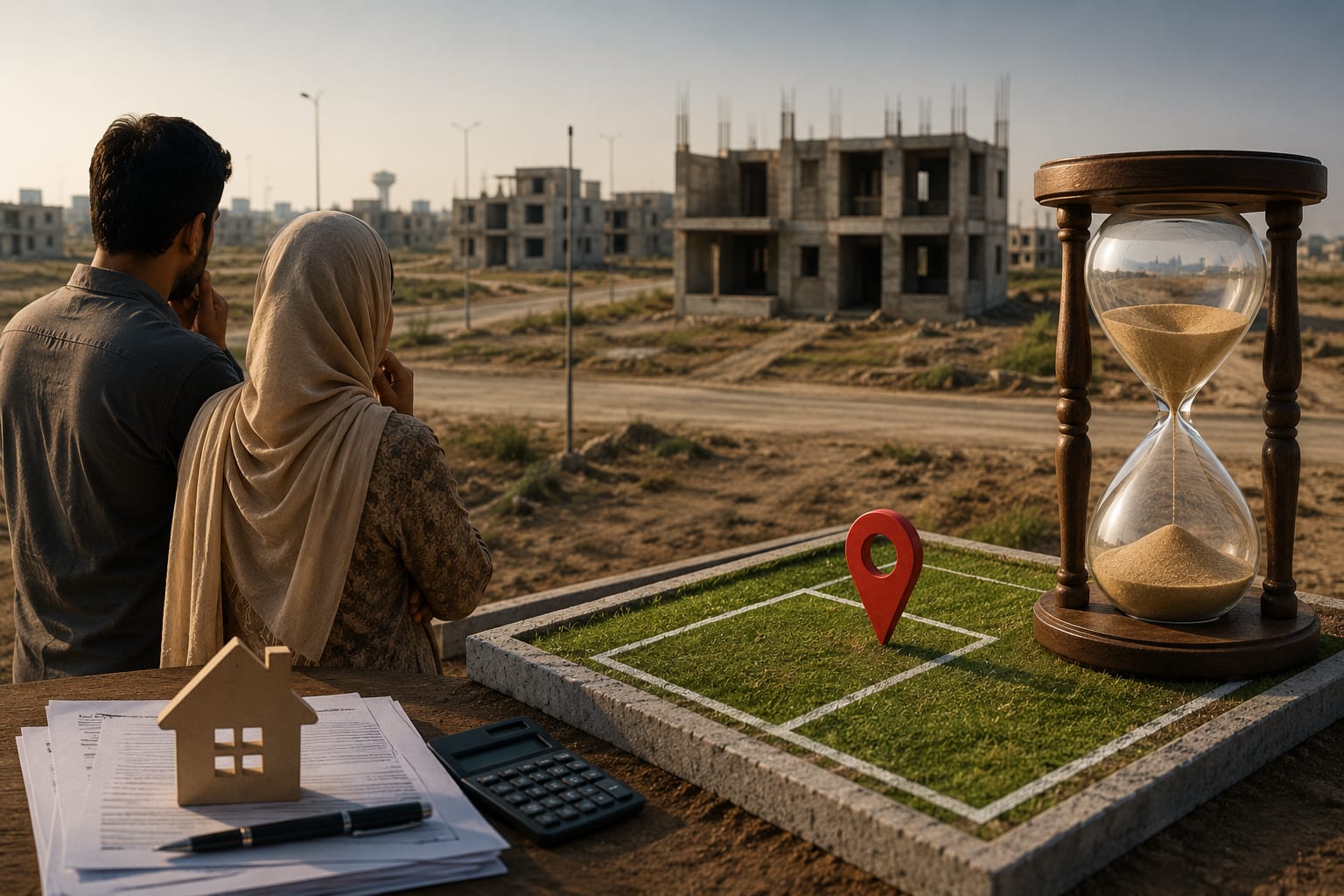
One of the most serious problems facing Pakistan’s real estate sector is the prolonged delay in handing over possession of plots and homes to buyers who have often invested their life savings. In many cases, years pass without the promised development work being completed or physical possession being delivered. The issue is not limited to private housing schemes, as several public-sector projects have also faced lengthy delays.
A recent example is Islamabad’s Green Enclave-I project, launched by the Federal Government Employees Housing Authority in 2009. Thousands of government employees deposited their money in the hope of securing residential plots, yet nearly 17 years later, many allottees are still waiting for possession. In August 2026, affected allottees once again announced protests, saying repeated assurances had failed to translate into meaningful progress.
This is not merely the story of one delayed project. It reflects a wider structural problem in Pakistan’s real estate system. Many housing schemes are launched with impressive master plans, wide roads, parks, schools, commercial centres and promises of modern facilities. Buyers continue paying instalments, but projects can remain stalled for years because of land acquisition problems, regulatory approvals, contractor disputes, incomplete development work or legal complications.
Green Enclave-I has also faced issues related to land, development agreements and administrative disputes. In July 2026, a Senate committee expressed concern over the persistent delays and was informed that despite the land acquisition process having begun in 2009, development work continued to face significant obstacles.
The damage caused by such delays is not only financial. A family may invest in a plot to build a home for its children, a retiree may put a lifetime of savings into property, while another household may hope to move out of rented accommodation into its own home. When possession is delayed by 10, 15 or even 17 years, it is not just capital that remains tied up; the long-term plans of entire families are disrupted.
Such delays also weaken public confidence in the real estate market. For buyers, it is no longer enough to know whether a housing scheme is officially approved. They also need to know whether the developer actually owns the required land, how much development work has been completed, what the final possession timeline is, and what legal protection is available if that deadline is missed.
The government and relevant development authorities should make clear and enforceable possession timelines mandatory for housing projects. Before a scheme is launched, the availability of land, key approvals and development resources should be properly verified. If a developer or public authority fails to deliver possession within the committed period, buyers should have access to transparent accountability mechanisms, compensation or an effective refund process rather than simply being given another revised deadline.
Pakistan’s real estate sector does not only need new housing projects; it needs a system that ensures promises are actually fulfilled. For a buyer, success is not merely receiving a file or an allotment letter. The real milestone is being able to stand on the land and say: this is my plot, and now I can finally build my home.