Currently viewing
Housing Societies Coverage
Delayed and Incomplete Real Estate Projects in Pakistan: A Growing Concern
August 24, 2026
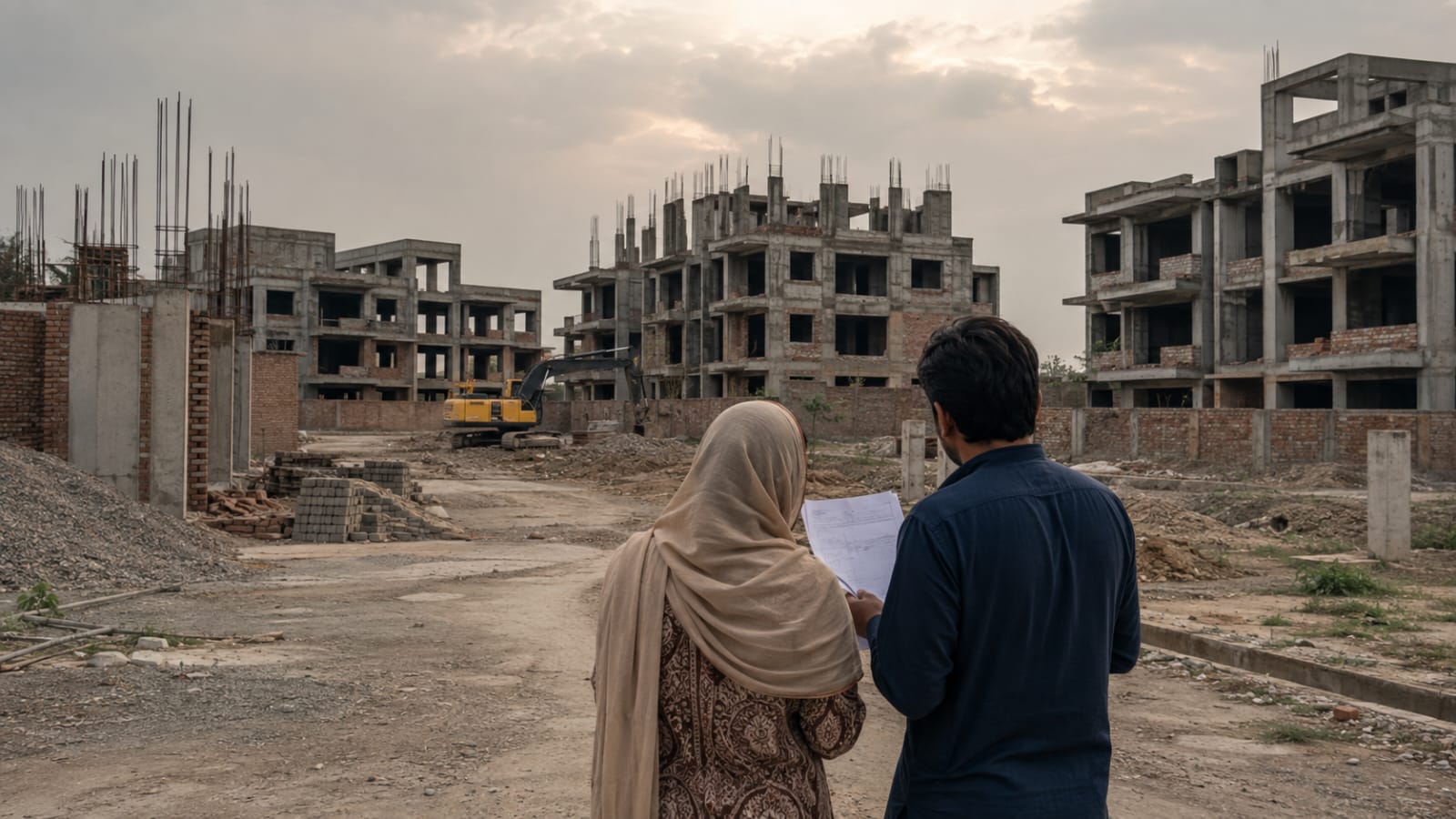
Pakistan’s real estate sector attracts billions of rupees in investment every year. For many families, purchasing a plot, house or apartment represents a lifetime investment. However, delayed and incomplete projects have become one of the most serious problems affecting the sector. Thousands of buyers continue to wait for possession of properties for which they have already paid substantial amounts.
A common reason behind these delays is that developers launch projects before completing essential legal and financial requirements. Some begin marketing housing schemes without owning all the required land, obtaining an approved layout plan or receiving a No Objection Certificate from the relevant development authority. Attractive advertisements, flexible instalment plans and promises of rapid development encourage people to invest before verifying the project’s legal status.
Financial mismanagement is another major cause. Certain developers use payments collected from one project to purchase land or finance construction elsewhere. When property sales decline, this flow of money is disrupted and development work stops. Buyers are then informed that possession has been delayed because of inflation, regulatory approvals or rising construction costs. Although these factors can create genuine difficulties, they are sometimes used to conceal poor planning or misuse of customer funds.
The consequences for buyers can be severe. Families may continue paying rent while also making instalment payments for an unfinished home. Investors can lose access to their savings for years, while the resale value of their property files declines. Those who demand refunds often face complicated procedures, long waiting periods or deductions from the amount they originally paid. Court cases and complaints before regulatory authorities may also take years to resolve.
Incomplete schemes create wider urban problems as well. Partially developed housing projects often lack roads, drainage, electricity, gas, water supply and sewerage systems. In some cases, a small number of families receive possession but are forced to live without basic services. Such projects also contribute to unplanned urban expansion and place additional pressure on surrounding infrastructure.
Stronger regulation is essential to address this issue. Authorities should prevent developers from advertising or collecting money until land ownership, project approval and financial capacity have been verified. Customer payments should be placed in protected project accounts and used only for the development for which they were collected. Regulators should also publish updated information about approved projects, development progress, legal disputes and expected completion dates.
Buyers must also exercise caution. Before making any payment, they should confirm the project’s approval directly from the relevant authority, verify the developer’s ownership of the land and examine the possession schedule written in the agreement. Verbal promises made by sales agents should never replace official documentation.
Delayed projects damage public confidence in Pakistan’s entire real estate market. Greater transparency, responsible development and effective enforcement can protect buyers while encouraging serious developers. A property investment should provide security and stability, not years of financial uncertainty and legal struggle.