

Tokyo | ReNews International Desk News
Japan’s growing stock of abandoned homes is turning into a major economic and social challenge, reflecting the deeper impact of the country’s shrinking and aging population on its real estate market.
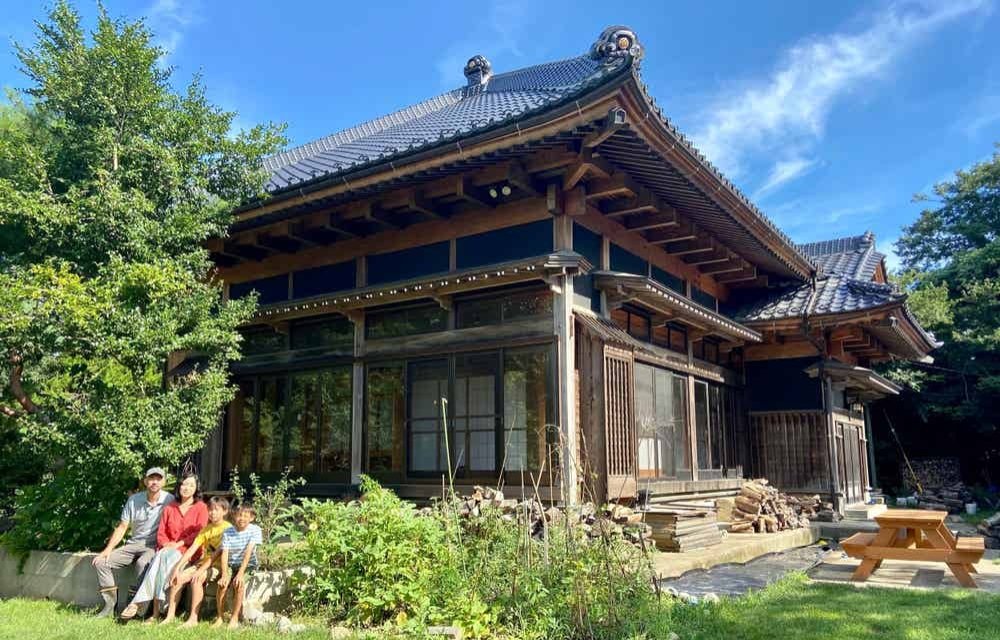
Across rural towns, smaller regional cities and aging suburban districts, millions of vacant houses are gradually reshaping Japan’s property landscape. These abandoned homes, known locally as “akiya,” have become one of the most visible signs of demographic decline in the world’s advanced economies.
According to Japan’s Ministry of Internal Affairs and Communications, the country now has around 9 million vacant homes, representing nearly 14 percent of its total housing stock. In many areas, entire neighborhoods are slowly hollowing out as elderly homeowners pass away and younger heirs choose not to live in, maintain or renovate inherited properties.
What was once viewed mainly as a rural problem has now developed into a broader structural issue for Japan’s economy.
For decades, employment opportunities and investment have remained concentrated in major metropolitan centers such as Tokyo, Osaka and Nagoya. At the same time, smaller towns and villages have continued to lose residents as younger generations move toward urban areas for jobs, education and better services.
This population shift has left behind aging parents, empty family homes and properties that often carry emotional value but limited financial worth. When such houses are inherited, many heirs find that keeping them is economically difficult.
Older homes often require major repairs, earthquake-safety upgrades and energy-efficiency improvements. Maintenance costs, property taxes, insurance expenses and legal complications related to inheritance can quickly become higher than the property’s market value. In some rural areas, the building itself is considered almost worthless, with buyers placing value mainly on the land.
As a result, many homes remain neglected for years.
Local governments increasingly see these vacant houses as both an economic burden and a public-safety risk. Abandoned properties are often linked with collapsing roofs, overgrown vegetation, fire hazards, pest problems and declining neighborhood appearance. Their presence can also reduce the value of nearby homes, adding further pressure to already weak regional property markets.
Municipal authorities are spending more time and resources identifying dangerous structures, contacting owners and, in some cases, supporting demolition through subsidies. However, the scale of the problem has made it difficult for local governments to respond quickly.
The crisis has also exposed a sharp divide within Japan’s housing market.
In central Tokyo, condominium prices have continued to rise due to strong demand, limited supply and foreign investment. But in many parts of regional Japan, the situation is entirely different. Oversupply, population decline and weak demand have pushed property values down, leaving many homes difficult to sell at any price.
To address the issue, several municipalities have created “akiya banks” online databases where vacant homes are listed for sale or lease at heavily discounted prices.
Some properties are offered for only a few thousand dollars, while others are transferred at almost no cost if buyers agree to renovate and occupy them.
These programs have attracted interest from foreign buyers, remote workers and people looking for rural lifestyles. However, experts warn that cheap purchase prices can be misleading because renovation, legal transfer and long-term maintenance costs may be substantial.
Japan’s abandoned-home problem is also changing traditional assumptions about real estate. In many Western countries, homes are often treated as long-term family assets that appreciate over time. In Japan, however, residential structures have historically depreciated quickly, with land usually holding more value than the building itself.
Demographic decline is accelerating this trend outside major urban centers.
Banks and financial institutions are also monitoring the situation closely. As property values weaken in depopulating areas, lenders face growing concerns about the long-term quality of real estate used as collateral. Developers are increasingly focusing on urban redevelopment projects rather than building new housing in shrinking regions.
Tokyo remains largely protected from the worst effects because people continue to move into the capital for work and education. But economists warn that the gap between thriving urban centers and declining regional communities is becoming harder to reverse.
For Japan, the rise of millions of abandoned homes is no longer just a housing issue. It has become a symbol of the country’s demographic transformation and a serious test of how an advanced economy manages long-term population decline, regional inequality and property-market contraction.
Published: May 13, 2026 - 11:33 AM
Japan’s 9 Million Abandoned Homes Signal Deepening Property and Demographic Crisis
جاپان میں 90 لاکھ متروک مکانات، پراپرٹی مارکیٹ اور معیشت کیلئے سنگین بحران بن گئے
▫️Vacant “akiya” houses now account for nearly 14 percent of Japan’s housing stock as rural towns and aging suburbs face population decline, inheritance complications and falling property values
Tokyo | ReNews International Desk News Japan’s growing stock of abandoned homes is turning into a major economic and social challenge, reflecting the deeper impact of the country’s shrinking and aging population on its real estate mar...


























