ReNews Pakistan
← Back to home

Global Real Estate News

1 news article

Rapid Data Centre Expansion Puts London Housing Projects Under Pressure, Fuelling Debate Over Land and Power Allocation

Rapid Data Centre Expansion Puts London Housing Projects Under Pressure, Fuelling Debate Over Land and Power Allocation

Residents raise concerns over traffic, noise, water consumption and environmental effects as urban experts demand stronger planning rules and mandatory renewable energy use

London | ReNews International Desk NewsThe rapid construction of data centres in London and its surrounding areas has triggered a growing debate over how limited supplies of land, water and electricity should be divided between digital i...

London | ReNews International Desk News
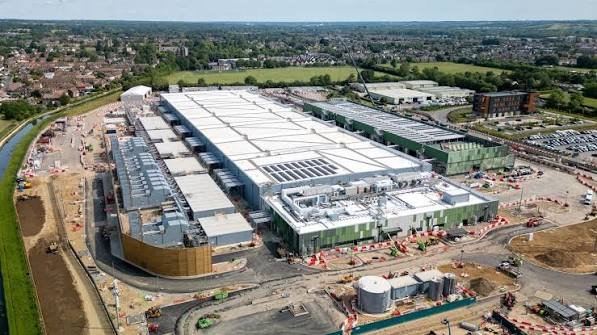
The rapid construction of data centres in London and its surrounding areas has triggered a growing debate over how limited supplies of land, water and electricity should be divided between digital infrastructure and urgently needed housing.
Demand for artificial intelligence, cloud computing and online services is driving investment in large data centres. However, the enormous power and land requirements of these facilities are placing additional pressure on parts of London where electricity networks are already operating close to their limits.
Data centres are large facilities containing computer servers that store, process and transfer digital information. They operate continuously and require substantial amounts of electricity. Powerful cooling systems are also needed to prevent servers from overheating, with some cooling methods consuming significant quantities of water.
A London Assembly report found that rising electricity demand, including demand created by the expansion of data centres, had contributed to delays in connecting new housing developments to the power network. Parts of the electricity grid in the west London boroughs of Hillingdon, Hounslow and Ealing reached full capacity in 2022, temporarily preventing some new developments from proceeding.
Short term measures introduced by the Greater London Authority, National Grid, Ofgem and other stakeholders later helped secure electricity connections for more than 12,000 homes by early 2025. However, the report warned that long term demand from data centres and other major electricity users could create further constraints unless the city adopts a coordinated energy strategy.
The dispute extends beyond electricity. Data centre developers and housing companies are often competing for sites that already have access to strong power connections, transport routes and other essential infrastructure. This has raised questions about whether scarce urban land should be used for homes or allocated to facilities supporting the rapidly expanding digital economy.
Communities living near proposed data centre sites have also raised concerns about construction traffic, operational noise, water consumption and the possible loss of open or environmentally sensitive land. Local government representatives say data centres cannot be planned separately from housing, energy networks, water infrastructure, land use and climate targets.
Pressure on Britain’s electricity connection system has increased as developers seek to build new artificial intelligence and cloud computing infrastructure. Ofgem has proposed stricter connection requirements, including financial commitment fees and compulsory project milestones, for data centre developers seeking to reserve large amounts of grid capacity.
The proposed system is intended to discourage speculative projects that reserve electricity capacity without making sufficient progress towards construction. Such projects can remain in connection queues and prevent homes, businesses and essential public infrastructure from receiving timely access to the grid.
Urban planning experts are calling for data centres to be governed by a separate and stronger set of planning rules. They argue that developers should be required to provide detailed assessments of electricity demand, water use, traffic, noise, carbon emissions and the cumulative effect of their projects on housing delivery.

There are also demands for new data centres to use renewable energy, publish clear information about their environmental footprint and meet stricter efficiency standards. Proposals include capturing the excess heat produced by servers and supplying it to nearby homes and commercial buildings through local heating networks.
London now faces the challenge of supporting digital investment without allowing data centres to undermine housing targets, overload local electricity networks or create unacceptable environmental costs for nearby communities.
Urban experts warn that without clearer national regulation and long term coordination between housing authorities, electricity providers, water companies and data centre developers, competition for London’s land and power capacity is likely to become more intense.
Dubai Court Orders Property Seller to Pay Dh460,000 Over Failed Dubai Hills Ownership Transfer

Dubai Court Orders Property Seller to Pay Dh460,000 Over Failed Dubai Hills Ownership Transfer

▫️ Buyer awarded full deposit refund and equal compensation, with 5% annual interest payable until settlement

The Dubai Court of First Instance has ordered a property seller to pay Dh460,000 after failing to complete the ownership transfer of a Dubai Hills property valued at Dh700,000.

Rapid Data Centre Expansion Puts London Housing Projects Under Pressure, Fuelling Debate Over Land and Power Allocation

Rapid Data Centre Expansion Puts London Housing Projects Under Pressure, Fuelling Debate Over Land and Power Allocation

Residents raise concerns over traffic, noise, water consumption and environmental effects as urban experts demand stronger planning rules and mandatory renewable energy use

London | ReNews International Desk NewsThe rapid construction of data centres in London and its surrounding areas has triggered a growing debate over how limited supplies of land, water and electricity should be divided between digital i...


London | ReNews International Desk News
The rapid construction of data centres in London and its surrounding areas has triggered a growing debate over how limited supplies of land, water and electricity should be divided between digital infrastructure and urgently needed housing.
Demand for artificial intelligence, cloud computing and online services is driving investment in large data centres. However, the enormous power and land requirements of these facilities are placing additional pressure on parts of London where electricity networks are already operating close to their limits.
Data centres are large facilities containing computer servers that store, process and transfer digital information. They operate continuously and require substantial amounts of electricity. Powerful cooling systems are also needed to prevent servers from overheating, with some cooling methods consuming significant quantities of water.
A London Assembly report found that rising electricity demand, including demand created by the expansion of data centres, had contributed to delays in connecting new housing developments to the power network. Parts of the electricity grid in the west London boroughs of Hillingdon, Hounslow and Ealing reached full capacity in 2022, temporarily preventing some new developments from proceeding.
Short term measures introduced by the Greater London Authority, National Grid, Ofgem and other stakeholders later helped secure electricity connections for more than 12,000 homes by early 2025. However, the report warned that long term demand from data centres and other major electricity users could create further constraints unless the city adopts a coordinated energy strategy.
The dispute extends beyond electricity. Data centre developers and housing companies are often competing for sites that already have access to strong power connections, transport routes and other essential infrastructure. This has raised questions about whether scarce urban land should be used for homes or allocated to facilities supporting the rapidly expanding digital economy.
Communities living near proposed data centre sites have also raised concerns about construction traffic, operational noise, water consumption and the possible loss of open or environmentally sensitive land. Local government representatives say data centres cannot be planned separately from housing, energy networks, water infrastructure, land use and climate targets.
Pressure on Britain’s electricity connection system has increased as developers seek to build new artificial intelligence and cloud computing infrastructure. Ofgem has proposed stricter connection requirements, including financial commitment fees and compulsory project milestones, for data centre developers seeking to reserve large amounts of grid capacity.
The proposed system is intended to discourage speculative projects that reserve electricity capacity without making sufficient progress towards construction. Such projects can remain in connection queues and prevent homes, businesses and essential public infrastructure from receiving timely access to the grid.
Urban planning experts are calling for data centres to be governed by a separate and stronger set of planning rules. They argue that developers should be required to provide detailed assessments of electricity demand, water use, traffic, noise, carbon emissions and the cumulative effect of their projects on housing delivery.

There are also demands for new data centres to use renewable energy, publish clear information about their environmental footprint and meet stricter efficiency standards. Proposals include capturing the excess heat produced by servers and supplying it to nearby homes and commercial buildings through local heating networks.
London now faces the challenge of supporting digital investment without allowing data centres to undermine housing targets, overload local electricity networks or create unacceptable environmental costs for nearby communities.
Urban experts warn that without clearer national regulation and long term coordination between housing authorities, electricity providers, water companies and data centre developers, competition for London’s land and power capacity is likely to become more intense.
Dubai Court Orders Property Seller to Pay Dh460,000 Over Failed Dubai Hills Ownership Transfer

Dubai Court Orders Property Seller to Pay Dh460,000 Over Failed Dubai Hills Ownership Transfer

▫️ Buyer awarded full deposit refund and equal compensation, with 5% annual interest payable until settlement

The Dubai Court of First Instance has ordered a property seller to pay Dh460,000 after failing to complete the ownership transfer of a Dubai Hills property valued at Dh700,000.

More Real Estate News

National Real Estate News

See All →

City and District Real Estate News

See All →

Corporate Real Estate News

See All →

Social Real Estate News

See All →

Real Estate Insights

See All →

Arazi Nama

See All →