Islamabad | ReNews Pakistan
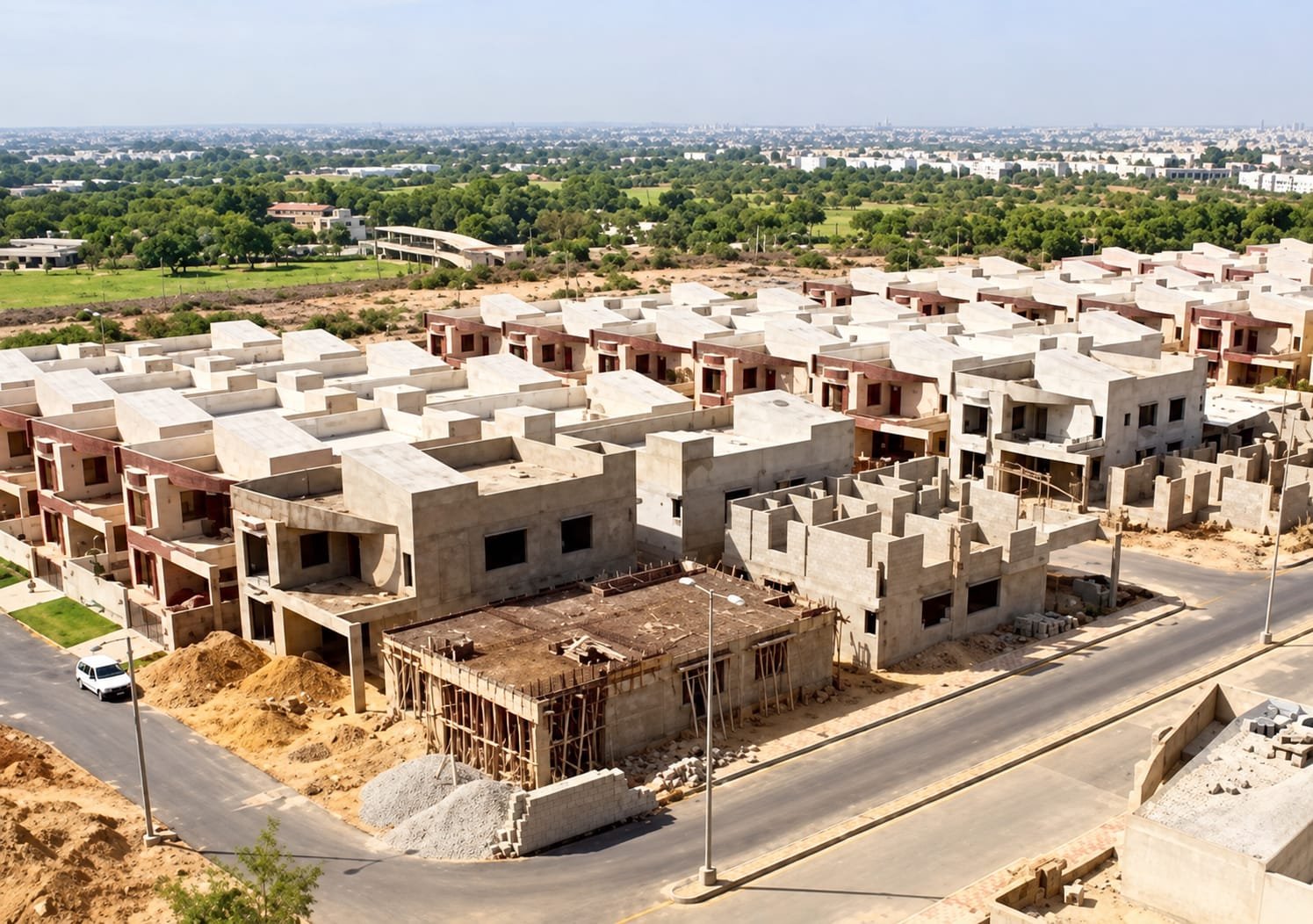
The federal government has set an ambitious target of providing Rs 700 billion in housing loans to facilitate the financing of 125,000 residential units during 2026 under the Prime Minister’s Apna Ghar scheme, as part of broader efforts to expand access to housing finance, strengthen financial inclusion and stimulate economic activity across Pakistan.
The target was discussed during a high-level meeting chaired by Prime Minister Shehbaz Sharif to review progress on financing initiatives for the housing sector, small and medium enterprises (SMEs) and agriculture.
During the meeting, senior officials briefed the prime minister on measures being taken to increase the availability of housing loans, simplify financing procedures and improve access to institutional credit for individuals and businesses.
The government’s housing financing initiative is aimed at addressing the difficulties faced by prospective homeowners in obtaining bank loans, particularly those seeking financial assistance to construct or purchase residential properties.
Under the proposed financing framework, banks and other participating financial institutions are expected to play a central role in extending housing credit to eligible applicants, supporting the government’s objective of facilitating home ownership and encouraging investment in residential construction.
The planned financing of Rs 700 billion represents a substantial commitment to the housing sector, which has significant linkages with construction materials, manufacturing, transportation and other economic activities.
Greater access to housing finance could also generate additional demand for construction-related industries, including cement, steel, electrical equipment, sanitary fittings and building materials, while potentially creating employment opportunities across the construction supply chain.
During the briefing, officials informed the prime minister that the National Bank of Pakistan (NBP) had achieved a housing finance approval rate of 76 percent, which was described as an encouraging development in efforts to improve the processing and approval of housing loan applications.
The meeting also reviewed initiatives intended to strengthen the availability of financing for small and medium enterprises, which play an important role in employment generation, domestic production and commercial activity.
Officials informed the meeting that steps were being taken to facilitate SME access to formal banking channels, enabling businesses to obtain the capital required for expansion, modernisation and improved operational efficiency.
Particular emphasis was placed on helping small and medium enterprises adopt modern technologies and secure the financial resources necessary to improve productivity and compete more effectively in international markets.
The government is also working on financial mechanisms aimed at addressing lending risks and encouraging greater participation by financial institutions in sectors that have traditionally faced difficulties obtaining adequate credit.
In this regard, the meeting examined joint risk-sharing arrangements designed to distribute lending risks among participating institutions and support greater credit availability.
Officials also briefed the prime minister on supply chain financing arrangements that could help businesses meet their working capital requirements, improve liquidity and maintain the continuity of commercial operations.
Improved data sharing between relevant institutions was identified as another important component of the financing reforms, with the objective of strengthening credit assessments, streamlining application procedures and supporting more efficient lending decisions.
The meeting was informed that digital financing systems were being expanded to enable consumers to apply for smaller loans without physically visiting bank branches.
The initiative is intended to reduce procedural difficulties, improve convenience for borrowers and extend access to financial services through technology-based platforms.
As part of the wider digital transformation of lending services, the government plans to activate a dedicated SME portal by the end of November 2026.
The portal is expected to serve as a platform for facilitating access to financing for small and medium enterprises, potentially improving coordination between businesses, financial institutions and relevant government agencies.
The meeting also reviewed agricultural financing, recognising the importance of improving credit availability for farmers and agricultural businesses to support production and associated economic activities.
Expanding access to agricultural credit remains an important element of the government’s broader financing agenda, particularly in facilitating investment in farming operations, agricultural inputs and productivity improvements.
The simultaneous focus on housing, SMEs and agriculture reflects the government’s efforts to direct greater financial resources towards productive economic sectors while widening participation in the formal financial system.
The effectiveness of these initiatives will depend on the implementation of financing arrangements, the responsiveness of participating banks, the accessibility of application procedures and the ability of eligible borrowers to obtain credit on workable terms.
The Rs 700 billion housing finance target, alongside the planned SME portal, digital lending expansion and institutional risk-sharing arrangements, forms part of the federal government’s wider strategy to improve access to financing, support private sector activity and encourage sustainable economic development across the country.
Published: October 8, 2026 - 12:01 PM
Government Targets Rs 700 Billion in Housing Loans for 125,000 Homes in 2026
حکومت کا 2026 میں ایک لاکھ 25 ہزار گھروں کیلئے 700 ارب روپے کے قرضوں کی فراہمی کا ہدف
▫️ Prime Minister reviews housing finance expansion as government moves to improve access to affordable home ownership through the Apna Ghar scheme
Islamabad | ReNews PakistanThe federal government has set an ambitious target of providing Rs 700 billion in housing loans to facilitate the financing of 125,000 residential units during 2026 under the Prime Minister’s Apna Ghar scheme, ...