Karachi | ReNews Pakistan
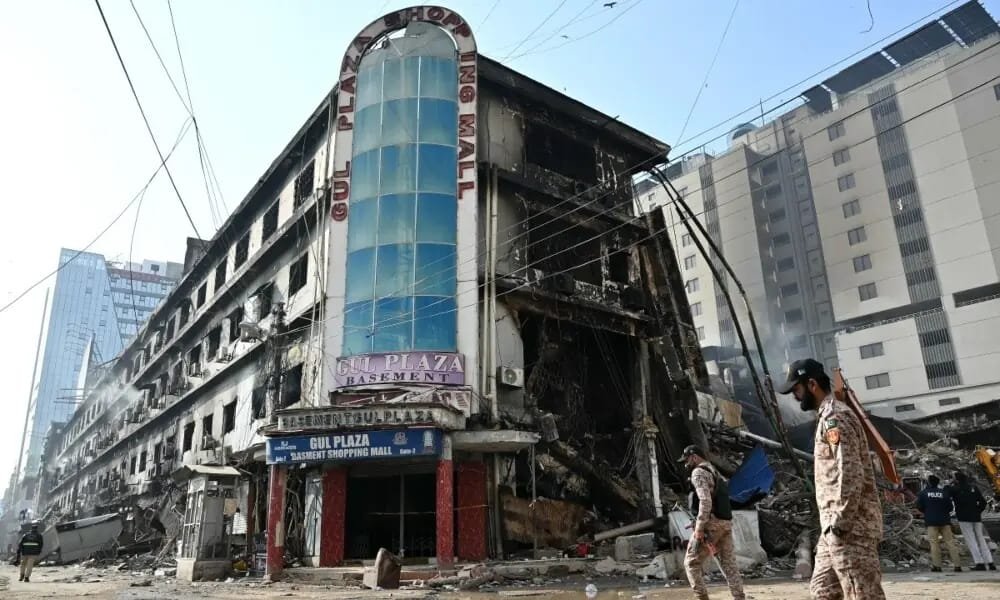
The Judicial Commission’s report on the Gul Plaza tragedy has raised serious questions over compliance with building laws, fire safety regulations and emergency evacuation arrangements in Karachi. Rather than treating the incident merely as a fire, the report describes it as a failure of the existing provincial and municipal governance system, while identifying the absence of basic safety requirements in the building as a major factor behind the loss of lives.
According to the available draft of the report, Gul Plaza lacked adequate arrangements to deal with emergencies. The absence of proper entry and exit routes and an effective emergency evacuation system, sealed windows, inadequate smoke ventilation, insufficient lighting and the lack of essential fire safety equipment severely hampered rescue efforts. The commission observed that the availability of safe evacuation routes and an effective emergency exit system could have helped reduce the loss of life.
The report has also examined the role of the Sindh Building Control Authority (SBCA). According to the commission, the SBCA was primarily responsible for ensuring compliance with construction and safety requirements under the Karachi Building and Town Planning Regulations 2002. However, it failed to maintain the building’s history and related records in accordance with the audit framework and did not ensure effective monitoring.
The commission also expressed concern over the lack of an effective mechanism for timely identification and rectification of violations of building safety standards. According to the report, building regulations should not be limited to granting permission for construction; safety requirements, including fire protection, emergency exits, electricity, lighting, water supply and access for rescue services, must also be continuously monitored throughout the operational life of a building.
The report has also raised questions over the performance of the Civil Defence Department. According to the commission, the department was responsible for conducting advance inspections of buildings, identifying safety deficiencies, ensuring implementation of fire safety audits and providing relevant training on safety measures. However, these responsibilities were not effectively fulfilled.
The commission further observed that the district administration failed to effectively utilise the fire audit mechanism. It also noted shortcomings in the supervision and performance of the Deputy Commissioner in relation to the enforcement of safety measures.
Deficiencies in the emergency response system further aggravated the situation during the tragedy. According to the report, the Karachi Metropolitan Corporation (KMC), through its Fire Brigade, had the primary responsibility to reach the site promptly and conduct an effective rescue operation. The Fire Brigade told the commission that adequate water supplies were available. However, evidence presented during the proceedings indicated that the water supply ran out while firefighting operations were underway, creating further difficulties and contributing to the escalation of casualties.
The commission also identified the shortage of essential firefighting and rescue equipment as a significant concern. Calls for help continued to come from people trapped inside the burning building, but the lack of adequate rescue equipment severely affected the effectiveness of the operation.
The report also questioned the performance of Rescue 1122, stating that the service was unable to discharge its responsibilities effectively due to inadequate equipment. The commission highlighted the issue in view of the substantial public funds allocated annually to the emergency rescue system.
According to the report, the Gul Plaza Managing Committee, which was present at the site in its administrative capacity, also failed to play an effective role in rescuing people trapped inside the building. However, the available draft of the commission’s report does not hold any specific individual directly responsible for the tragedy.
Overall, the commission concluded that the Gul Plaza tragedy exposed serious weaknesses in the enforcement and monitoring of building safety and fire protection regulations, as well as in the emergency response mechanism. The report characterised the incident as a failure of the existing provincial and municipal governance system, particularly in protecting the lives and property of citizens.
It is important to note that the available draft of the Judicial Commission’s report does not bear the signatures or official seal of any government officer or the commission. Therefore, its status and authenticity require separate official confirmation.
Published: August 31, 2026 - 9:59 AM
Serious Violations of Building Laws and Fire Safety Regulations Found in Gul Plaza Tragedy: Judicial Commission Report
گل پلازہ سانحہ میں بلڈنگ قوانین اور فائر سیفٹی نظام کی سنگین خلاف ورزیاں ہوئیں: رپورٹ جوڈیشیل کمیشن
▫️Emergency Exits, Fire Safety Equipment, Water and Lighting Deficiencies Identified as Major Causes of the Disaster
Karachi | ReNews PakistanThe Judicial Commission’s report on the Gul Plaza tragedy has raised serious questions over compliance with building laws, fire safety regulations and emergency evacuation arrangements in Karachi. Rather than tre...