ReNews Pakistan
← Back to home

Arazi Nama

89 news articles

Karachi’s Buildings: Are We Waiting for the Next Major Disaster?

Karachi’s Buildings: Are We Waiting for the Next Major Disaster?

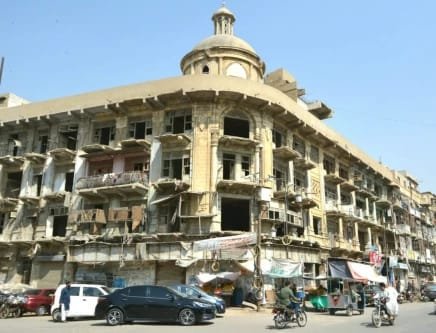
The devastating fire at Gul Plaza was not merely an isolated accident. It exposed several uncomfortable realities about Karachi’s construction system, safety arrangements and weak enforcement of building regulations. The fire safety audit ordered by the Sindh government after the incident shows that the problem is not limited to a few buildings. Instead, the entire system requires urgent and far-reaching reforms.
A total of 783 residential and commercial buildings were inspected across Karachi’s seven districts. The findings are deeply alarming. Only 370 buildings, or around 47 percent, were found to substantially comply with basic fire safety standards. Another 298 buildings showed partial compliance, while 115 failed to meet essential safety requirements and were declared unsafe.
Even more concerning, 239 buildings were classified as high-risk. Emergency exits were missing in 416 buildings, while 310 buildings did not have basic firefighting equipment.
These figures are not simply numbers in an official report. They are directly linked to the daily lives and safety of thousands of families. When additional floors are constructed in violation of approved plans, corridors are converted into shops or offices, staircases are used for storage, or emergency exits are blocked, a minor fire can turn into a major tragedy within minutes.
One of the main reasons behind the growing danger is the large number of old and deteriorating buildings across Karachi. Many of these structures were built several decades ago, but their electrical wiring, firefighting systems and safety arrangements were never upgraded to meet modern standards.
Experts have repeatedly warned that a large number of residential, commercial and industrial buildings in the city lack adequate fire safety systems. As a result, hundreds of fire incidents are reported every year.
Pakistan does not suffer from a complete absence of laws. The real problem is weak enforcement. Building plans may be approved at the time of construction, but illegal changes made later are rarely monitored effectively. Many buildings are never inspected again after completion.
Over time, safety standards decline, illegal extensions increase and risks continue to grow.
In many major cities around the world, regular fire safety audits are mandatory. High-rise buildings are required to install automatic fire alarms, sprinkler systems, smoke control systems, clearly marked emergency exits and evacuation plans. Regular emergency drills are also conducted to ensure that residents and staff know how to respond during a crisis.
Pakistan must also move away from temporary crackdowns and create a permanent, enforceable safety framework.
Several basic measures are urgently needed. Fire safety certificates for all commercial buildings and high-rise residential structures should be renewed every year. Immediate action should be taken against illegal construction and violations of approved building plans.
The electrical wiring and safety systems of older buildings should be upgraded in phases. Building owners, management staff and residents should receive regular fire safety training, while evacuation drills should be conducted at fixed intervals.
At the same time, fire brigade and rescue departments must be provided with modern equipment, better training and easier access to densely built areas.
Karachi is Pakistan’s largest commercial and economic centre. If its buildings are unsafe, investment, business activity and urban life will all remain at risk. A few days of inspections and official action after tragedies such as the Gul Plaza fire will not be enough.
Real progress will only be achieved when both old and new buildings are required to meet the same safety standards, regulations are strictly enforced and citizens can trust that their homes, offices and markets are genuinely safe.
Karachi does not only need more buildings. It needs safer buildings, because a safe city is the foundation of a strong economy and a secure society.
DHA Estate Agents Association Lahore Election Campaign: Leadership, Performance and Dealers’ Expectations

DHA Estate Agents Association Lahore Election Campaign: Leadership, Performance and Dealers’ Expectations

▫️ Riaz Hussain

The election campaign for the DHA Estate Agents Association Lahore offers the real estate community an important opportunity to define its priorities.

Why Is Consumer Protection Weak in Pakistan’s Real Estate Sector, and Where Can Property Investors Seek Justice?

Why Is Consumer Protection Weak in Pakistan’s Real Estate Sector, and Where Can Property Investors Seek Justice?

▫️ Riaz Hussain

For millions of Pakistanis, owning a home is a lifelong dream. However, turning that dream into reality can sometimes put their entire life savings at risk. Many buyers investing in residential and commercial projects face problems such ...

Property Fraud and Misleading Marketing: The Hidden Risks Facing Pakistan’s Real Estate Buyers

Property Fraud and Misleading Marketing: The Hidden Risks Facing Pakistan’s Real Estate Buyers

▫️

Pakistan’s real estate sector attracts billions of rupees in investment every year, but behind glossy advertisements, ambitious master plans and promises of high returns lies a persistent problem: property fraud and misleading marketing.

DHA Lahore’s Phase 9 Prism Moves Toward Greater Residential and Commercial Occupancy

DHA Lahore’s Phase 9 Prism Moves Toward Greater Residential and Commercial Occupancy

DHA Lahore’s Phase 9 Prism has emerged as one of the city’s major residential and commercial developments, with the opening of possession for plots in 2026 marking the beginning of a new phase of development and construction activity.

Property Taxes vs Real Estate: Can Pakistan Find the Right Balance?

Property Taxes vs Real Estate: Can Pakistan Find the Right Balance?

▫️

Pakistan’s real estate sector stands at a difficult crossroads. On one side, the government needs to increase tax revenues, document property ownership and bring more economic activity into the formal tax system. On the other, property b...

What You Should Know Before Buying Property: It’s Not Just About the Documents

What You Should Know Before Buying Property: It’s Not Just About the Documents

Buying property is one of the biggest financial decisions a person can make.When purchasing a house, apartment, plot or any other type of real estate, buyers usually focus on the price, location and ownership documents. But in reality, c...

New Housing Projects Gain Momentum in Pakistan, Transforming Urban Development and Real Estate Landscape

New Housing Projects Gain Momentum in Pakistan, Transforming Urban Development and Real Estate Landscape

▫️

Pakistan’s housing sector is witnessing increased activity as population growth, urban expansion and rising demand for residential facilities continue to drive the development of new housing projects across the country.

From Building Plan Approval to Safer Structures: Why Building Code Enforcement Matters in Pakistan

From Building Plan Approval to Safer Structures: Why Building Code Enforcement Matters in Pakistan

▫️

Pakistan’s major cities are witnessing a steady increase in high-rise buildings, residential developments, commercial plazas and housing societies.

Crackdown on Illegal Housing Societies in Islamabad: How Can Billions of Rupees Invested by Citizens Be Protected?

Crackdown on Illegal Housing Societies in Islamabad: How Can Billions of Rupees Invested by Citizens Be Protected?

▫️Crackdown on Illegal Housing Societies in Islamabad: How Can Billions of Rupees Invested by Citizens Be Protected?

Recent action against illegal housing societies in Islamabad has once again raised a critical question: How do such societies emerge in the federal capital, who is responsible for monitoring them, and what role should state institutions ...

Karachi’s Buildings: Are We Waiting for the Next Major Disaster?

Karachi’s Buildings: Are We Waiting for the Next Major Disaster?

The devastating fire at Gul Plaza was not merely an isolated accident. It exposed several uncomfortable realities about Karachi’s construction system, safety arrangements and weak enforcement of building regulations. The fire safety audit ordered by the Sindh government after the incident shows that the problem is not limited to a few buildings. Instead, the entire system requires urgent and far-reaching reforms.
A total of 783 residential and commercial buildings were inspected across Karachi’s seven districts. The findings are deeply alarming. Only 370 buildings, or around 47 percent, were found to substantially comply with basic fire safety standards. Another 298 buildings showed partial compliance, while 115 failed to meet essential safety requirements and were declared unsafe.
Even more concerning, 239 buildings were classified as high-risk. Emergency exits were missing in 416 buildings, while 310 buildings did not have basic firefighting equipment.
These figures are not simply numbers in an official report. They are directly linked to the daily lives and safety of thousands of families. When additional floors are constructed in violation of approved plans, corridors are converted into shops or offices, staircases are used for storage, or emergency exits are blocked, a minor fire can turn into a major tragedy within minutes.
One of the main reasons behind the growing danger is the large number of old and deteriorating buildings across Karachi. Many of these structures were built several decades ago, but their electrical wiring, firefighting systems and safety arrangements were never upgraded to meet modern standards.
Experts have repeatedly warned that a large number of residential, commercial and industrial buildings in the city lack adequate fire safety systems. As a result, hundreds of fire incidents are reported every year.
Pakistan does not suffer from a complete absence of laws. The real problem is weak enforcement. Building plans may be approved at the time of construction, but illegal changes made later are rarely monitored effectively. Many buildings are never inspected again after completion.
Over time, safety standards decline, illegal extensions increase and risks continue to grow.
In many major cities around the world, regular fire safety audits are mandatory. High-rise buildings are required to install automatic fire alarms, sprinkler systems, smoke control systems, clearly marked emergency exits and evacuation plans. Regular emergency drills are also conducted to ensure that residents and staff know how to respond during a crisis.
Pakistan must also move away from temporary crackdowns and create a permanent, enforceable safety framework.
Several basic measures are urgently needed. Fire safety certificates for all commercial buildings and high-rise residential structures should be renewed every year. Immediate action should be taken against illegal construction and violations of approved building plans.
The electrical wiring and safety systems of older buildings should be upgraded in phases. Building owners, management staff and residents should receive regular fire safety training, while evacuation drills should be conducted at fixed intervals.
At the same time, fire brigade and rescue departments must be provided with modern equipment, better training and easier access to densely built areas.
Karachi is Pakistan’s largest commercial and economic centre. If its buildings are unsafe, investment, business activity and urban life will all remain at risk. A few days of inspections and official action after tragedies such as the Gul Plaza fire will not be enough.
Real progress will only be achieved when both old and new buildings are required to meet the same safety standards, regulations are strictly enforced and citizens can trust that their homes, offices and markets are genuinely safe.
Karachi does not only need more buildings. It needs safer buildings, because a safe city is the foundation of a strong economy and a secure society.
DHA Estate Agents Association Lahore Election Campaign: Leadership, Performance and Dealers’ Expectations

DHA Estate Agents Association Lahore Election Campaign: Leadership, Performance and Dealers’ Expectations

▫️ Riaz Hussain

The election campaign for the DHA Estate Agents Association Lahore offers the real estate community an important opportunity to define its priorities.

Why Is Consumer Protection Weak in Pakistan’s Real Estate Sector, and Where Can Property Investors Seek Justice?

Why Is Consumer Protection Weak in Pakistan’s Real Estate Sector, and Where Can Property Investors Seek Justice?

▫️ Riaz Hussain

For millions of Pakistanis, owning a home is a lifelong dream. However, turning that dream into reality can sometimes put their entire life savings at risk. Many buyers investing in residential and commercial projects face problems such ...

Property Fraud and Misleading Marketing: The Hidden Risks Facing Pakistan’s Real Estate Buyers

Property Fraud and Misleading Marketing: The Hidden Risks Facing Pakistan’s Real Estate Buyers

▫️

Pakistan’s real estate sector attracts billions of rupees in investment every year, but behind glossy advertisements, ambitious master plans and promises of high returns lies a persistent problem: property fraud and misleading marketing.

DHA Lahore’s Phase 9 Prism Moves Toward Greater Residential and Commercial Occupancy

DHA Lahore’s Phase 9 Prism Moves Toward Greater Residential and Commercial Occupancy

DHA Lahore’s Phase 9 Prism has emerged as one of the city’s major residential and commercial developments, with the opening of possession for plots in 2026 marking the beginning of a new phase of development and construction activity.

Property Taxes vs Real Estate: Can Pakistan Find the Right Balance?

Property Taxes vs Real Estate: Can Pakistan Find the Right Balance?

▫️

Pakistan’s real estate sector stands at a difficult crossroads. On one side, the government needs to increase tax revenues, document property ownership and bring more economic activity into the formal tax system. On the other, property b...

What You Should Know Before Buying Property: It’s Not Just About the Documents

What You Should Know Before Buying Property: It’s Not Just About the Documents

Buying property is one of the biggest financial decisions a person can make.When purchasing a house, apartment, plot or any other type of real estate, buyers usually focus on the price, location and ownership documents. But in reality, c...

New Housing Projects Gain Momentum in Pakistan, Transforming Urban Development and Real Estate Landscape

New Housing Projects Gain Momentum in Pakistan, Transforming Urban Development and Real Estate Landscape

▫️

Pakistan’s housing sector is witnessing increased activity as population growth, urban expansion and rising demand for residential facilities continue to drive the development of new housing projects across the country.

From Building Plan Approval to Safer Structures: Why Building Code Enforcement Matters in Pakistan

From Building Plan Approval to Safer Structures: Why Building Code Enforcement Matters in Pakistan

▫️

Pakistan’s major cities are witnessing a steady increase in high-rise buildings, residential developments, commercial plazas and housing societies.

Crackdown on Illegal Housing Societies in Islamabad: How Can Billions of Rupees Invested by Citizens Be Protected?

Crackdown on Illegal Housing Societies in Islamabad: How Can Billions of Rupees Invested by Citizens Be Protected?

▫️Crackdown on Illegal Housing Societies in Islamabad: How Can Billions of Rupees Invested by Citizens Be Protected?

Recent action against illegal housing societies in Islamabad has once again raised a critical question: How do such societies emerge in the federal capital, who is responsible for monitoring them, and what role should state institutions ...

More Real Estate News

National Real Estate News

See All →

City and District Real Estate News

See All →

Global Real Estate News

See All →

Corporate Real Estate News

See All →

Social Real Estate News

See All →

Real Estate Insights

See All →