

[ReNews Pakistan]
Dubai:
Dubai’s real estate market has started 2026 on a robust note, registering property transactions totaling AED 771.12 million on January 1, the first working day of the new year. According to data released by the Dubai Land Department (DLD), a total of 204 deals were concluded in a single day, demonstrating strong investor confidence and continued momentum across diverse market segments.
The transactions comprised 140 sales of residential units, including apartments and villas, alongside 40 buildings and 24 land plots. This balanced distribution highlights broad-based demand that extends beyond traditional residential properties to commercial buildings and undeveloped land, signaling healthy activity in both end-user and investment categories.
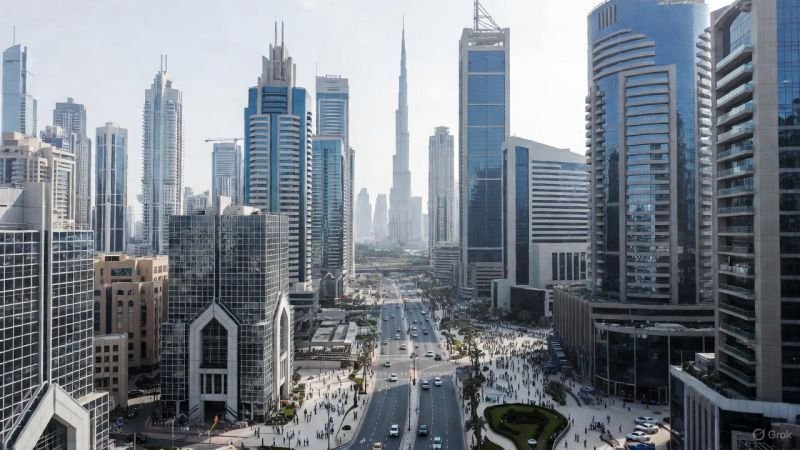
High-value transactions dominated the day’s highlights. The most expensive deal involved a luxury apartment on Palm Jumeirah, sold for AED 33.5 million. In the downtown precinct, a hotel apartment in Address Fountain Views, overlooking Burj Khalifa, changed hands for AED 14.4 million. Another notable sale was an apartment inside Burj Khalifa itself, transacted at AED 10.3 million.
These premium deals reaffirm the enduring appeal of iconic addresses and luxury developments among high-net-worth individuals and institutional buyers.
This strong opening builds directly on Dubai’s exceptional performance throughout 2025, widely regarded as a record-breaking year for the emirate’s real estate sector. Total sales value reached approximately AED 682 billion, marking a substantial 30.6 percent year-on-year growth compared to 2024. The year saw more than 214,000 transactions, reflecting unprecedented participation from local, regional, and international buyers.
Several factors underpinned this sustained growth. Dubai’s population officially surpassed the 4 million milestone in 2025, driven by influxes of professionals, families, and expatriates attracted by employment opportunities and quality of life. Foreign direct investment remained a key driver, supported by economic diversification, political stability, and investor-friendly policies. Established communities such as Dubai Hills Estate, Arabian Ranches, and Downtown Dubai continued to attract long-term residents, while emerging areas like Dubai South and Jumeirah Village Circle gained traction among mid-market buyers.
Market analysis from 2025 revealed that a significant portion of demand originated from end-users rather than short-term speculators. Buyers aged 31 to 45 formed the largest demographic segment, prioritizing family-oriented properties with amenities such as schools, parks, and retail facilities. This shift toward genuine housing needs contributed to market stability and reduced volatility compared to previous cycles.
Looking ahead to 2026, industry experts anticipate continued positive momentum, though at a potentially moderated pace. A substantial supply pipeline is expected to enter the market, with estimates ranging between 96,000 and 120,000 new residential units scheduled for delivery throughout the year. This increased inventory could help ease price pressure in certain segments, particularly off-plan and mid-tier properties, while maintaining equilibrium between supply and demand.
Developers are responding by focusing on quality, sustainability, and integrated communities. Many new projects now incorporate smart home technologies, green building standards, and enhanced lifestyle amenities to differentiate offerings in an increasingly competitive landscape. Regulatory enhancements by the Dubai Land Department, including greater transparency in transactions and streamlined processes, continue to bolster buyer confidence.
The early-year activity also reflects Dubai’s evolving urban fabric. Ongoing infrastructure projects, such as expansions to the metro network, road improvements, and new mixed-use developments, are reshaping land use patterns and enhancing connectivity across the city. Areas once considered peripheral are rapidly transforming into self-sufficient neighborhoods, supported by rising population density and commercial growth.
While it is still early in the year, the volume and value of transactions on January 1 provide a clear indicator of market resilience. Dubai’s real estate sector remains a cornerstone of the emirate’s economy, contributing significantly to GDP and employment. Its ability to attract diverse capital inflows while accommodating growing residential needs positions it as a leading global property hub.
As 2026 unfolds, stakeholders will closely monitor how incoming supply interacts with demand dynamics, interest rate movements, and geopolitical factors. However, the strong start suggests that Dubai’s property market is well-equipped to navigate the year ahead, continuing to play a pivotal role in the city’s urban development and economic diversification strategy.
Published: January 3, 2026 - 9:24 AM
Dubai Property Market Kicks Off 2026 with AED 771 Million in Sales on First Working Day.
دبئی میں 2026 کا آغاز، پہلے ہی دن 771 ملین درہم کی فروخت ریکارڈ
▫️ Over 200 transactions recorded on January 1, spanning residential units, buildings, and land plots. ▫️ Premium deals in Palm Jumeirah and Burj Khalifa underscore sustained demand for luxury properties.
Dubai’s real estate market has started 2026 on a robust note, registering property transactions totaling AED 771.12 million on January 1, the first working day of the new year. According to data released by the Dubai Land Department (DLD...
































