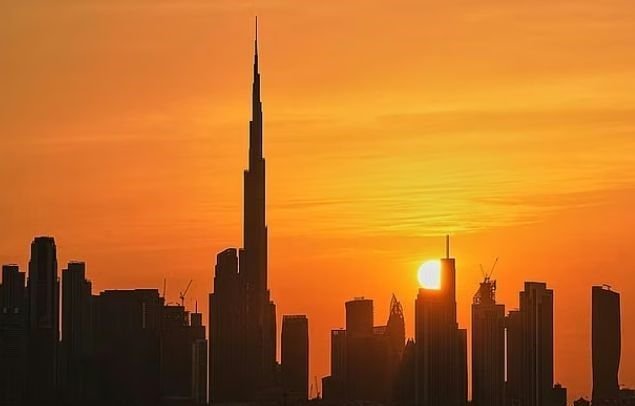
Dubai: ReNews Pakistan
Despite regional geopolitical tensions and global economic uncertainty, Dubai’s property market has remained resilient, providing consistent investment opportunities and establishing itself as a safe and attractive destination for international investors. The emirate has repeatedly demonstrated that uncertainty elsewhere can reinforce its position as a preferred investment hub.
Recent data from the Dubai Land Department indicates that thousands of real estate transactions were completed in recent months, spanning residential, off-plan, and secondary market properties, with total transaction values reaching several billion dirhams. Economic analysts note that this trend underscores investors’ confidence in Dubai’s property sector even during periods of broader market volatility.
In 2025, Dubai’s real estate market recorded historic figures, with hundreds of thousands of transactions completed and total trading volume showing significant year-on-year growth. During this period, the emirate attracted capital from multiple countries, with Pakistani investors ranking among the top contributors, particularly in the off-plan property segment.
According to global property consultancy reports, Dubai’s residential market attracted billions of dollars in investments across various segments, particularly in prime locations such as Business Bay, Dubai Creek Harbour, and Palm Jumeirah, which remain highly sought after by international buyers.
Experts attribute the market’s stability to several key factors: a transparent legal framework, low taxes and investor-friendly policies, balanced supply across residential and commercial sectors, and Dubai’s status as a global trade hub. Rental yields in the emirate are also competitive, averaging around 7 percent, and reaching up to 9 percent in affordable communities, making long-term investment particularly attractive.
Although regional tensions increased this year, leading to temporary dips in real estate indices, analysts stress that these are short-term fluctuations and the market’s fundamentals remain strong. Some transactions slowed as investors adopted a more cautious approach, yet overall transaction volumes indicate that the market has responded strategically rather than panic-driven.
Investors are prioritizing factors beyond price, including lifestyle, rental income potential, residency benefits, and economic stability. Data show that international investors, including those from Pakistan, India, and Europe, continue to invest consistently in Dubai, with year-on-year growth in interest.
Experts further suggest that if regional geopolitical tensions ease, Dubai’s real estate market could accelerate its growth trajectory, with projections for 2026 indicating potential growth of 7–10 percent, particularly in villas and townhouses where demand is rising.
In conclusion, while global political and economic factors may temporarily influence market trends, Dubai’s property sector continues to demonstrate resilience, strong fundamentals, and long-term investment appeal, reinforcing its status as a secure and prestigious destination for global capital.
Published: March 16, 2026 - 3:48 PM
Dubai Property Market Remains Attractive for Global Investors
دبئی پراپرٹی مارکیٹ عالمی سرمایہ کاری کے لیے محفوظ اور پرکشش
▫️Despite Regional Tensions and Economic Uncertainty, Dubai Maintains Investment Stability
Dubai: ReNews Pakistan Despite regional geopolitical tensions and global economic uncertainty, Dubai’s property market has remained resilient, providing consistent investment opportunities and establishing itself as a safe and attract...