

Tokyo | ReNews International Desk News
Japan’s prime retail property market recorded a strong performance in the first quarter of 2026, with rents in several leading shopping districts climbing to record highs as fashion brands, luxury retailers and footwear companies competed for limited storefront space.
According to CBRE’s Q1 2026 Japan Retail MarketView report, average rents reached all-time highs in five of the 10 major retail areas tracked by the firm. These included Ginza, Omotesando/Harajuku, Shibuya, Shinsaibashi and Kyoto. The report noted that vacancy levels in several key retail corridors remained extremely low, reflecting strong leasing demand despite wider global economic uncertainty.
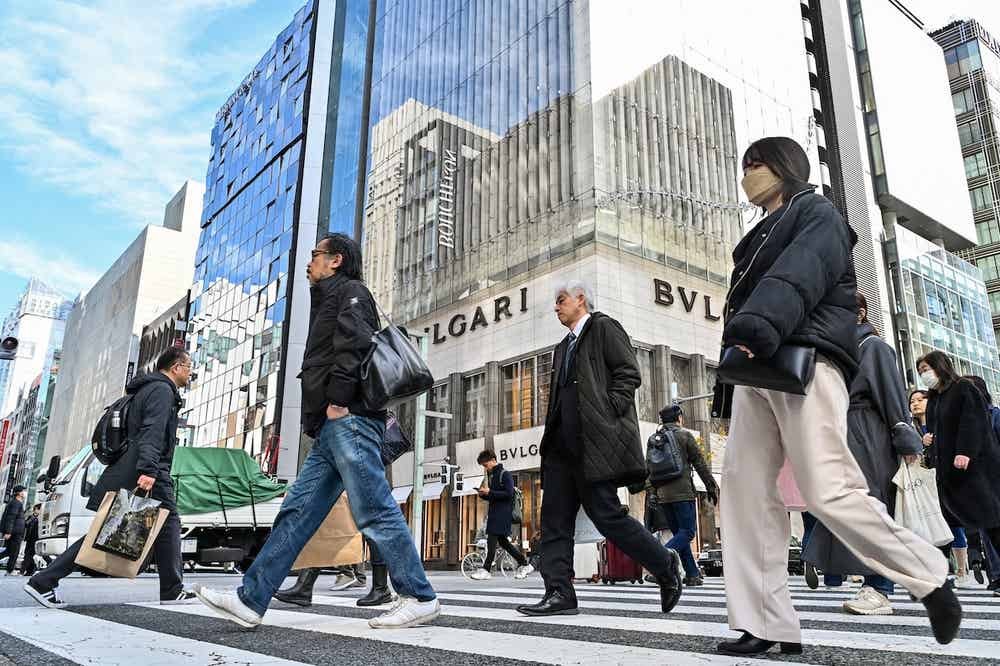
Tokyo’s Ginza district continued to lead the country’s retail market as Japan’s most expensive shopping corridor. Average rents in the district rose 1.4 percent from the previous quarter to a record ¥ 296,000 per tsubo, equivalent to around 3.3 square meters. Vacancy in Ginza’s prime area remained at 0.0 percent for the fifth consecutive quarter, as luxury brands, apparel retailers, footwear companies and resale operators competed for scarce available space.
CBRE said competition for prime retail units has become increasingly intense, with multiple retailers often seeking the same available location. The firm added that retailers with strong existing store sales were among the main drivers of relocations, expansions and new openings.
Fashion brands emerged as the strongest source of demand during the quarter, accounting for 45 percent of all newly leased retail floor space in Japan’s prime shopping streets. Large leasing transactions were recorded in major districts including Ginza, Omotesando/Harajuku, Shinsaibashi and Sakae.
The strong leasing activity came despite pressure on Japan’s retail sector from weaker tourism sentiment linked to geopolitical tensions and a Chinese government advisory issued late last year discouraging travel to Japan. However, CBRE said retailer appetite remained firm, with few companies changing their expansion strategies amid broader uncertainty.
In Omotesando and Harajuku, average rents climbed to a record ¥ 252,000 per tsubo, marking the fifth consecutive quarterly high. Vacancy in the area fell to just 0.2 percent, supported by continued demand from apparel retailers willing to pay premium rents for prime locations near Jingumae Crossing.
Shibuya also posted record rents, with average prices rising 1.1 percent quarter-on-quarter to ¥182,000 per tsubo. Vacancy remained at zero, while stronger demand along Shibuya Center gai pushed acceptable rent levels higher.
Outside Tokyo, Osaka’s Shinsaibashi district also recorded a new peak, with rents reaching ¥275,000 per tsubo. Demand was supported by luxury retailers, sporting goods brands and apparel companies seeking space ahead of the scheduled opening of the QUARTZ SHINSAIBASHI retail complex later this year.
Kyoto also saw strong growth, with rents increasing 3.1 percent to a record ¥134,500 per tsubo. The rise was mainly driven by demand for retail space near the Fujii Daimaru shopping area.
However, not all major retail markets strengthened during the quarter. Nagoya’s Sakae district recorded a sharp rise in vacancy to 3.5 percent after a large space became available on Minami Otsu-dori. As a result, rents in the area declined 1.4 percent from the previous quarter.
Despite this mixed performance, CBRE said Japan’s overall retail leasing market remains undersupplied. With limited space available in prime shopping streets, landlords are increasingly able to seek higher rents not only in premier districts but also in secondary locations offering smaller and relatively lower cost retail units.
Published: May 16, 2026 - 4:10 PM
Japan’s Prime Retail Rents Reach Record Highs as Fashion and Luxury Demand Intensifies
جاپان کے اہم ریٹیل علاقوں میں کرایے ریکارڈ سطح پر پہنچ گئے، فیشن اور لگژری برانڈز کی طلب میں اضافہ
▫️Fashion brands accounted for 45% of newly leased prime retail space, while vacancy in several major shopping districts remained close to zero
Tokyo | ReNews International Desk News Japan’s prime retail property market recorded a strong performance in the first quarter of 2026, with rents in several leading shopping districts climbing to record highs as fashion brands, luxur...
































