

Tokyo | ReNews International Desk News
The alleged illegal construction of Jamia Masjid Ramadan in Kawagoe, Japan, has moved beyond a local administrative dispute and become a matter of international attention. After Pakistan’s Ambassador to Japan, Abdul Hameed Bhutta, attended the mosque’s inauguration ceremony, Japanese, Indian and Israeli media gave prominent coverage to the issue, while various claims, comments and debates also emerged on social media.
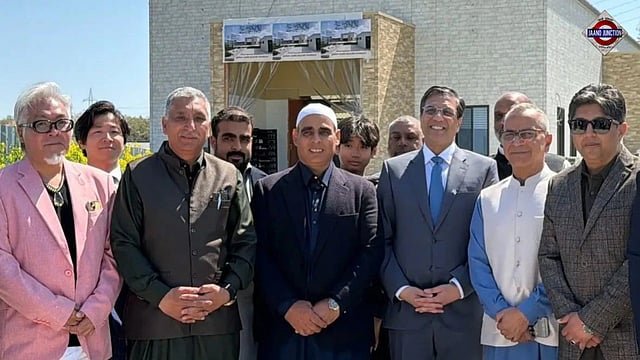
The inauguration ceremony of Jamia Masjid Ramadan was held in April this year, where Pakistani Ambassador Abdul Hameed Bhutta participated as a special guest.
However, Kawagoe Mayor Hatsue Morita later stated at a press conference that the mosque had been built in an urban development control area without obtaining the necessary permissions required under local laws. On this basis, the structure is being described as an illegal construction.
According to the Pakistani Embassy, Ambassador Abdul Hameed Bhutta had not been informed about any dispute regarding the mosque’s legal status or construction permits. The embassy said the ambassador had asked the organisers about legal requirements before attending the ceremony, and the organisers had informed him that all rules and regulations had been followed in the construction of the mosque.
Diplomatic sources said the Pakistani ambassador’s participation in the ceremony was religious and community related in nature. However, once objections were later raised by the local administration over the construction, the matter attracted media attention. Japanese media reported the issue in the context of local urban planning and construction laws, while Indian and Israeli media highlighted the participation of the Pakistani ambassador.
According to the Kawagoe administration, the site falls within an urban development control area, where specific legal permits and regulatory approvals are required for construction. Following Mayor Hatsue Morita’s statement, a local debate began over whether the mosque administration had fulfilled all legal requirements before carrying out the construction.
The Pakistani Embassy has clarified that the ambassador attended the ceremony on the basis of information provided by the organisers and was kept unaware of any dispute relating to illegal construction or permits. The embassy said that local laws and administrative proceedings in this matter fall under the jurisdiction of Japanese authorities.
After the issue came to light, concern has also been expressed within the Pakistani community living in Japan. Community circles say that full compliance with local laws, permit requirements and urban planning regulations is essential in the construction of religious sites to avoid such controversies in the future.
Published: June 4, 2026 - 2:05 PM
Pakistan’s Ambassador Kept Unaware of Legal Status in Japan Mosque Construction Controversy
جاپان میں مسجد کی مبینہ غیر قانونی تعمیر کا معاملہ، پاکستانی سفیر کو قانونی صورتحال سے لاعلم رکھا گیا
▫️Pakistani Embassy says Ambassador Abdul Hameed Bhutta had sought information from organisers about legal requirements before attending the inauguration ceremony
Tokyo | ReNews International Desk News The alleged illegal construction of Jamia Masjid Ramadan in Kawagoe, Japan, has moved beyond a local administrative dispute and become a matter of international attention. After Pakistan’s Ambass...
































