Islamabad | ReNews Pakistan
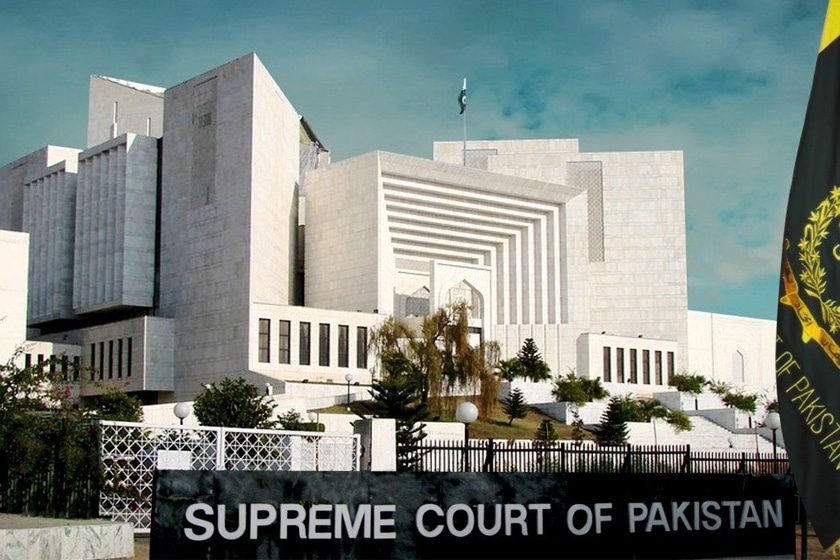
The Supreme Court of Pakistan has ruled in a significant judgment that the government may acquire property without the owner’s consent for the completion of public interest projects, provided all legal requirements are fulfilled. However, the court made it clear that the affected owner must be paid full, fair and genuine compensation based on the land’s market value.
The apex court observed that in land acquisition matters, official rates alone cannot serve as the basis for compensation. Instead, the actual market value of the land, its possible use, location, future development potential and other relevant factors must be considered to ensure justice for the affected citizen.
The judgment was authored by Justice Muhammad Ali Mazhar in a case related to compensation for land acquired for a canal project in Swabi. In the 20 page written verdict, the court dismissed all civil appeals filed by the Khyber Pakhtunkhwa government and upheld the decisions of the Peshawar High Court and the Reference Court.
The Supreme Court also reiterated the principle that compensation for land should follow the standard of “gold for gold, not copper.” According to the court, this means that when the state acquires a citizen’s land for public interest, the compensation must fully cover the owner’s actual financial loss, rather than amounting to a symbolic or undervalued payment.
The court further held that if there is an extraordinary delay in the land acquisition process, the increase in land prices and the impact of inflation during that period must also be reflected in the compensation. Otherwise, genuine financial justice cannot be provided to the affected owner.
The judgment stated that while land acquisition may be necessary for public interest and development projects, causing unfair financial loss to a citizen in the name of such projects is contrary to the spirit of the Constitution and the law. The state, the court noted, is bound to maintain a balance between development needs and citizens’ fundamental rights.
According to the court record, landowners in Swabi had approached the Reference Court after declaring the officially fixed compensation for land acquired for the canal project insufficient. The Reference Court enhanced the compensation on the basis of available evidence, market value and other relevant factors, a decision later upheld by the Peshawar High Court.
The Khyber Pakhtunkhwa government challenged those rulings before the Supreme Court. However, the apex court rejected the government’s objections, holding that the lower courts’ decisions were in accordance with the law and evidence. The Supreme Court consequently dismissed all civil appeals filed by the government and maintained the rulings in favour of the landowners.
Legal observers say the Supreme Court’s decision may serve as an important precedent in future land acquisition cases across the country, particularly for infrastructure, canal, road, rail, energy and other public development projects. The ruling is expected to strengthen the principle that affected landowners must be compensated on the basis of fair market value rather than official rates alone.
Published: July 7, 2026 - 4:00 PM
Govt Can Acquire Land Without Owner’s Consent for Public Interest Projects: Supreme Court
مفادِ عامہ کے منصوبوں کیلئے حکومت مالک کی رضامندی کے بغیر بھی زمین حاصل کر سکتی ہے : سپریم کورٹ
▫️In its 20 page detailed judgment, the court ruled that compensation for acquired land cannot be determined solely on official rates, but must also reflect market value, future use and development potential
Islamabad | ReNews PakistanThe Supreme Court of Pakistan has ruled in a significant judgment that the government may acquire property without the owner’s consent for the completion of public interest projects, provided all legal requirem...