

Islamabad | ReNews Pakistan
The Federal Constitutional Court (FCC) has laid down comprehensive legal guidelines aimed at strengthening the protection of minors' property and inheritance rights, directing civil and revenue courts across Pakistan to exercise greater judicial scrutiny in cases involving children and other vulnerable parties.
In a detailed judgment authored by Chief Justice Aminuddin Khan, the court held that the protection of a minor's legal and financial interests is a fundamental judicial responsibility that must be addressed before any substantive proceedings take place. The ruling requires trial courts to determine, at the earliest possible stage, whether any party to a case is a minor and to ensure strict compliance with the provisions of Order XXXII of the Code of Civil Procedure (CPC), 1908.
The FCC ruled that no guardian may be appointed for a minor unless the court is fully satisfied that the proposed guardian has no conflict of interest and is capable of protecting the child's legal rights. The judgment further states that no compromise, settlement or consent decree affecting a minor's property or inheritance can be accepted unless the court independently determines that it is lawful, fully compliant with the CPC and genuinely serves the minor's best interests.
The court also directed that proceedings involving the property or inheritance rights of minors must comply with the provisions of the Guardians and Wards Act, 1890, wherever applicable. Judges were instructed to exercise heightened caution in cases where compromises are presented by illiterate persons, parda nasheen women or other vulnerable individuals acting on behalf of minors, ensuring that such agreements are free from coercion, undue influence or legal defects.
The landmark principles were issued while deciding a property dispute originating from Bahawalnagar. The Federal Constitutional Court set aside a Lahore High Court judgment that had restored a compromise decree affecting the property and inheritance rights of minor children and a woman. The FCC reinstated an earlier revisional court order that had declared the compromise decree invalid and directed that the dispute be decided through a fresh trial on its merits.
Emphasising the judiciary's constitutional duty to safeguard vulnerable litigants, the court observed that disputes involving minors' rights must never be resolved hastily. It ruled that every judicial order should clearly demonstrate the court's independent assessment of whether the outcome genuinely protects the minor's interests.
The judgment further held that a judicial decree cannot legitimise an agreement that is legally defective or obtained in violation of mandatory legal safeguards. The FCC concluded that the Lahore High Court had failed to properly apply the statutory protections designed to safeguard the property and inheritance rights of women and minors, making judicial intervention necessary to ensure justice and uphold the rule of law.
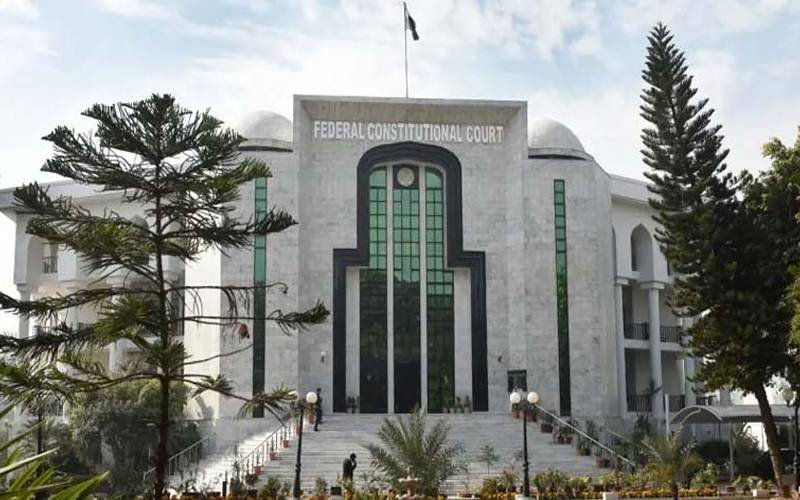
Published: July 18, 2026 - 11:15 AM
FCC Issues Landmark Guidelines to Strengthen Protection of Minors’ Property and Inheritance Rights
وفاقی آ ئینی عدالت نے نابالغوں کے جائیداد اور وراثتی حقوق کے تحفظ کیلئے اہم ہدایات جاری کر دیں
▫️Federal Constitutional Court overturns Lahore High Court ruling in Bahawalnagar property dispute, orders fresh trial and stresses stronger safeguards for women, minors and other vulnerable litigants
Islamabad | ReNews PakistanThe Federal Constitutional Court (FCC) has laid down comprehensive legal guidelines aimed at strengthening the protection of minors' property and inheritance rights, directing civil and revenue courts across Pa...

























