

Islamabad | ReNews Pakistan
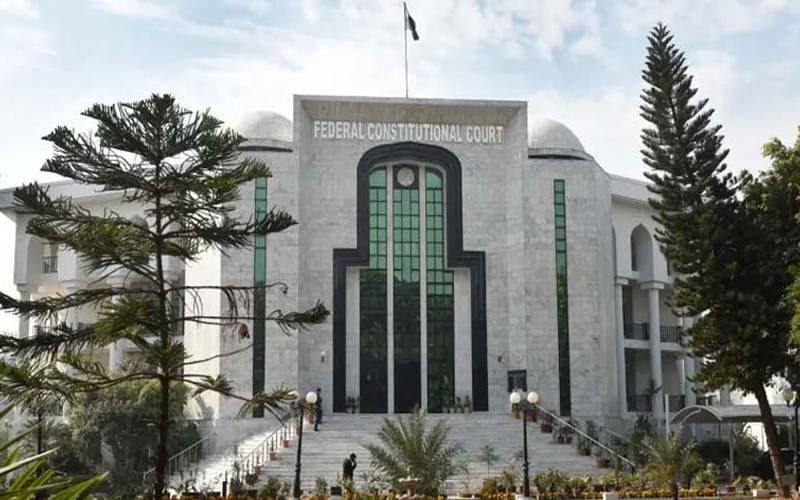
The Federal Constitutional Court has removed major legal obstacles that had delayed the Nai Gaj Dam project for several years, setting aside Sindh High Court rulings that permitted the contractor to seek price escalation beyond the terms of the original contract.
In a detailed 21 page judgment issued on Monday, a two-member bench comprising Chief Justice Aminuddin Khan and Justice Ali Baqar Najafi directed the contractor, NEIE/SMADB/LILLEY/RMS Karachi, to complete the remaining work in accordance with the original agreement, the arbitral award and the memorandum of understanding signed on September 21, 2021.
The court ruled that the contractor would not be entitled to claim any additional price escalation, compensation or financial benefit beyond the amounts and terms already settled between the parties.
To prevent further disruption to the strategically important project, the court also barred fresh judicial intervention until the dam was completed. Any dispute arising during the remaining construction period must be resolved through the dispute resolution mechanism provided in the contract.
The judgment directed the Water and Power Development Authority to decide within 15 days on any formal application submitted by the contractor seeking permission to resume work.
WAPDA may grant a reasonable extension based on the volume and nature of the outstanding construction. However, the court made it clear that any extension of time would not create a right to additional payments, price adjustments, damages or compensation.
The bench further ruled that, should the contractor decline or fail to restart work under the agreed contractual conditions, WAPDA would be authorized to terminate the arrangement and award the remaining work through a fresh tender.
In such a situation, the remaining construction may be awarded on a risk-and-cost basis in accordance with the applicable law, allowing WAPDA to recover additional expenses resulting from the contractor’s failure to fulfil its obligations.
Located on the Gaj River in Sindh’s Dadu district, the Nai Gaj Dam has been designed as a multipurpose water and agricultural development project. It is expected to provide irrigation water to the rain-fed regions of Kachho and Kohistan, where agricultural activity remains heavily dependent on seasonal rainfall.
The project is also intended to restore freshwater flows into Manchar Lake, support environmental rehabilitation and improve water conservation in the surrounding region.
Once completed, the dam is expected to generate approximately 4.2 megawatts of hydropower and bring nearly 28,800 acres of land under cultivation, creating significant opportunities for agricultural production and rural economic development.
The project was awarded in 2012 at an estimated cost of Rs38.79 billion. However, contractual disputes, litigation and disagreements over price escalation resulted in prolonged delays and prevented the completion of the remaining construction work.
In its judgment, the Federal Constitutional Court emphasized that the Nai Gaj Dam is not merely a contractual undertaking but a nationally significant public infrastructure project linked to irrigation, agriculture, water security, hydropower generation and environmental restoration.
The ruling is expected to provide a clear legal and contractual framework for the resumption of construction while limiting the possibility of further litigation and financial claims that could delay the project again.
Published: July 14, 2026 - 10:50 AM
FCC Removes Key Legal Barriers to Completion of Nai Gaj Dam
وفاقی آئینی عدالت نے نئی گاج ڈیم کی تکمیل میں حائل اہم قانونی رکاوٹیں دور کر دیں
▫️Contractor ordered to resume and complete remaining construction under the original agreement, arbitral award and 2021 memorandum of understanding
Islamabad | ReNews Pakistan The Federal Constitutional Court has removed major legal obstacles that had delayed the Nai Gaj Dam project for several years, setting aside Sindh High Court rulings that permitted the contractor to seek price...

























