Pakistan’s first water-sensitive sponge park has been inaugurated at Jamali Park in Federal B Area, Block 8, Karachi, introducing an innovative urban development model designed to conserve rainwater, reduce surface runoff and mitigate the risk of urban flooding.
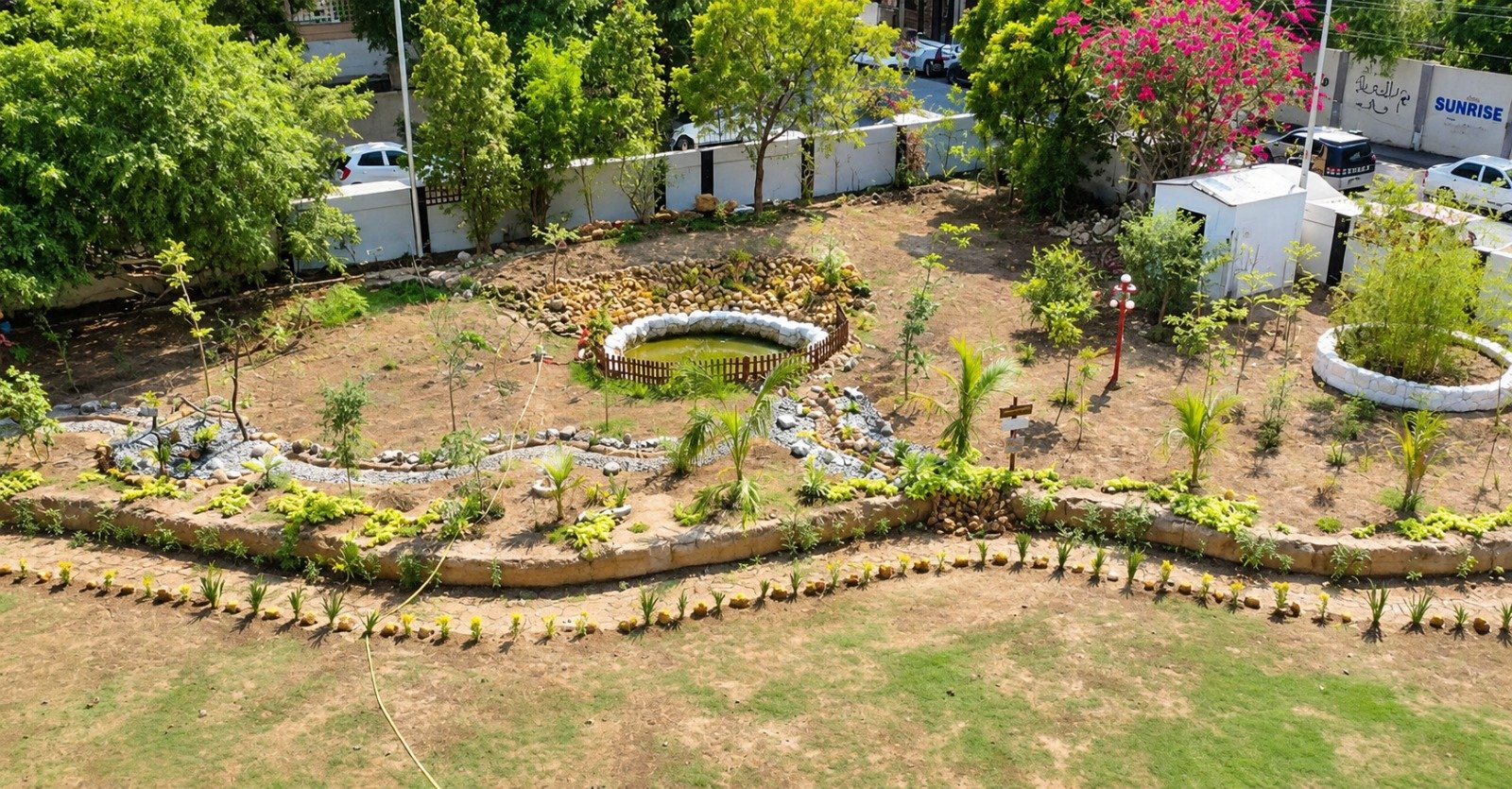
Developed through a collaboration between World Wide Fund for Nature-Pakistan (WWF-P), Gulberg Town Municipal Corporation and GSK (GlaxoSmithKline), the project has the capacity to temporarily retain up to100,000 gallons of rainwater during monsoon rainfall events. Spread over approximately one acre, the redesigned public park incorporates nature-based water management infrastructure intended to improve rainwater infiltration and groundwater recharge.
Experts believe the initiative offers a practical solution to Karachi's growing urban drainage challenges, where extensive concrete surfaces and paved roads prevent rainwater from naturally entering the ground, causing significant quantities of water to flow into drainage systems and eventually into the sea.
The park features specially designed rain gardens, bioswales and permeable pathways that enable it to absorb and temporarily store rainwater before allowing it to gradually infiltrate the soil. Rain gardens collect runoff in shallow, planted depressions, while bioswales help slow and filter stormwater through vegetated channels. Permeable walkways allow water to pass through their surfaces rather than accumulating on paved areas, helping reduce pressure on conventional drainage infrastructure during heavy rainfall. Beyond stormwater management, the park includes native tree plantations, a dedicated biodiversity zone, a pollinator habitat and a community learning area designed to promote environmental awareness and provide visitors with opportunities to understand sustainable water conservation practices. These improvements are also expected to support urban wildlife, increase green cover, reduce the urban heat island effect and improve the surrounding area's microclimate.
Speaking at the inauguration, Anum Farhan, Senior Programme Adviser for Asia, Conservation, Advocacy and Policy at WWF-UK, described the transformation of Jamali Park as an example of how local governments can translate climate commitments into practical improvements in public spaces. Naeem Ashraf Raja, Director of the Biodiversity Programme at the Ministry of Climate Change and Environmental Coordination, welcomed the initiative for its contribution to urban biodiversity and its alignment with the objectives of the Global Biodiversity Framework. Sohail Ali Naqvi, Director of the Freshwater Programme at WWF-Pakistan, emphasized that the project demonstrates how nature-based infrastructure can support groundwater recharge, conserve urban vegetation and strengthen sustainable water management. He noted that similar interventions could be replicated and expanded across Karachi and other Pakistani cities to address the increasing environmental pressures associated with rapid urbanization.
Gulberg Town Chairman Nusratullah announced plans to introduce similar environmentally sustainable designs in other public parks across the town, indicating the potential for wider adoption of sponge park infrastructure in Karachi. The inauguration ceremony was attended by representatives of government institutions, academia, civil society, corporate organizations and local communities. Environmental experts believe the Jamali Park project provides a replicable model for municipalities seeking to integrate stormwater management into urban planning, public park development and rehabilitation programmes. By combining recreational facilities with rainwater conservation, groundwater recharge and biodiversity protection, the initiative demonstrates how existing urban spaces can be redesigned to improve climate resilience, reduce localized flooding risks and support more sustainable development in Pakistan's rapidly expanding cities.
Published: November 14, 2026 - 10:01 AM
Pakistan’s First Sponge Park Opens in Karachi to Conserve Rainwater and Reduce Urban Flooding
کراچی میں پاکستان کے پہلے سفنج پارک کا افتتاح، بارش کا پانی محفوظ کرنے اور شہری سیلاب کے خطرات کم کرنے کا منصوبہ
▫️ WWF-Pakistan, Gulberg Town Municipal Corporation and GSK introduce climate-resilient urban green space to improve groundwater recharge, biodiversity and sustainable water management
Pakistan’s first water-sensitive sponge park has been inaugurated at Jamali Park in Federal B Area, Block 8, Karachi, introducing an innovative urban development model designed to conserve rainwater, reduce surface runoff and mitigate th...