Canada | ReNews Pakistan
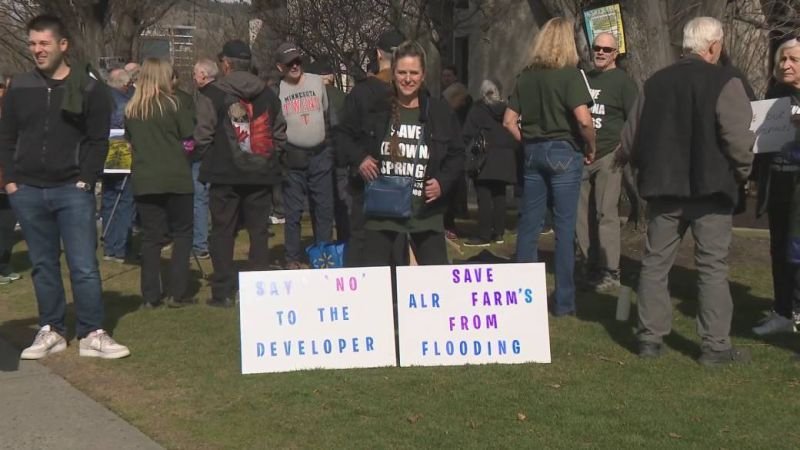
A heated debate emerged in Kelowna as residents, farmers, and business leaders gathered outside city hall ahead of a critical public hearing on a proposed land swap between the City of Kelowna and Denciti Development Corp. The plan involves exchanging city-owned industrial land for portions of the Kelowna Springs Golf Course on Penno Road.
Under the agreement, the city would acquire 60 acres of land from Denciti, allowing the preservation of a nine-hole golf course, while Denciti would receive nine acres of city-owned industrial land on Hollywood Road North. The company would retain 46 adjacent acres for potential industrial rezoning.
Supporters of the swap, including business leaders and members of the Pickleball Kelowna Club, emphasized the economic benefits. Developer Volodya Gusak highlighted the creation of roughly 400 construction jobs over the next decade, and an estimated 700 full-time industrial and manufacturing jobs. He noted that property tax revenue could rise from $33,000 to $3.2 million upon completion of the development.
“The proposal ensures long-term economic resilience, balancing construction, tourism, and external shocks,” said Simon Mills, a local business leader backing the plan. The deal also includes the construction of a year-round indoor pickleball facility, seen as a community benefit.
However, critics raised environmental and social concerns. Residents like Ted O’Sullivan and Arielle Kersey warned about the risk of flooding and drought due to rezoning land with natural groundwater springs. Local farmers added that converting wetlands to industrial use could damage Mill Creek, sensitive species, and nearby farmland.
City staff recommended approval of the land swap, but opponents urged the council to reconsider, citing both ecological risks and community impact. The public hearing reflects growing tension between development ambitions and environmental preservation in Kelowna.
Published: March 11, 2026 - 3:21 PM
Kelowna Land Swap Sparks Debate Over Golf Course Future
کیلونا میں زمین کی تبادلے کی تجویز پر تنازعہ، گلف کورس کا مستقبل داؤ پر
▫️ Public Hearing Highlights Supporters and Opponents of Proposed Land Exchange. ▫️ Environmental Concerns and Economic Benefits Take Center Stage
Canada | ReNews Pakistan A heated debate emerged in Kelowna as residents, farmers, and business leaders gathered outside city hall ahead of a critical public hearing on a proposed land swap between the City of Kelowna and Denciti Deve...