

Lahore | ReNews Pakistan
The Asian Development Bank (ADB) loan review mission has reviewed progress on ongoing and proposed urban development projects in Punjab, stressing the need to accelerate implementation of projects related to water supply, drainage, sewerage, solid waste management and other essential municipal services while improving coordination among relevant institutions.
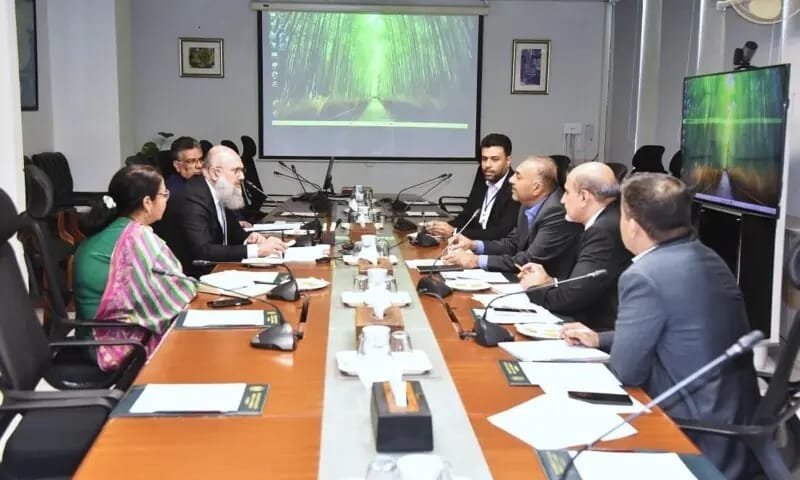
The ADB loan review mission visited the Punjab Housing, Urban Development and Public Health Engineering Department, where a meeting was held on the directions of Housing Department Secretary Noor-ul-Amin Mengal. The meeting was chaired by Special Secretary Waqar Azim, while the ADB review mission was led by Head of the Project Implementation Unit (PIU) Jin Min Nahm.
The meeting reviewed the status of ADB-assisted urban development projects in various cities of Punjab, along with proposed projects, approval processes, development activities and issues affecting implementation. The participants discussed the progress of projects, timely approvals, effective execution and improved coordination among government departments.
One of the key ADB-supported urban development initiatives in Punjab is the Developing Resilient Environments and Advancing Municipal Services in Punjab project, which focuses on making urban services and infrastructure in Rawalpindi and Bahawalpur more sustainable, inclusive and resilient to climate change. The ADB has provided $180 million in concessional financing for the project, while its total cost stands at $225 million.
According to the ADB, the project aims to expand and modernize the urban water supply system in Rawalpindi and improve solid waste collection, treatment and disposal systems in Bahawalpur. Around 1.5 million people in the two rapidly growing cities are expected to benefit from the initiative.
The project also focuses on strengthening institutional capacity and improving the quality, coverage, efficiency and financial sustainability of municipal services. The objective is not limited to developing physical infrastructure but also includes strengthening the administrative and financial capacity of institutions responsible for delivering urban services.
ADB data shows that as of August 21, 2026, contracts worth approximately $131.37 million had been awarded under the project, representing around 73 percent of the ADB loan amount, while approximately $36.74 million, or 20 percent, had been disbursed. The project is scheduled for completion on June 30, 2029.
In Rawalpindi, ADB-supported water infrastructure initiatives include a water supply system linked to the Chahan Dam, pumping stations, water works, ground storage tanks and overhead reservoirs. In July this year, an agreement was also signed for the installation of a 12.192-megawatt solar photovoltaic plant for the sustainable and resilient water supply project, aimed at improving the sustainability of the water supply system and reducing energy-related costs.
ADB support is also being extended to urban service improvement initiatives in other cities of Punjab. Under the Punjab Intermediate Cities Improvement Program, attention has been given to urban infrastructure, water supply, sewerage, urban flood protection, urban planning and institutional capacity for municipal services in cities including Sahiwal and Sialkot.
Meanwhile, the Punjab government has also launched the Punjab Municipal Services Programme to rehabilitate and improve municipal services across the province. The programme includes rehabilitation of dysfunctional water supply and sewerage schemes, provision of solid waste and sewerage machinery, installation of streetlights, replacement of manhole covers and other essential municipal works.
Experts say that with residential and commercial construction expanding rapidly across Punjab’s cities, water supply, sewerage, drainage and solid waste management infrastructure have become central components of urban planning. The need for reliable water supplies, wastewater treatment, stormwater drainage and environmental safeguards is becoming increasingly important, particularly with the expansion of new housing schemes and urban settlements.
The ADB review mission is also significant in the broader context of Punjab’s interconnected urban development projects. Investment in water supply, sewerage, solid waste management, drainage and municipal infrastructure not only improves urban services but also creates the basic infrastructure required for future residential and commercial development.
The meeting stressed the need for relevant institutions to maintain effective coordination throughout the approval and implementation stages, remove development bottlenecks in a timely manner and advance ADB-supported projects in line with their prescribed targets. The measures are expected to help improve the quality, accessibility and sustainability of urban services across Punjab.
Published: September 9, 2026 - 4:01 PM
Asian Development Bank Reviews Urban Development and Water Infrastructure in Punjab
پنجاب میں شہری ترقی اور پانی کے بنیادی ڈھانچے پر ایشیائی ترقیاتی بینک کا جائزہ
▫️ADB loan review mission visits Housing and Urban Development Department, reviews ongoing and proposed projects, approvals and implementation issues across Punjab
Lahore | ReNews PakistanThe Asian Development Bank (ADB) loan review mission has reviewed progress on ongoing and proposed urban development projects in Punjab, stressing the need to accelerate implementation of projects related to water...
































