Islamabad | ReNews Pakistan
The government’s newly launched housing mortgage finance scheme has received a broad welcome from business leaders and industry stakeholders, who see it as a significant move toward promoting homeownership in Pakistan. However, they have also called for key policy refinements, particularly an increase in the loan ceiling to PKR 30 million to better match current construction costs.
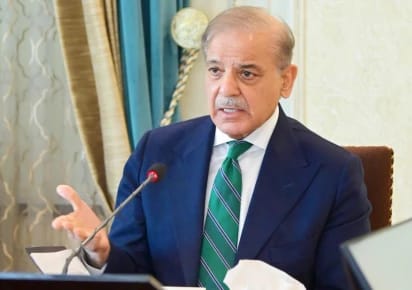
Former caretaker federal minister and Chairman of the Economic Policy and Business Development think tank, Gohar Ejaz, praised Prime Minister Shehbaz Sharif for introducing the initiative, describing it as a step in the right direction to support middle-class families seeking to own homes. He noted that mortgage financing could play a vital role in stimulating economic activity by encouraging participation from the private housing and construction sectors.
Ejaz termed mortgage financing as a crucial support mechanism for middle income groups, enabling them to achieve homeownership, often a lifelong aspiration. However, he emphasized that the existing financing cap of PKR 10 million is insufficient, even for constructing a modest four marla house in major urban centres where the scheme is expected to operate.
He urged policymakers, particularly the State Bank of Pakistan, to revisit the framework and adopt a more inclusive approach. He also recommended allowing private housing finance companies, regulated by the Securities and Exchange Commission of Pakistan, to participate in the scheme to expand its outreach.
According to Ejaz, reliance solely on large commercial banks could limit access for small borrowers, thereby restricting the scheme’s effectiveness. He proposed raising the financing limit to PKR 30 million and formally integrating private developers into the initiative to improve accessibility and delivery of housing solutions for middle and lower middle income groups.
Meanwhile, SM Tanveer, Patron in Chief of the Federation of Pakistan Chambers of Commerce and Industry, also welcomed the initiative but called for reducing the markup rate from 5 percent to zero for low and middle income segments to make financing more affordable.
Industry stakeholders pointed out that Pakistan faces a substantial housing shortage, compounded by one of the lowest mortgage penetration rates in the region.
They noted that a robust housing finance system, supported by private sector participation, could unlock widespread economic activity, given the construction sector’s linkages with over 40 allied industries.
Experts further highlighted that expanding mortgage access could help formalise the real estate sector, improve documentation, and boost tax revenues. However, they stressed the importance of simplifying procedures, digitising land records, and strengthening legal protections for both lenders and borrowers to ensure broader adoption.
While the initiative has been largely welcomed, stakeholders underscored that its success will depend on timely reforms, including increasing the loan cap, reducing borrowing costs, and expanding participation. They maintained that with the right adjustments, the scheme has the potential to become a transformative policy for Pakistan’s housing sector.
Published: April 29, 2026 - 9:45 AM
Government Launches Housing Mortgage Scheme; Business Leaders Welcome Move, Urge Policy Adjustments in Line With Rising Construction Costs
حکومت نے ہاؤسنگ مارگیج سکیم متعارف کرادی، کاروباری رہنماؤں کا خیر مقدم ، بڑھتی تعمیراتی لاگت کے مطابق پالیسی میں تبدیلی کی ضرورت پر زور
▫️Experts call for increasing loan limit to Rs 30 million, propose lower markup rates and regulatory reforms
Islamabad | ReNews Pakistan The government’s newly launched housing mortgage finance scheme has received a broad welcome from business leaders and industry stakeholders, who see it as a significant move toward promoting homeownership ...