

Islamabad | ReNews Pakistan
The Overseas Investors Chamber of Commerce and Industry (OICCI) has called for greater investment freedom and a more predictable business environment in Pakistan, with reforms in sectors including real estate identified as part of a broader strategy to attract private and foreign capital.
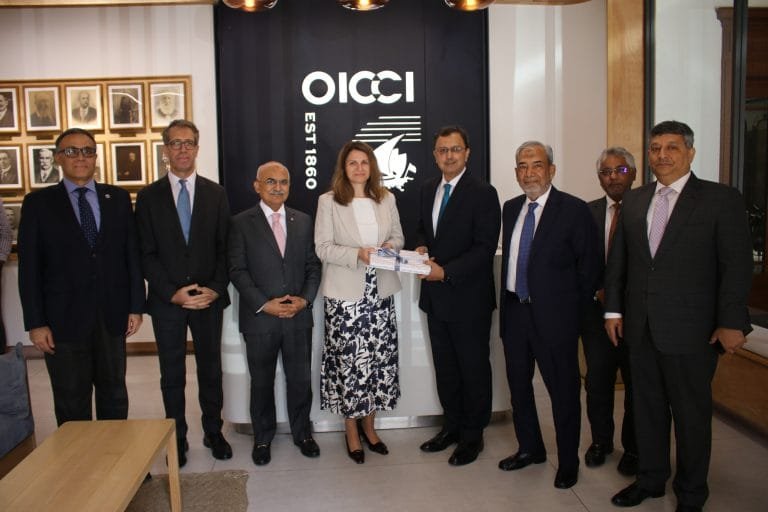
The demands were raised during a meeting between senior OICCI leadership, representatives of multinational member companies and a visiting International Monetary Fund (IMF) delegation comprising IMF Advisor Iva Petrova and Resident Representative Mahir Binici.
The Chamber expressed concern over the decline in foreign direct investment (FDI) despite improvements in Pakistan’s external position and sovereign credit profile. It said net FDI fell by around 32 percent to $1.7 billion in FY2026, highlighting the need for stronger measures to restore investor confidence and stimulate fresh investment.
OICCI called for lower regulatory and compliance costs, stronger investor protection and clearer coordination between federal and provincial authorities. It emphasized that greater policy consistency and transparency are essential for investors considering long-term commitments in Pakistan.
The Chamber also highlighted the need to broaden taxation rather than repeatedly increasing the burden on documented businesses. It specifically identified agriculture, real estate, SMEs and retail among sectors requiring greater inclusion in the tax net.
For the property sector, improved regulatory clarity, predictable taxation and stronger investor protection could form part of the wider investment reforms sought by overseas investors. OICCI's position comes as Pakistan seeks to increase private sector participation and attract additional domestic and foreign capital.
The Chamber also urged domestic businesses to take the lead in reinvesting in Pakistan, noting that foreign investors closely observe the confidence demonstrated by local companies before making investment decisions.
Energy Security, Exports and SOE Reform Also on Investment Agenda
Amid higher oil prices linked to the Middle East conflict, OICCI called for immediate energy-conservation measures and a medium term strategy to strengthen Pakistan’s energy self sufficiency.
The Chamber sought a coherent energy security policy covering electricity, gas and petroleum, citing high regional energy costs, circular debt and the need for greater investment in refining. It also pointed to opportunities for regional energy cooperation.
On the external sector, OICCI maintained that Pakistan cannot sustain higher economic growth without expanding its capacity to generate foreign exchange.
It called for greater competitiveness and productivity, stronger export-oriented industries, deeper trade and investment links with key international markets and expanded regional trade where commercially viable.
The Chamber also urged faster reform of state owned enterprises (SOEs) and credible privatization where continued state ownership lacks a compelling policy rationale.
It called for clearer separation of the state's roles as policymaker, regulator, facilitator and commercial operator, arguing that this would create greater space for private sector investment and competition.
OICCI's proposals ultimately call for a broader shift toward a more investment friendly economic framework in which real estate, industry, exports and other private-sector segments can contribute more effectively to economic growth and capital formation.
Published: September 26, 2026 - 9:01 AM
Overseas Investors Seek Greater Investment Freedom as OICCI Pushes Real Estate and Private Sector Reforms
او آئی سی سی آئی کا رئیل اسٹیٹ اور نجی شعبے میں اصلاحات پر زور، غیر ملکی سرمایہ کاروں نے پاکستان میں سرمایہ کاری کیلئے زیادہ آزادی مانگ لی
▫️ Chamber urges Pakistan to reduce regulatory barriers, strengthen investor protection and bring greater clarity to real estate and other under taxed sectors
Islamabad | ReNews PakistanThe Overseas Investors Chamber of Commerce and Industry (OICCI) has called for greater investment freedom and a more predictable business environment in Pakistan, with reforms in sectors including real estate i...
































