Islamabad | ReNews Pakistan
Pakistan and the Asian Development Bank (ADB) have agreed to strengthen their development partnership, with particular emphasis on advancing the Main Line 1 (ML 1) Railway Upgradation Project and expanding cooperation across key development sectors.
The ADB has reaffirmed its commitment to accelerating its institutional processes related to ML 1, while Pakistan has called for the early completion of the project's feasibility study and the commencement of procurement procedures.
Separately, Pakistan and the World Bank have renewed their commitment to accelerating the implementation of the country's 10-year Country Partnership Framework (CPF) and improving the delivery of measurable development outcomes.
Federal Minister for Economic Affairs Ahad Khan Cheema held separate meetings with ADB President Masato Kanda and World Bank Managing Director of Operations Anna Bjerde in Bangkok, Thailand, on October 15, on the sidelines of the 2026 World Bank Group and International Monetary Fund Annual Meetings.
The discussions focused on Pakistan's development priorities, international financing, infrastructure improvement, private-sector investment and the timely implementation of major projects.
During his meeting with ADB President Masato Kanda, the minister discussed opportunities for strengthening cooperation under the bank's Country Partnership Strategy (CPS) 2026 to 2030.
He welcomed the approval of the new strategy, describing it as an important framework for making development cooperation more strategic and focused on measurable outcomes.
The ML 1 Railway Upgradation Project featured prominently in the discussions. Cheema appreciated the ADB's leading role in advancing the project and stressed the need to complete the feasibility study and begin the procurement process at the earliest possible stage.
ADB President Masato Kanda reaffirmed the bank's continued engagement with Pakistan and assured support for fast-tracking its institutional processes concerning ML 1.
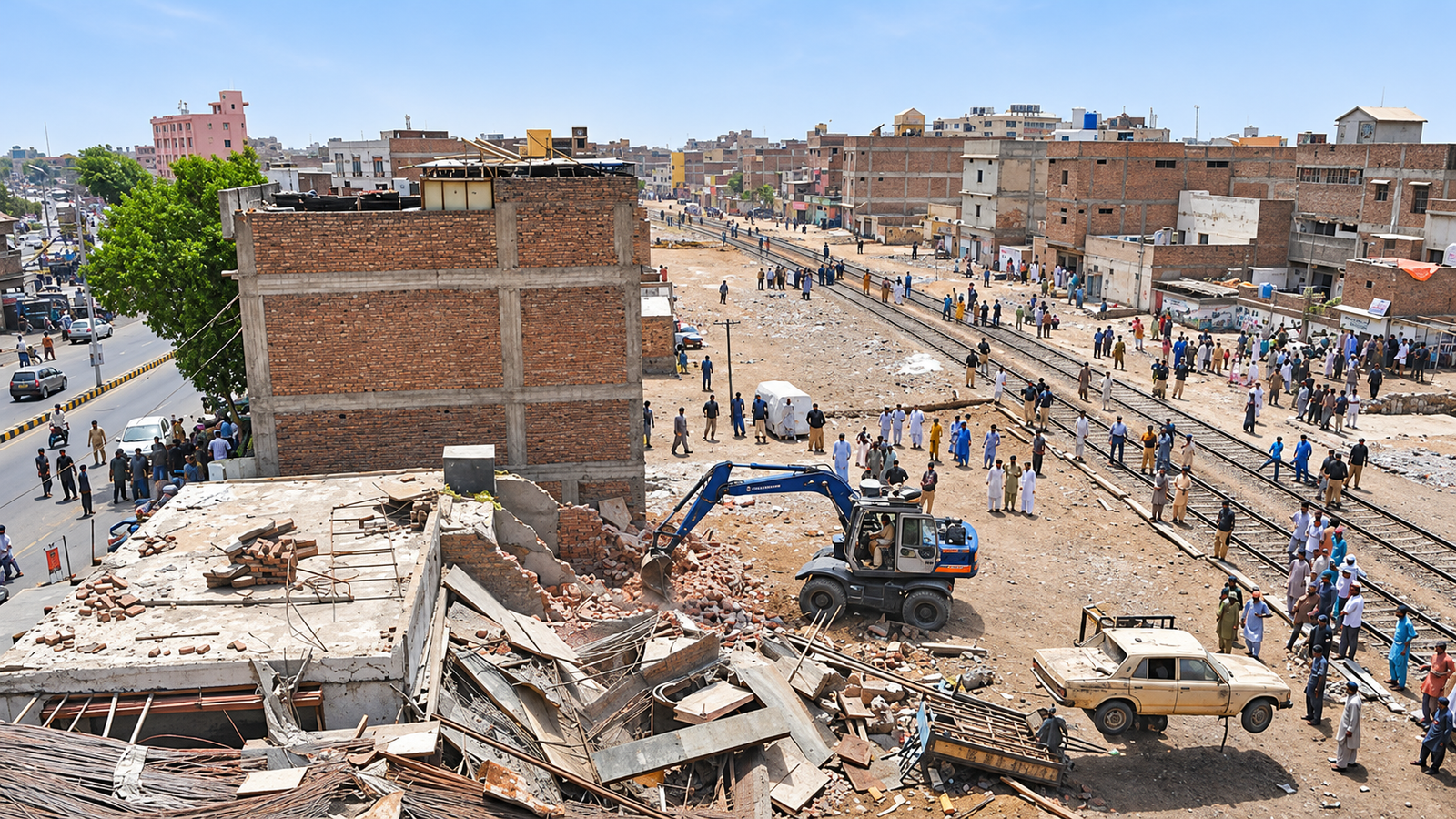
The ML-1 project is intended to modernise Pakistan's principal railway corridor between Karachi and Peshawar, improve passenger and freight services, strengthen railway infrastructure and enhance transport connectivity between major commercial and industrial centres.
Beyond railway modernisation, the proposed upgrade is considered important for improving logistics, reducing transport constraints and supporting the movement of industrial and commercial goods across the country.
The project's potential economic benefits could extend to logistics facilities, industrial infrastructure, freight handling and commercial development connected with the railway network. However, these outcomes will depend on financing arrangements, final project approvals and implementation.
The minister also emphasised the importance of private-sector-led economic growth and requested an expansion of the ADB's non-sovereign operations in Pakistan.
He called for a stronger permanent operational presence of the bank in the country to facilitate investment transactions and develop a pipeline of public-private partnership projects.
The Pakistani delegation also highlighted the need for affordable development financing and greater flexibility in the ADB's lending framework to support the country's development priorities.
Both sides agreed to work closely to accelerate project implementation and achieve sustainable development outcomes.
In a separate meeting, Federal Minister Ahad Khan Cheema and World Bank Managing Director of Operations Anna Bjerde discussed implementation of Pakistan's Country Partnership Framework for 2026 ,2035.
The 10 year framework is designed to support long term improvements in human development, climate resilience, clean energy, water and sanitation, public resource management and productive private investment.
Announced in January 2025, the framework envisages approximately $20 billion in planned World Bank financing over the decade, with an emphasis on delivering sustained development outcomes rather than relying on fragmented, short-term interventions.
During the meeting, Cheema reiterated the government's commitment to translating the framework's priorities into practical development results.
He called for enhanced technical and financial assistance, integrated development programmes and digital monitoring systems to track project performance and measure impact.
The minister stressed the need for stronger project preparation through dedicated Project Readiness Facilities, predictable financing arrangements and improved implementation support to accelerate project approvals and execution.
He also highlighted government efforts to address administrative and institutional bottlenecks in project planning and implementation.
The discussions covered cooperation in human development, climate resilience, water and sanitation, economic transformation and sectors offering substantial employment opportunities.