ReNews Pakistan
← Back to home

Global Real Estate News

404 news articles

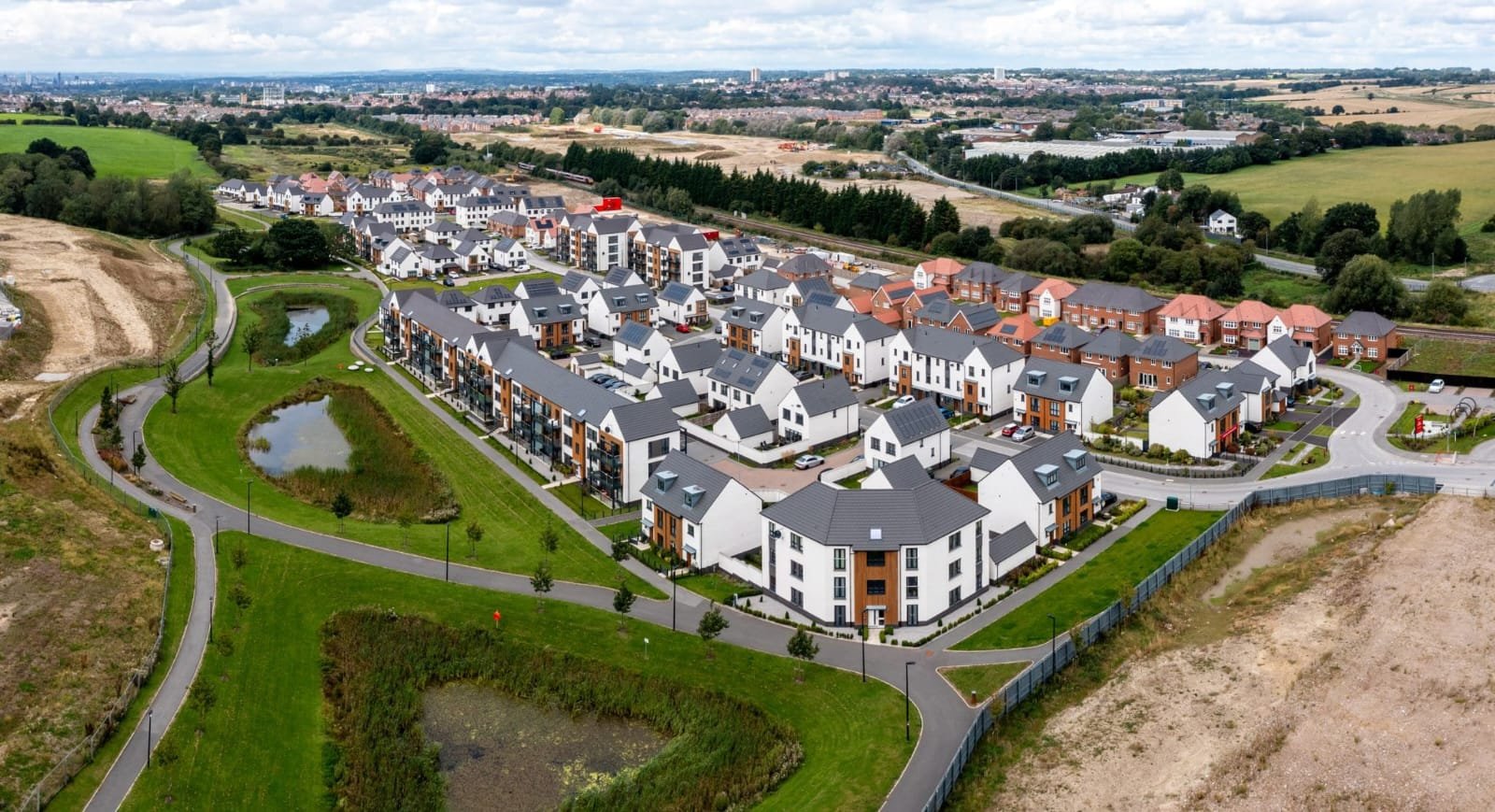
Britain’s Major Cities Missing 1.2 Million Homes Around Inner City Train Stations

Britain’s Major Cities Missing 1.2 Million Homes Around Inner City Train Stations

▫️Think tank urges transfer of Network Rail land to metro mayors and faster planning approvals to unlock housing, strengthen public transport and boost urban economies

London | ReNews International Desk NewsBritain’s major cities could accommodate at least 1.

London | ReNews International Desk News
Britain’s major cities could accommodate at least 1.2 million additional homes around inner city train and tram stations if they matched the housing densities achieved by comparable cities in France and Japan, according to a major new study by the independent think tank Centre for Cities.
The report, “Mind the density gap: How Britain’s big cities can build more homes near train stations,” published on September 2, 2026, examines housing density and mass-transit infrastructure across Britain’s 12 largest cities and compares them with international peers. It concludes that Britain is failing to make full use of land around existing transport infrastructure, contributing significantly to the country’s housing shortage. It is estimated that at least 2.4 million homes are missing around stations across the 12 largest British cities when both inner city and suburban areas are compared with French and Japanese peers. About 1.2 million of that gap is concentrated in innerbcity urban cores.
The largest potential increase is in London, where matching international densities could create more than 500,000 additional homes around inner-city stations. Glasgow has the next-largest potential, with around 183,000 homes, followed by Manchester with approximately 134,000.
The research highlights an unusual feature of Britain’s urban development: housing density does not consistently increase around major public-transport stations. In France and Japan, areas close to mass-transit stations tend to be significantly denser because residents benefit from convenient access to employment, education, services and city centres. In Britain, however, station areas are often no denser than areas further away.
In some cities, the situation is even reversed. Liverpool, Sheffield and Newcastle have lower average residential densities around inner city stations than in parts of the urban core farther from stations, the report found.
The development gap has also persisted over time. Between 2011 and 2021, the average British big city built around 50% fewer homes near stations than comparable cities in France and Japan. Centre for Cities says around 30% of stations in Britain’s major cities experienced little or no development during the period.
Manchester has emerged as one of Britain’s stronger performers. The city added around 30,000 homes around its inner city stations between 2011 and 2021, including developments around Metrolink tram stops. London added approximately 300,000 homes during the same period. Glasgow, Birmingham and Liverpool have also made progress, although their overall density remains below that of international peers.
The study argues that Britain does not necessarily need to build entirely new transport networks to unlock a substantial number of homes. Densifying areas around stations that already exist could deliver nearly 1.3 million additional homes in the urban cores of London and other major cities, making better use of existing infrastructure.
The findings come as the UK government is already attempting to encourage housebuilding around transport hubs. Recent changes to England’s planning framework have promoted development within walking distance of well-connected train, tram and Underground stations, including certain green belt locations subject to requirements for affordable housing, infrastructure and green space.
Centre for Cities, however, says planning reform alone will not be sufficient. It is calling for faster transfer of land around railway stations from Network Rail to elected metro mayors and city regions, allowing local authorities to coordinate housing, transport and regeneration more effectively.
The think tank also recommends greater use of Mayoral Development Corporations to accelerate regeneration around stations and Mayoral Development Orders to reduce delays for developments that comply with established planning rules.
According to the research, increasing housing density around stations could reduce Britain’s housing shortage by roughly 25%. The benefits would extend beyond housing: more homes close to transport could reduce commuting times, expand local labour markets, support struggling high streets and improve economic productivity.
The report also identifies an even larger opportunity outside city centres. If housing density around stations in the outer suburbs of major British cities were brought closer to French and Japanese levels, another 1.1 million homes could potentially be accommodated. This would take the overall station-related density gap to more than two million homes.
The research therefore places transport oriented development at the centre of Britain’s housing challenge, arguing that the country can increase housing supply without relying exclusively on outward urban expansion. The key issue, it says, is making better use of land that already has access to rail and mass-transit networks.
Centre for Cities policy and research director Anthony Breach said building more homes around existing stations is among the most effective ways to strengthen city economies, but warned that planning delays, fragmented land ownership and bureaucracy could prevent the government from achieving its ambitions.
The findings are particularly significant for Britain’s property market because they suggest that station led urban development could become a major source of future residential supply, while simultaneously increasing demand for well connected urban neighbourhoods. If implemented at scale, the approach could reshape development patterns across London, Manchester, Birmingham, Glasgow, Liverpool, Leeds and other major cities.
Dubai Court Orders Property Seller to Pay Dh460,000 Over Failed Dubai Hills Ownership Transfer

Dubai Court Orders Property Seller to Pay Dh460,000 Over Failed Dubai Hills Ownership Transfer

▫️ Buyer awarded full deposit refund and equal compensation, with 5% annual interest payable until settlement

The Dubai Court of First Instance has ordered a property seller to pay Dh460,000 after failing to complete the ownership transfer of a Dubai Hills property valued at Dh700,000.

Vietnam Approves New Real Estate Business Law to Strengthen Property Market Regulations

Vietnam Approves New Real Estate Business Law to Strengthen Property Market Regulations

▫️ National Assembly passes amended legislation with 471 votes, introducing stricter rules for developers, property transactions and financial transparency

Vietnam’s National Assembly has approved an amended Real Estate Business Law aimed at improving transparency, strengthening investor accountability and protecting property buyers.

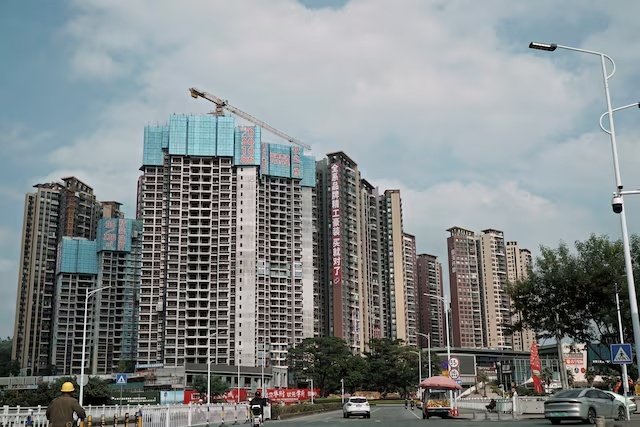
China’s Property Market Expected to Remain Under Pressure as Home Prices Face Further Declines Through 2027

China’s Property Market Expected to Remain Under Pressure as Home Prices Face Further Declines Through 2027

▫️ Housing prices forecast to fall 2.8% in 2026 and another 0.5% in 2027 amid excess inventory and weak household income growth

Beijing | ReNews International CorrespondentChina’s housing market is expected to remain under pressure through 2027 as falling property prices, excess housing inventory and weak household income expectations continue to delay recovery.

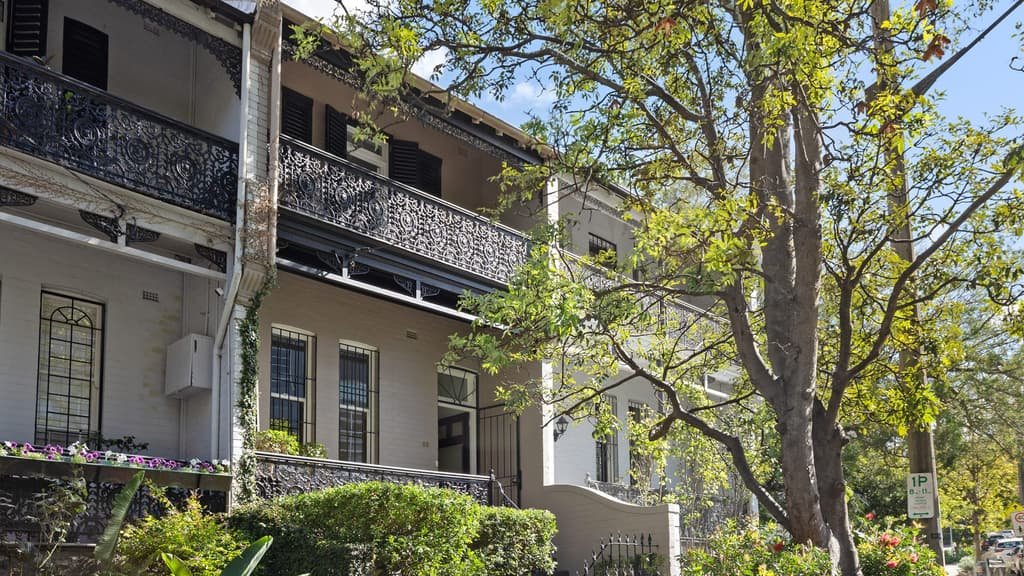
Sydney Property Auction Defies Market Slowdown as Paddington Home Sells for $3.31 Million

Sydney Property Auction Defies Market Slowdown as Paddington Home Sells for $3.31 Million

▫️ Four bedrooms Victorian terrace attracts 11 registered bidders and sells $310,000 above reserve despite falling property prices and high mortgage rates

A Victorian terrace with four bedrooms in Sydney’s Paddington suburb has sold for AUD 3.

US Housing Market Recovery Hinges on Mortgage Rate Relief, Survey Finds

US Housing Market Recovery Hinges on Mortgage Rate Relief, Survey Finds

▫️ Nearly two-thirds of surveyed agents say 30-year mortgage rates must fall below 6% to meaningfully revive buyer demand, as affordability pressures delay home searches and home listings

A sustained recovery in the US housing market will depend heavily on mortgage rates easing, according to a survey of real estate agents who say high borrowing costs are discouraging both buyers and sellers.

Hong Kong Luxury Home Prices Rise 5.3% as Mainland Buyers Sustain Demand

Hong Kong Luxury Home Prices Rise 5.3% as Mainland Buyers Sustain Demand

▫️ Mainland Chinese buyers accounted for 72% of primary-market and 68% of secondary-market luxury deals in Q3

Hong Kong’s luxury residential market recorded higher prices and a sharp increase in ultra-luxury transactions in the first nine months of 2026, with mainland Chinese buyers continuing to support demand, according to property consultancy...

Riyadh: Investment in Public and Private Housing Projects on the Rise

Riyadh: Investment in Public and Private Housing Projects on the Rise

▫️ More than 15,000 residential plots made available through the Sakani platform in three months, says Saudi Ministry of Municipalities and Housing

Saudi Arabia’s real estate market is drawing investment amid global geopolitical and economic uncertainty, supported by strong domestic demand and efforts to increase housing supply.

New Zealand Housing Market Enters Holding Pattern as Sellers Wait

New Zealand Housing Market Enters Holding Pattern as Sellers Wait

▫️ Average asking prices declined 2.7%, and auction listings fell to their lowest October share in seven years

New Zealand’s housing market stalled in October as uncertainty prompted some sellers to delay listing their properties.

Manchester | GMCA Signs Agreement with National Housing Bank to Unlock Up to £500m

Manchester | GMCA Signs Agreement with National Housing Bank to Unlock Up to £500m

▫️ Funding could support new homes and mixed-use regeneration projects across Greater Manchester, subject to the bank’s due diligence and approval process

The Greater Manchester Combined Authority (GMCA) has signed a framework agreement with Homes England’s National Housing Bank (NHB) that could help unlock up to £500 million for housing and regeneration projects across the region.

Britain’s Major Cities Missing 1.2 Million Homes Around Inner City Train Stations

Britain’s Major Cities Missing 1.2 Million Homes Around Inner City Train Stations

▫️Think tank urges transfer of Network Rail land to metro mayors and faster planning approvals to unlock housing, strengthen public transport and boost urban economies

London | ReNews International Desk NewsBritain’s major cities could accommodate at least 1.

London | ReNews International Desk News
Britain’s major cities could accommodate at least 1.2 million additional homes around inner city train and tram stations if they matched the housing densities achieved by comparable cities in France and Japan, according to a major new study by the independent think tank Centre for Cities.
The report, “Mind the density gap: How Britain’s big cities can build more homes near train stations,” published on September 2, 2026, examines housing density and mass-transit infrastructure across Britain’s 12 largest cities and compares them with international peers. It concludes that Britain is failing to make full use of land around existing transport infrastructure, contributing significantly to the country’s housing shortage. It is estimated that at least 2.4 million homes are missing around stations across the 12 largest British cities when both inner city and suburban areas are compared with French and Japanese peers. About 1.2 million of that gap is concentrated in innerbcity urban cores.
The largest potential increase is in London, where matching international densities could create more than 500,000 additional homes around inner-city stations. Glasgow has the next-largest potential, with around 183,000 homes, followed by Manchester with approximately 134,000.
The research highlights an unusual feature of Britain’s urban development: housing density does not consistently increase around major public-transport stations. In France and Japan, areas close to mass-transit stations tend to be significantly denser because residents benefit from convenient access to employment, education, services and city centres. In Britain, however, station areas are often no denser than areas further away.
In some cities, the situation is even reversed. Liverpool, Sheffield and Newcastle have lower average residential densities around inner city stations than in parts of the urban core farther from stations, the report found.
The development gap has also persisted over time. Between 2011 and 2021, the average British big city built around 50% fewer homes near stations than comparable cities in France and Japan. Centre for Cities says around 30% of stations in Britain’s major cities experienced little or no development during the period.
Manchester has emerged as one of Britain’s stronger performers. The city added around 30,000 homes around its inner city stations between 2011 and 2021, including developments around Metrolink tram stops. London added approximately 300,000 homes during the same period. Glasgow, Birmingham and Liverpool have also made progress, although their overall density remains below that of international peers.
The study argues that Britain does not necessarily need to build entirely new transport networks to unlock a substantial number of homes. Densifying areas around stations that already exist could deliver nearly 1.3 million additional homes in the urban cores of London and other major cities, making better use of existing infrastructure.
The findings come as the UK government is already attempting to encourage housebuilding around transport hubs. Recent changes to England’s planning framework have promoted development within walking distance of well-connected train, tram and Underground stations, including certain green belt locations subject to requirements for affordable housing, infrastructure and green space.
Centre for Cities, however, says planning reform alone will not be sufficient. It is calling for faster transfer of land around railway stations from Network Rail to elected metro mayors and city regions, allowing local authorities to coordinate housing, transport and regeneration more effectively.
The think tank also recommends greater use of Mayoral Development Corporations to accelerate regeneration around stations and Mayoral Development Orders to reduce delays for developments that comply with established planning rules.
According to the research, increasing housing density around stations could reduce Britain’s housing shortage by roughly 25%. The benefits would extend beyond housing: more homes close to transport could reduce commuting times, expand local labour markets, support struggling high streets and improve economic productivity.
The report also identifies an even larger opportunity outside city centres. If housing density around stations in the outer suburbs of major British cities were brought closer to French and Japanese levels, another 1.1 million homes could potentially be accommodated. This would take the overall station-related density gap to more than two million homes.
The research therefore places transport oriented development at the centre of Britain’s housing challenge, arguing that the country can increase housing supply without relying exclusively on outward urban expansion. The key issue, it says, is making better use of land that already has access to rail and mass-transit networks.
Centre for Cities policy and research director Anthony Breach said building more homes around existing stations is among the most effective ways to strengthen city economies, but warned that planning delays, fragmented land ownership and bureaucracy could prevent the government from achieving its ambitions.
The findings are particularly significant for Britain’s property market because they suggest that station led urban development could become a major source of future residential supply, while simultaneously increasing demand for well connected urban neighbourhoods. If implemented at scale, the approach could reshape development patterns across London, Manchester, Birmingham, Glasgow, Liverpool, Leeds and other major cities.
Dubai Court Orders Property Seller to Pay Dh460,000 Over Failed Dubai Hills Ownership Transfer

Dubai Court Orders Property Seller to Pay Dh460,000 Over Failed Dubai Hills Ownership Transfer

▫️ Buyer awarded full deposit refund and equal compensation, with 5% annual interest payable until settlement

The Dubai Court of First Instance has ordered a property seller to pay Dh460,000 after failing to complete the ownership transfer of a Dubai Hills property valued at Dh700,000.

Vietnam Approves New Real Estate Business Law to Strengthen Property Market Regulations

Vietnam Approves New Real Estate Business Law to Strengthen Property Market Regulations

▫️ National Assembly passes amended legislation with 471 votes, introducing stricter rules for developers, property transactions and financial transparency

Vietnam’s National Assembly has approved an amended Real Estate Business Law aimed at improving transparency, strengthening investor accountability and protecting property buyers.

China’s Property Market Expected to Remain Under Pressure as Home Prices Face Further Declines Through 2027

China’s Property Market Expected to Remain Under Pressure as Home Prices Face Further Declines Through 2027

▫️ Housing prices forecast to fall 2.8% in 2026 and another 0.5% in 2027 amid excess inventory and weak household income growth

Beijing | ReNews International CorrespondentChina’s housing market is expected to remain under pressure through 2027 as falling property prices, excess housing inventory and weak household income expectations continue to delay recovery.

Sydney Property Auction Defies Market Slowdown as Paddington Home Sells for $3.31 Million

Sydney Property Auction Defies Market Slowdown as Paddington Home Sells for $3.31 Million

▫️ Four bedrooms Victorian terrace attracts 11 registered bidders and sells $310,000 above reserve despite falling property prices and high mortgage rates

A Victorian terrace with four bedrooms in Sydney’s Paddington suburb has sold for AUD 3.

US Housing Market Recovery Hinges on Mortgage Rate Relief, Survey Finds

US Housing Market Recovery Hinges on Mortgage Rate Relief, Survey Finds

▫️ Nearly two-thirds of surveyed agents say 30-year mortgage rates must fall below 6% to meaningfully revive buyer demand, as affordability pressures delay home searches and home listings

A sustained recovery in the US housing market will depend heavily on mortgage rates easing, according to a survey of real estate agents who say high borrowing costs are discouraging both buyers and sellers.

Hong Kong Luxury Home Prices Rise 5.3% as Mainland Buyers Sustain Demand

Hong Kong Luxury Home Prices Rise 5.3% as Mainland Buyers Sustain Demand

▫️ Mainland Chinese buyers accounted for 72% of primary-market and 68% of secondary-market luxury deals in Q3

Hong Kong’s luxury residential market recorded higher prices and a sharp increase in ultra-luxury transactions in the first nine months of 2026, with mainland Chinese buyers continuing to support demand, according to property consultancy...

Riyadh: Investment in Public and Private Housing Projects on the Rise

Riyadh: Investment in Public and Private Housing Projects on the Rise

▫️ More than 15,000 residential plots made available through the Sakani platform in three months, says Saudi Ministry of Municipalities and Housing

Saudi Arabia’s real estate market is drawing investment amid global geopolitical and economic uncertainty, supported by strong domestic demand and efforts to increase housing supply.

New Zealand Housing Market Enters Holding Pattern as Sellers Wait

New Zealand Housing Market Enters Holding Pattern as Sellers Wait

▫️ Average asking prices declined 2.7%, and auction listings fell to their lowest October share in seven years

New Zealand’s housing market stalled in October as uncertainty prompted some sellers to delay listing their properties.

Manchester | GMCA Signs Agreement with National Housing Bank to Unlock Up to £500m

Manchester | GMCA Signs Agreement with National Housing Bank to Unlock Up to £500m

▫️ Funding could support new homes and mixed-use regeneration projects across Greater Manchester, subject to the bank’s due diligence and approval process

The Greater Manchester Combined Authority (GMCA) has signed a framework agreement with Homes England’s National Housing Bank (NHB) that could help unlock up to £500 million for housing and regeneration projects across the region.

More Real Estate News

National Real Estate News

See All →

City and District Real Estate News

See All →

Corporate Real Estate News

See All →

Social Real Estate News

See All →

Real Estate Insights

See All →

Arazi Nama

See All →