Beijng | ReNews International Desk News
China’s Property Market Slump Deepens, Sparking Debate Over Possible Spillover Risks for India
Residential prices fall to multi year lows as China’s real estate downturn erases trillions in wealth
Analysts say India’s housing sector remains structurally different despite growing comparisons on social media
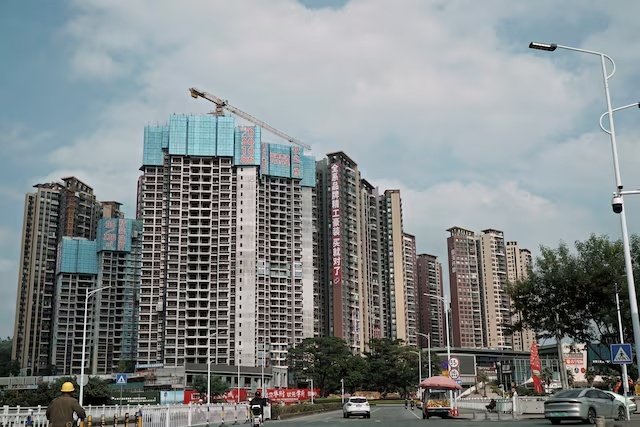
China’s property market is undergoing a prolonged and severe downturn, with residential prices across major cities reportedly falling to their lowest levels in nearly two decades. The sustained decline has revived global debate over whether similar vulnerabilities could emerge in other major developing economies, including India.
According to data cited from the Bank for International Settlements, China’s inflation adjusted residential property price index dropped to 86.79 in the fourth quarter of 2025, down from a peak of 113 in late 2021. This represents a real-term decline of roughly 23% over four years, reflecting what analysts describe not as a sudden collapse but a prolonged “slow-moving contraction” in the sector.
The downturn has been broad-based. Real estate investment in China reportedly fell by 14.7% in the first ten months of 2025, while new home sales have declined for five consecutive years. At the same time, unsold completed housing inventory has surged to an estimated 391 million square metres, an increase of about 72% since 2021, highlighting persistent oversupply pressures in the market.
The scale of the crisis is particularly significant given the sector’s historical role in China’s economy. Real estate and related industries once accounted for nearly a quarter of GDP, making the sector’s slowdown a major drag on growth. The impact has also been felt at the household level, where property constitutes a dominant share of family wealth, unlike in many Western economies where financial assets such as equities play a larger role.
Several of China’s largest developers have also come under severe financial stress. Evergrande, once one of the country’s biggest property firms, collapsed under more than $300 billion in debt and was delisted from the Hong Kong Stock Exchange in 2025. Country Garden has defaulted on its obligations, while Vanke, previously viewed as a relatively stable developer, reported record losses and has sought extensions on bond repayments.
Amid the ongoing crisis, discussions on global social media platforms have turned toward India, with some users questioning whether a similar housing correction could unfold there. Concerns cited include currency depreciation risks, stock market volatility, job uncertainty, and the broader impact of artificial intelligence on employment.
Some observers also note that while Indian equity markets have experienced periods of subdued returns, residential property prices in several urban centres have remained elevated, raising concerns about affordability and valuation levels.
However, many analysts argue that India’s housing market operates under fundamentally different conditions. Unlike China’s oversupply driven model, India’s real estate sector is largely supported by end-user demand, demographic expansion, and ongoing urbanisation. In many regions, housing demand continues to exceed supply, and a significant portion of the population still lacks adequate residential accommodation.
At the same time, experts caution that certain risks remain. Slowing income growth, declining rental yields in some cities, and the influence of informal capital flows, including NRI investments and unaccounted wealth, could affect future market dynamics.
Despite these concerns, there is no consensus that India is heading toward a China-style property crisis. Instead, economists broadly view the two markets as structurally distinct, with different demand drivers and supply conditions. For now, China’s ongoing downturn serves as a cautionary example of how prolonged imbalances in real estate markets can lead to sustained economic and financial stress, while India’s trajectory remains closely tied to domestic demographic and urban growth trends.

Published: April 30, 2026 - 4:30 PM
Property Orices in China Fall to Two Fecade Low, Major Developers Hit Hard
چین میں پراپرٹی کی قیمتیں دو دہائیوں کی کم ترین سطح پر پہنچ گئیں، بڑے ڈویلپرز متاثر
▫️Could similar conditions emerge in developing economies like India? Debate intensifies smong experts
Beijng | ReNews International Desk News China’s Property Market Slump Deepens, Sparking Debate Over Possible Spillover Risks for India Residential prices fall to multi year lows as China’s real estate downturn erases trillions in weal...