Islamabad | ReNews Pakistan
Pakistan is intensifying efforts to attract international investment into its mineral sector as growing global demand for copper, lithium, gold and other critical minerals increases the strategic and economic importance of the country's natural resources.
Pakistan's mineral wealth has been estimated at approximately $8 trillion, with 92 minerals identified across the country and 52 being commercially extracted.
However, the $8 trillion figure represents a broad estimate of mineral potential rather than a verified valuation of economically recoverable reserves.
The government is seeking to translate this resource potential into investment, industrial development and long-term economic activity through greater international engagement and improved infrastructure.
A major initiative in this regard is the Pakistan Minerals Investment Forum 2026, scheduled to take place on November 12 and 13 at the Jinnah Convention Centre in Islamabad.
The forum is expected to bring together international investors, mining executives, policymakers, financial institutions and technical experts to explore opportunities in mineral exploration, extraction, processing and associated infrastructure development.
Discussions will also address investment regulations, financing requirements, sustainable mining practices and the infrastructure needed to support commercially viable mineral projects.
Global demand for critical minerals has increased alongside the expansion of electric vehicles, renewable energy systems, battery storage technologies and advanced industrial applications.
Copper and lithium, in particular, have gained strategic importance because of their extensive use in electrical infrastructure, batteries and technologies supporting the transition towards cleaner energy.
Pakistan's geological position provides significant opportunities for mineral exploration.
Parts of the country lie within the Tethyan Metallogenic Belt, a major mineral-bearing geological zone extending from southeastern Europe through Türkiye and the Middle East towards the Himalayan region.
The belt is particularly associated with copper and gold mineralisation, providing a geological foundation for large-scale mining developments.
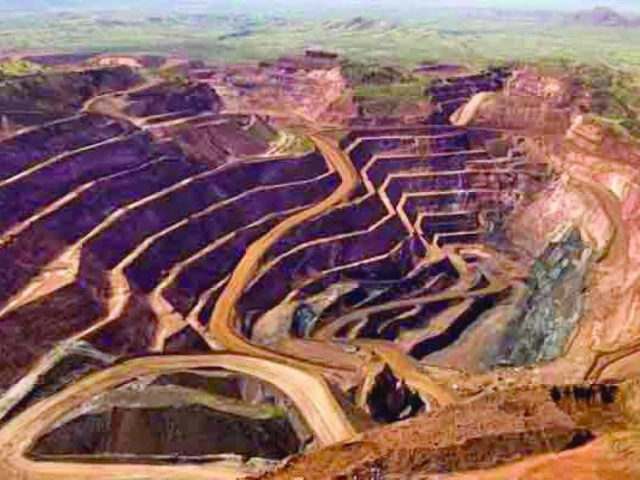
Major mineral projects, including Reko Diq in Balochistan, highlight Pakistan's potential to attract international investment in mineral extraction and supporting infrastructure.
Pakistan's critical minerals prospects received further attention in July 2026 when Oil and Gas Development Company Limited (OGDCL) confirmed the presence of lithium in underground formation water obtained from a high-temperature geothermal well in Sindh.
The discovery was made at the Wahid Bakhsh well in Khairpur district through advanced geochemical analysis of geothermal brine.
According to the company, the lithium concentrations were comparable to those found in certain internationally recognised lithium-bearing geothermal brine resources.
However, the discovery does not establish that large-scale commercial extraction is already feasible.
Further technical studies are required to determine the extent of the resource, suitable extraction technologies, production costs and overall commercial viability.
OGDCL has also initiated cooperation with the Pakistan Institute of Nuclear Science and Technology to explore technologies for lithium extraction and assess the potential for commercial development.