ReNews Pakistan
← Back to home

Real Estate Insights

27 news articles

New Provinces or Stronger Local Government? Pakistan Must Fix Governance Before Redrawing Its Map

New Provinces or Stronger Local Government? Pakistan Must Fix Governance Before Redrawing Its Map

▫️Muhammad Faisal Sulehria

Smaller provinces may improve administrative access, but without meaningful political, financial and administrative devolution, Pakistan risks creating more centres of power rather than bringing government closer to citizensPakistan’s go...

Smaller provinces may improve administrative access, but without meaningful political, financial and administrative devolution, Pakistan risks creating more centres of power rather than bringing government closer to citizens
Pakistan’s governance crisis is becoming increasingly difficult to ignore. A country of nearly 250 million people is being administered through structures that often appear too centralised, too distant and too slow to respond to the everyday needs of citizens.
This has revived an important national debate: should Pakistan create new provinces and smaller administrative units to improve governance?
The question deserves serious consideration. But before boundaries are redrawn, another question must be answered. Will new provinces actually decentralise power, or will they simply reproduce the same governance problems within smaller geographical areas?
The argument for smaller provinces has considerable merit. Provinces with populations running into tens of millions can themselves become highly centralised systems. Political authority, financial resources and administrative decision making often remain concentrated in provincial capitals, leaving remote districts with limited influence over decisions that directly affect them.
Smaller administrative units could reduce the distance between citizens and government. They could allow regional priorities to receive greater attention, make public institutions more responsive and provide communities that feel politically neglected with a stronger voice.
South Punjab has long been at the centre of demands for a separate province. Islamabad could also be considered within a wider debate over administrative restructuring, while other proposals may deserve examination on the basis of population, geography, economic viability and administrative efficiency.
But creating a province is far more complicated than drawing new lines on a map.
Any alteration in the federal structure would involve constitutional procedures, political consensus and, where provincial boundaries are affected, approval by the relevant provincial legislature. New provincial governments would require assemblies, cabinets, secretariats, administrative departments and bureaucratic structures.
There would also be significant financial consequences.
Each new province would require a share of national resources. Revenue distribution arrangements would have to be reconsidered, while questions involving assets, liabilities, government employees, public institutions and development responsibilities would need to be resolved.
Before Pakistan moves towards such a major restructuring, policymakers should therefore present credible estimates of the costs involved and measurable evidence of the governance benefits expected from the change.
There is an even more fundamental issue.
If the political and administrative culture remains unchanged, smaller provinces could simply become smaller versions of the existing system. Power may shift from one provincial capital to several new provincial capitals without ever reaching districts, towns and neighbourhoods.
New bureaucracies could reproduce old bureaucratic weaknesses. New political elites could control resources in much the same way as existing ones. Citizens could still remain dependent on distant offices for decisions concerning local services.
This is why the debate over new provinces cannot be separated from the debate over local government.
Pakistan already has a constitutional and administrative mechanism capable of bringing government significantly closer to citizens: empowered local governments.
Municipalities, districts and local councils deal with many of the services that shape daily life, including local roads, sanitation, water supply, land use, municipal regulation, public spaces and community infrastructure. Yet local government remains one of the weakest parts of Pakistan’s democratic structure.
Provincial governments have historically shown limited willingness to transfer meaningful political, administrative and financial authority to elected local institutions.
This creates an obvious contradiction.
Political parties strongly defend provincial autonomy when powers and resources are being transferred from Islamabad to the provinces. Yet the same principle becomes far less attractive when provincial capitals are asked to transfer authority and money to districts, cities and neighbourhoods.
The reason is partly political.
An empowered local government system distributes control over development funds, public services and administrative decisions. It places resources closer to voters and reduces the dependence of communities on provincial legislators and party leadership structures.
Those who currently exercise these powers therefore have little political incentive to surrender them.
This does not mean that Pakistan should reject the idea of new provinces. Demographic growth, regional inequalities and administrative pressures may eventually make additional provinces necessary.
The debate may, in fact, already be overdue.
But any serious proposal must go beyond slogans. It should identify the proposed boundaries, explain the constitutional process, calculate the financial cost, assess the economic viability of each new unit and demonstrate how public services would improve.
Most importantly, any restructuring plan should explain how authority will continue moving downward after a new province is created.
Pakistan may indeed need a different administrative map. But changing the map alone will not repair governance.
The real test of reform is not how many provinces appear on the map. It is how close political authority, public money and decision making ultimately move towards the citizen.
If new provinces merely create additional capitals where power remains concentrated, Pakistan will have reorganised centralisation rather than eliminated it.
A meaningful reform would do something more ambitious: redraw not only administrative boundaries, but also the relationship between the state and the citizen.

Punjab's Plan to Develop 120 Model Villages: A New Approach to Rural Infrastructure

Punjab's Plan to Develop 120 Model Villages: A New Approach to Rural Infrastructure

▫️ Muhammad Faisal Sulehria

The Punjab government's decision to approve a pilot programme for developing 120 model villages represents a significant policy initiative aimed at improving rural infrastructure, sanitation and basic public facilities.

World Habitat Day: Three Billion People Worldwide Deprived of Adequate Housing. Why?

World Habitat Day: Three Billion People Worldwide Deprived of Adequate Housing. Why?

▫️ Muhammad Faisal Sulehria

World Habitat Day 2026 has been observed against the backdrop of a deepening global housing crisis in which safe, adequate and affordable shelter remains beyond the reach of billions of people.

10 Years Since Panama Papers, Offshore Secrecy Infrastructure Still Remains

10 Years Since Panama Papers, Offshore Secrecy Infrastructure Still Remains

▫️ Muhammad Faisal Sulehria

Ten years have passed since the Panama Papers exposed the scale and complexity of the global offshore financial system, yet the basic infrastructure that enables financial secrecy and anonymous ownership has not been completely dismantled.

World Bank Downgrades Pakistan’s Barrage Project Over Weak Institutional Performance

World Bank Downgrades Pakistan’s Barrage Project Over Weak Institutional Performance

▫️ Muhammad Faisal Sulehria

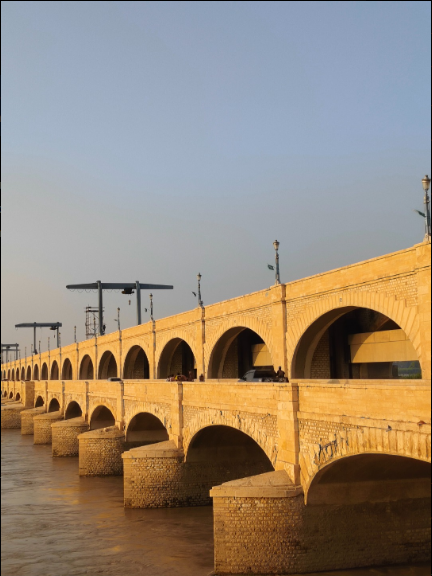
The $314.93 million Sindh Barrages Improvement Project has made substantial progress on physical rehabilitation and modernisation works at Guddu and Sukkur barrages. Yet the World Bank has downgraded the project’s development objective a...

Indus Waters Treaty : A Legal Boost for Pakistan’s Position and Growing Questions for India

Indus Waters Treaty : A Legal Boost for Pakistan’s Position and Growing Questions for India

▫️Muhammad Faisal Sulehria

The Hague arbitration findings reinforce the treaty’s legal status and underline the importance of international agreements in managing water disputes between Pakistan and IndiaThe Indus Waters Treaty is far more than an agreement dividi...

Why Do We Still Prefer Thermal Power When Hydropower Is Cheaper and Available?

Why Do We Still Prefer Thermal Power When Hydropower Is Cheaper and Available?

▫️Muhammad Faisal Sulehria

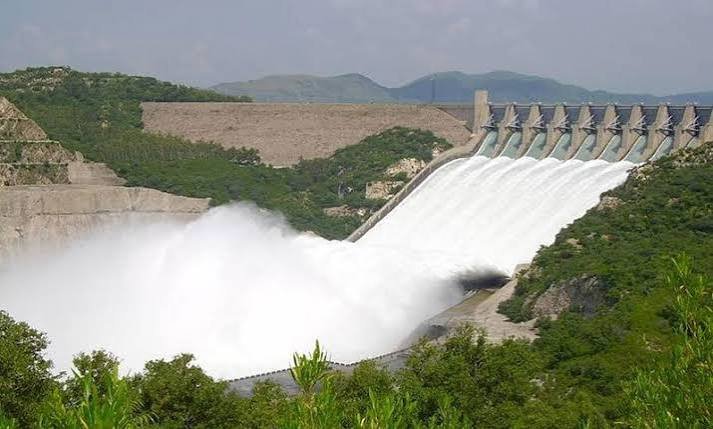
Pakistan’s power sector is facing a striking contradiction. On one side, hydropower generation has crossed 7,000 MW during the monsoon as higher river flows have improved water availability. On the other, Punjab is reportedly facing a po...

Solar Power Reaches 27% of Total Generation, Transforming the Traditional Infrastructure Model

Solar Power Reaches 27% of Total Generation, Transforming the Traditional Infrastructure Model

▫️Muhammad Faisal Sulehria

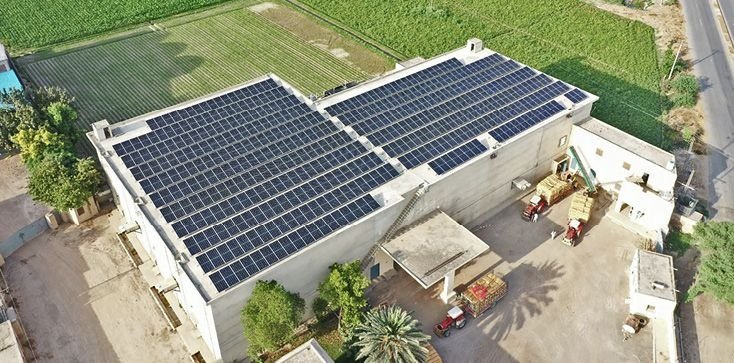
Pakistan’s rapidly expanding rooftop and distributed solar market is beginning to reshape not only the country’s energy system but also the economics of residential, commercial and industrial property. According to new analysis by the Pa...

Punjab’s Idle Public Assets: Can Government Property Become a New Source of Revenue and Development?

Punjab’s Idle Public Assets: Can Government Property Become a New Source of Revenue and Development?

▫️Muhammad Faisal Sulehria

Punjab’s decision to establish a dedicated authority for identifying, managing and generating value from underused public assets could represent an important development for both the province’s real estate sector and its public finances....

New Provinces or Stronger Local Government? Pakistan Must Fix Governance Before Redrawing Its Map

New Provinces or Stronger Local Government? Pakistan Must Fix Governance Before Redrawing Its Map

▫️Muhammad Faisal Sulehria

Smaller provinces may improve administrative access, but without meaningful political, financial and administrative devolution, Pakistan risks creating more centres of power rather than bringing government closer to citizensPakistan’s go...


Smaller provinces may improve administrative access, but without meaningful political, financial and administrative devolution, Pakistan risks creating more centres of power rather than bringing government closer to citizens
Pakistan’s governance crisis is becoming increasingly difficult to ignore. A country of nearly 250 million people is being administered through structures that often appear too centralised, too distant and too slow to respond to the everyday needs of citizens.
This has revived an important national debate: should Pakistan create new provinces and smaller administrative units to improve governance?
The question deserves serious consideration. But before boundaries are redrawn, another question must be answered. Will new provinces actually decentralise power, or will they simply reproduce the same governance problems within smaller geographical areas?
The argument for smaller provinces has considerable merit. Provinces with populations running into tens of millions can themselves become highly centralised systems. Political authority, financial resources and administrative decision making often remain concentrated in provincial capitals, leaving remote districts with limited influence over decisions that directly affect them.
Smaller administrative units could reduce the distance between citizens and government. They could allow regional priorities to receive greater attention, make public institutions more responsive and provide communities that feel politically neglected with a stronger voice.
South Punjab has long been at the centre of demands for a separate province. Islamabad could also be considered within a wider debate over administrative restructuring, while other proposals may deserve examination on the basis of population, geography, economic viability and administrative efficiency.
But creating a province is far more complicated than drawing new lines on a map.
Any alteration in the federal structure would involve constitutional procedures, political consensus and, where provincial boundaries are affected, approval by the relevant provincial legislature. New provincial governments would require assemblies, cabinets, secretariats, administrative departments and bureaucratic structures.
There would also be significant financial consequences.
Each new province would require a share of national resources. Revenue distribution arrangements would have to be reconsidered, while questions involving assets, liabilities, government employees, public institutions and development responsibilities would need to be resolved.
Before Pakistan moves towards such a major restructuring, policymakers should therefore present credible estimates of the costs involved and measurable evidence of the governance benefits expected from the change.
There is an even more fundamental issue.
If the political and administrative culture remains unchanged, smaller provinces could simply become smaller versions of the existing system. Power may shift from one provincial capital to several new provincial capitals without ever reaching districts, towns and neighbourhoods.
New bureaucracies could reproduce old bureaucratic weaknesses. New political elites could control resources in much the same way as existing ones. Citizens could still remain dependent on distant offices for decisions concerning local services.
This is why the debate over new provinces cannot be separated from the debate over local government.
Pakistan already has a constitutional and administrative mechanism capable of bringing government significantly closer to citizens: empowered local governments.
Municipalities, districts and local councils deal with many of the services that shape daily life, including local roads, sanitation, water supply, land use, municipal regulation, public spaces and community infrastructure. Yet local government remains one of the weakest parts of Pakistan’s democratic structure.
Provincial governments have historically shown limited willingness to transfer meaningful political, administrative and financial authority to elected local institutions.
This creates an obvious contradiction.
Political parties strongly defend provincial autonomy when powers and resources are being transferred from Islamabad to the provinces. Yet the same principle becomes far less attractive when provincial capitals are asked to transfer authority and money to districts, cities and neighbourhoods.
The reason is partly political.
An empowered local government system distributes control over development funds, public services and administrative decisions. It places resources closer to voters and reduces the dependence of communities on provincial legislators and party leadership structures.
Those who currently exercise these powers therefore have little political incentive to surrender them.
This does not mean that Pakistan should reject the idea of new provinces. Demographic growth, regional inequalities and administrative pressures may eventually make additional provinces necessary.
The debate may, in fact, already be overdue.
But any serious proposal must go beyond slogans. It should identify the proposed boundaries, explain the constitutional process, calculate the financial cost, assess the economic viability of each new unit and demonstrate how public services would improve.
Most importantly, any restructuring plan should explain how authority will continue moving downward after a new province is created.
Pakistan may indeed need a different administrative map. But changing the map alone will not repair governance.
The real test of reform is not how many provinces appear on the map. It is how close political authority, public money and decision making ultimately move towards the citizen.
If new provinces merely create additional capitals where power remains concentrated, Pakistan will have reorganised centralisation rather than eliminated it.
A meaningful reform would do something more ambitious: redraw not only administrative boundaries, but also the relationship between the state and the citizen.
Punjab's Plan to Develop 120 Model Villages: A New Approach to Rural Infrastructure

Punjab's Plan to Develop 120 Model Villages: A New Approach to Rural Infrastructure

▫️ Muhammad Faisal Sulehria

The Punjab government's decision to approve a pilot programme for developing 120 model villages represents a significant policy initiative aimed at improving rural infrastructure, sanitation and basic public facilities.

World Habitat Day: Three Billion People Worldwide Deprived of Adequate Housing. Why?

World Habitat Day: Three Billion People Worldwide Deprived of Adequate Housing. Why?

▫️ Muhammad Faisal Sulehria

World Habitat Day 2026 has been observed against the backdrop of a deepening global housing crisis in which safe, adequate and affordable shelter remains beyond the reach of billions of people.

10 Years Since Panama Papers, Offshore Secrecy Infrastructure Still Remains

10 Years Since Panama Papers, Offshore Secrecy Infrastructure Still Remains

▫️ Muhammad Faisal Sulehria

Ten years have passed since the Panama Papers exposed the scale and complexity of the global offshore financial system, yet the basic infrastructure that enables financial secrecy and anonymous ownership has not been completely dismantled.

World Bank Downgrades Pakistan’s Barrage Project Over Weak Institutional Performance

World Bank Downgrades Pakistan’s Barrage Project Over Weak Institutional Performance

▫️ Muhammad Faisal Sulehria

The $314.93 million Sindh Barrages Improvement Project has made substantial progress on physical rehabilitation and modernisation works at Guddu and Sukkur barrages. Yet the World Bank has downgraded the project’s development objective a...

Indus Waters Treaty : A Legal Boost for Pakistan’s Position and Growing Questions for India

Indus Waters Treaty : A Legal Boost for Pakistan’s Position and Growing Questions for India

▫️Muhammad Faisal Sulehria

The Hague arbitration findings reinforce the treaty’s legal status and underline the importance of international agreements in managing water disputes between Pakistan and IndiaThe Indus Waters Treaty is far more than an agreement dividi...

Why Do We Still Prefer Thermal Power When Hydropower Is Cheaper and Available?

Why Do We Still Prefer Thermal Power When Hydropower Is Cheaper and Available?

▫️Muhammad Faisal Sulehria

Pakistan’s power sector is facing a striking contradiction. On one side, hydropower generation has crossed 7,000 MW during the monsoon as higher river flows have improved water availability. On the other, Punjab is reportedly facing a po...

Solar Power Reaches 27% of Total Generation, Transforming the Traditional Infrastructure Model

Solar Power Reaches 27% of Total Generation, Transforming the Traditional Infrastructure Model

▫️Muhammad Faisal Sulehria

Pakistan’s rapidly expanding rooftop and distributed solar market is beginning to reshape not only the country’s energy system but also the economics of residential, commercial and industrial property. According to new analysis by the Pa...

Punjab’s Idle Public Assets: Can Government Property Become a New Source of Revenue and Development?

Punjab’s Idle Public Assets: Can Government Property Become a New Source of Revenue and Development?

▫️Muhammad Faisal Sulehria

Punjab’s decision to establish a dedicated authority for identifying, managing and generating value from underused public assets could represent an important development for both the province’s real estate sector and its public finances....

More Real Estate News

National Real Estate News

See All →

City and District Real Estate News

See All →

Global Real Estate News

See All →

Corporate Real Estate News

See All →

Social Real Estate News

See All →

Arazi Nama

See All →