ReNews Pakistan
← Back to home

Real Estate Insights

27 news articles

World Habitat Day: Three Billion People Worldwide Deprived of Adequate Housing. Why?

World Habitat Day: Three Billion People Worldwide Deprived of Adequate Housing. Why?

▫️ Muhammad Faisal Sulehria

World Habitat Day 2026 has been observed against the backdrop of a deepening global housing crisis in which safe, adequate and affordable shelter remains beyond the reach of billions of people.

World Habitat Day 2026 has been observed against the backdrop of a deepening global housing crisis in which safe, adequate and affordable shelter remains beyond the reach of billions of people. This year’s theme, “Adequate Housing for All,” has renewed attention on the principle that housing is not merely a roof and four walls but a fundamental requirement for human dignity, security, health, education, employment and social stability. Across the world, rapidly growing cities, rising land and construction costs, conflict, climate change and displacement are making adequate housing increasingly difficult to secure, particularly for low-income households.

In his message marking World Habitat Day, United Nations Secretary-General António Guterres said adequate housing is the foundation of dignity, security and opportunity, yet more than three billion people are denied this universal human right. More than one billion people are living in slums and informal settlements, while many others are facing homelessness or displacement caused by wars, disasters and climate-related emergencies.

Guterres stressed that investment in adequate housing and the upgrading of informal settlements can play an important role in reducing poverty, addressing inequality, strengthening climate resilience and building more peaceful and inclusive societies. He also called for coordinated policies at national and local levels, stronger partnerships, better data and affordable financing for developing countries so that housing can be treated as a public good rather than a privilege available only to those with sufficient financial means.

Against this wider global backdrop, World Habitat Day 2026 also brought significant recognition for Pakistan, particularly Punjab. The United Nations Human Settlements Programme, UN-Habitat, awarded the 2026 UN-Habitat Scroll of Honour to the Punjab Housing and Town Planning Agency for its contribution to expanding access to adequate, safe and affordable housing for low-income households.

The recognition is closely associated with the Punjab government’s flagship Apni Chhat, Apna Ghar programme, which has been designed to support lower-income families seeking to build their own homes. The award places Punjab’s housing initiative among internationally recognised efforts aimed at making affordable shelter more accessible to groups that are often excluded from conventional housing finance and formal property markets.

Punjab Chief Minister Maryam Nawaz Sharif travelled to Muscat, Oman, to receive the Scroll of Honour during the World Habitat Day ceremony. She dedicated the award to the families who have built or are building homes under the Apni Chhat, Apna Ghar programme. The recognition is particularly significant because Pakistan has received the UN-Habitat Scroll of Honour again after a gap of 19 years.

For Punjab, the award comes at a time when Pakistan is confronting serious housing pressures caused by rapid population growth, urban migration, rising land prices, increasing construction costs and the limited purchasing power of low-income households. These challenges demonstrate that affordable housing cannot be addressed simply by increasing the number of houses constructed. Adequate housing also requires secure land tenure, access to water and sanitation, roads, electricity, schools, healthcare, public transport and employment opportunities.

The broader message of World Habitat Day is therefore that housing policy must be connected with urban planning, infrastructure, social protection and access to finance. A house becomes truly adequate only when the people living in it can also access essential services, feel secure in their tenure and remain protected from environmental, economic and social risks.

At the same time, the situation in Gaza presents one of the starkest contrasts to the global call for adequate housing. According to Palestinian sources, approximately 82 percent of buildings in Gaza have been damaged or destroyed as a result of Israeli bombardment. Large numbers of people have been forced from their homes and are living in temporary shelters, tents, damaged buildings or areas with severely limited access to basic services.

The destruction has extended far beyond residential structures. Water systems, sewage networks, healthcare facilities and other essential urban infrastructure have also suffered extensive damage, creating a humanitarian crisis in which people are struggling not only to find shelter but also to secure the basic conditions required for safe and dignified living.

In this context, World Habitat Day carries a much broader meaning. It is not only about building new homes but also about protecting civilians, preventing displacement, rebuilding communities destroyed by conflict and restoring the basic infrastructure needed for human life.

World Habitat Day 2026 therefore presents two sharply different realities. Punjab’s international recognition demonstrates how targeted public policy, financial support and housing programmes can improve access to homes for lower-income families. Gaza, on the other hand, shows how quickly the basic right to shelter can be destroyed by conflict and displacement.

The central message of the day remains clear: adequate housing should not be treated as a privilege for those who can afford it, but as a fundamental human right. Governments need policies that go beyond simply increasing housing supply and instead ensure access to safe, affordable, sustainable and dignified homes. With more than three billion people still deprived of adequate housing worldwide, the global housing crisis has become not only an urban development challenge but also a major social, economic and humanitarian issue.

Punjab's Plan to Develop 120 Model Villages: A New Approach to Rural Infrastructure

Punjab's Plan to Develop 120 Model Villages: A New Approach to Rural Infrastructure

▫️ Muhammad Faisal Sulehria

The Punjab government's decision to approve a pilot programme for developing 120 model villages represents a significant policy initiative aimed at improving rural infrastructure, sanitation and basic public facilities.

10 Years Since Panama Papers, Offshore Secrecy Infrastructure Still Remains

10 Years Since Panama Papers, Offshore Secrecy Infrastructure Still Remains

▫️ Muhammad Faisal Sulehria

Ten years have passed since the Panama Papers exposed the scale and complexity of the global offshore financial system, yet the basic infrastructure that enables financial secrecy and anonymous ownership has not been completely dismantled.

New Provinces or Stronger Local Government? Pakistan Must Fix Governance Before Redrawing Its Map

New Provinces or Stronger Local Government? Pakistan Must Fix Governance Before Redrawing Its Map

▫️Muhammad Faisal Sulehria

Smaller provinces may improve administrative access, but without meaningful political, financial and administrative devolution, Pakistan risks creating more centres of power rather than bringing government closer to citizensPakistan’s go...

World Bank Downgrades Pakistan’s Barrage Project Over Weak Institutional Performance

World Bank Downgrades Pakistan’s Barrage Project Over Weak Institutional Performance

▫️ Muhammad Faisal Sulehria

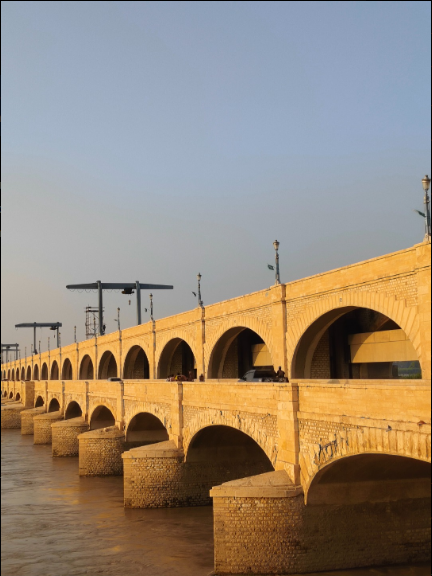
The $314.93 million Sindh Barrages Improvement Project has made substantial progress on physical rehabilitation and modernisation works at Guddu and Sukkur barrages. Yet the World Bank has downgraded the project’s development objective a...

Indus Waters Treaty : A Legal Boost for Pakistan’s Position and Growing Questions for India

Indus Waters Treaty : A Legal Boost for Pakistan’s Position and Growing Questions for India

▫️Muhammad Faisal Sulehria

The Hague arbitration findings reinforce the treaty’s legal status and underline the importance of international agreements in managing water disputes between Pakistan and IndiaThe Indus Waters Treaty is far more than an agreement dividi...

Why Do We Still Prefer Thermal Power When Hydropower Is Cheaper and Available?

Why Do We Still Prefer Thermal Power When Hydropower Is Cheaper and Available?

▫️Muhammad Faisal Sulehria

Pakistan’s power sector is facing a striking contradiction. On one side, hydropower generation has crossed 7,000 MW during the monsoon as higher river flows have improved water availability. On the other, Punjab is reportedly facing a po...

Solar Power Reaches 27% of Total Generation, Transforming the Traditional Infrastructure Model

Solar Power Reaches 27% of Total Generation, Transforming the Traditional Infrastructure Model

▫️Muhammad Faisal Sulehria

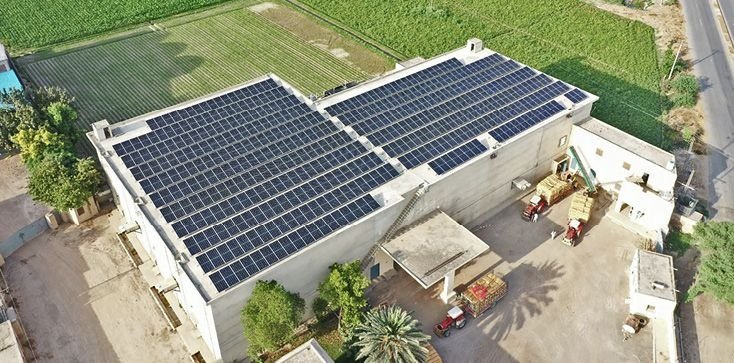
Pakistan’s rapidly expanding rooftop and distributed solar market is beginning to reshape not only the country’s energy system but also the economics of residential, commercial and industrial property. According to new analysis by the Pa...

Punjab’s Idle Public Assets: Can Government Property Become a New Source of Revenue and Development?

Punjab’s Idle Public Assets: Can Government Property Become a New Source of Revenue and Development?

▫️Muhammad Faisal Sulehria

Punjab’s decision to establish a dedicated authority for identifying, managing and generating value from underused public assets could represent an important development for both the province’s real estate sector and its public finances....

World Habitat Day: Three Billion People Worldwide Deprived of Adequate Housing. Why?

World Habitat Day: Three Billion People Worldwide Deprived of Adequate Housing. Why?

▫️ Muhammad Faisal Sulehria

World Habitat Day 2026 has been observed against the backdrop of a deepening global housing crisis in which safe, adequate and affordable shelter remains beyond the reach of billions of people.

World Habitat Day 2026 has been observed against the backdrop of a deepening global housing crisis in which safe, adequate and affordable shelter remains beyond the reach of billions of people. This year’s theme, “Adequate Housing for All,” has renewed attention on the principle that housing is not merely a roof and four walls but a fundamental requirement for human dignity, security, health, education, employment and social stability. Across the world, rapidly growing cities, rising land and construction costs, conflict, climate change and displacement are making adequate housing increasingly difficult to secure, particularly for low-income households.

In his message marking World Habitat Day, United Nations Secretary-General António Guterres said adequate housing is the foundation of dignity, security and opportunity, yet more than three billion people are denied this universal human right. More than one billion people are living in slums and informal settlements, while many others are facing homelessness or displacement caused by wars, disasters and climate-related emergencies.

Guterres stressed that investment in adequate housing and the upgrading of informal settlements can play an important role in reducing poverty, addressing inequality, strengthening climate resilience and building more peaceful and inclusive societies. He also called for coordinated policies at national and local levels, stronger partnerships, better data and affordable financing for developing countries so that housing can be treated as a public good rather than a privilege available only to those with sufficient financial means.

Against this wider global backdrop, World Habitat Day 2026 also brought significant recognition for Pakistan, particularly Punjab. The United Nations Human Settlements Programme, UN-Habitat, awarded the 2026 UN-Habitat Scroll of Honour to the Punjab Housing and Town Planning Agency for its contribution to expanding access to adequate, safe and affordable housing for low-income households.

The recognition is closely associated with the Punjab government’s flagship Apni Chhat, Apna Ghar programme, which has been designed to support lower-income families seeking to build their own homes. The award places Punjab’s housing initiative among internationally recognised efforts aimed at making affordable shelter more accessible to groups that are often excluded from conventional housing finance and formal property markets.

Punjab Chief Minister Maryam Nawaz Sharif travelled to Muscat, Oman, to receive the Scroll of Honour during the World Habitat Day ceremony. She dedicated the award to the families who have built or are building homes under the Apni Chhat, Apna Ghar programme. The recognition is particularly significant because Pakistan has received the UN-Habitat Scroll of Honour again after a gap of 19 years.

For Punjab, the award comes at a time when Pakistan is confronting serious housing pressures caused by rapid population growth, urban migration, rising land prices, increasing construction costs and the limited purchasing power of low-income households. These challenges demonstrate that affordable housing cannot be addressed simply by increasing the number of houses constructed. Adequate housing also requires secure land tenure, access to water and sanitation, roads, electricity, schools, healthcare, public transport and employment opportunities.

The broader message of World Habitat Day is therefore that housing policy must be connected with urban planning, infrastructure, social protection and access to finance. A house becomes truly adequate only when the people living in it can also access essential services, feel secure in their tenure and remain protected from environmental, economic and social risks.

At the same time, the situation in Gaza presents one of the starkest contrasts to the global call for adequate housing. According to Palestinian sources, approximately 82 percent of buildings in Gaza have been damaged or destroyed as a result of Israeli bombardment. Large numbers of people have been forced from their homes and are living in temporary shelters, tents, damaged buildings or areas with severely limited access to basic services.

The destruction has extended far beyond residential structures. Water systems, sewage networks, healthcare facilities and other essential urban infrastructure have also suffered extensive damage, creating a humanitarian crisis in which people are struggling not only to find shelter but also to secure the basic conditions required for safe and dignified living.

In this context, World Habitat Day carries a much broader meaning. It is not only about building new homes but also about protecting civilians, preventing displacement, rebuilding communities destroyed by conflict and restoring the basic infrastructure needed for human life.

World Habitat Day 2026 therefore presents two sharply different realities. Punjab’s international recognition demonstrates how targeted public policy, financial support and housing programmes can improve access to homes for lower-income families. Gaza, on the other hand, shows how quickly the basic right to shelter can be destroyed by conflict and displacement.

The central message of the day remains clear: adequate housing should not be treated as a privilege for those who can afford it, but as a fundamental human right. Governments need policies that go beyond simply increasing housing supply and instead ensure access to safe, affordable, sustainable and dignified homes. With more than three billion people still deprived of adequate housing worldwide, the global housing crisis has become not only an urban development challenge but also a major social, economic and humanitarian issue.
Punjab's Plan to Develop 120 Model Villages: A New Approach to Rural Infrastructure

Punjab's Plan to Develop 120 Model Villages: A New Approach to Rural Infrastructure

▫️ Muhammad Faisal Sulehria

The Punjab government's decision to approve a pilot programme for developing 120 model villages represents a significant policy initiative aimed at improving rural infrastructure, sanitation and basic public facilities.

10 Years Since Panama Papers, Offshore Secrecy Infrastructure Still Remains

10 Years Since Panama Papers, Offshore Secrecy Infrastructure Still Remains

▫️ Muhammad Faisal Sulehria

Ten years have passed since the Panama Papers exposed the scale and complexity of the global offshore financial system, yet the basic infrastructure that enables financial secrecy and anonymous ownership has not been completely dismantled.

New Provinces or Stronger Local Government? Pakistan Must Fix Governance Before Redrawing Its Map

New Provinces or Stronger Local Government? Pakistan Must Fix Governance Before Redrawing Its Map

▫️Muhammad Faisal Sulehria

Smaller provinces may improve administrative access, but without meaningful political, financial and administrative devolution, Pakistan risks creating more centres of power rather than bringing government closer to citizensPakistan’s go...

World Bank Downgrades Pakistan’s Barrage Project Over Weak Institutional Performance

World Bank Downgrades Pakistan’s Barrage Project Over Weak Institutional Performance

▫️ Muhammad Faisal Sulehria

The $314.93 million Sindh Barrages Improvement Project has made substantial progress on physical rehabilitation and modernisation works at Guddu and Sukkur barrages. Yet the World Bank has downgraded the project’s development objective a...

Indus Waters Treaty : A Legal Boost for Pakistan’s Position and Growing Questions for India

Indus Waters Treaty : A Legal Boost for Pakistan’s Position and Growing Questions for India

▫️Muhammad Faisal Sulehria

The Hague arbitration findings reinforce the treaty’s legal status and underline the importance of international agreements in managing water disputes between Pakistan and IndiaThe Indus Waters Treaty is far more than an agreement dividi...

Why Do We Still Prefer Thermal Power When Hydropower Is Cheaper and Available?

Why Do We Still Prefer Thermal Power When Hydropower Is Cheaper and Available?

▫️Muhammad Faisal Sulehria

Pakistan’s power sector is facing a striking contradiction. On one side, hydropower generation has crossed 7,000 MW during the monsoon as higher river flows have improved water availability. On the other, Punjab is reportedly facing a po...

Solar Power Reaches 27% of Total Generation, Transforming the Traditional Infrastructure Model

Solar Power Reaches 27% of Total Generation, Transforming the Traditional Infrastructure Model

▫️Muhammad Faisal Sulehria

Pakistan’s rapidly expanding rooftop and distributed solar market is beginning to reshape not only the country’s energy system but also the economics of residential, commercial and industrial property. According to new analysis by the Pa...

Punjab’s Idle Public Assets: Can Government Property Become a New Source of Revenue and Development?

Punjab’s Idle Public Assets: Can Government Property Become a New Source of Revenue and Development?

▫️Muhammad Faisal Sulehria

Punjab’s decision to establish a dedicated authority for identifying, managing and generating value from underused public assets could represent an important development for both the province’s real estate sector and its public finances....

More Real Estate News

National Real Estate News

See All →

City and District Real Estate News

See All →

Global Real Estate News

See All →

Corporate Real Estate News

See All →

Social Real Estate News

See All →

Arazi Nama

See All →