ReNews Pakistan
← Back to home

Real Estate Insights

27 news articles

Gilgit Baltistan’s Forests: A Test of Balance Between Land Protection and Safe Settlements

Gilgit Baltistan’s Forests: A Test of Balance Between Land Protection and Safe Settlements

▫️Muhammad Faisal Sulehria

The Senate subcommittee’s review of forest management in Gilgit Baltistan is not limited to timber cutting or the pending cases of licensed contractors. It highlights a wider policy challenge involving land use, natural resource protecti...

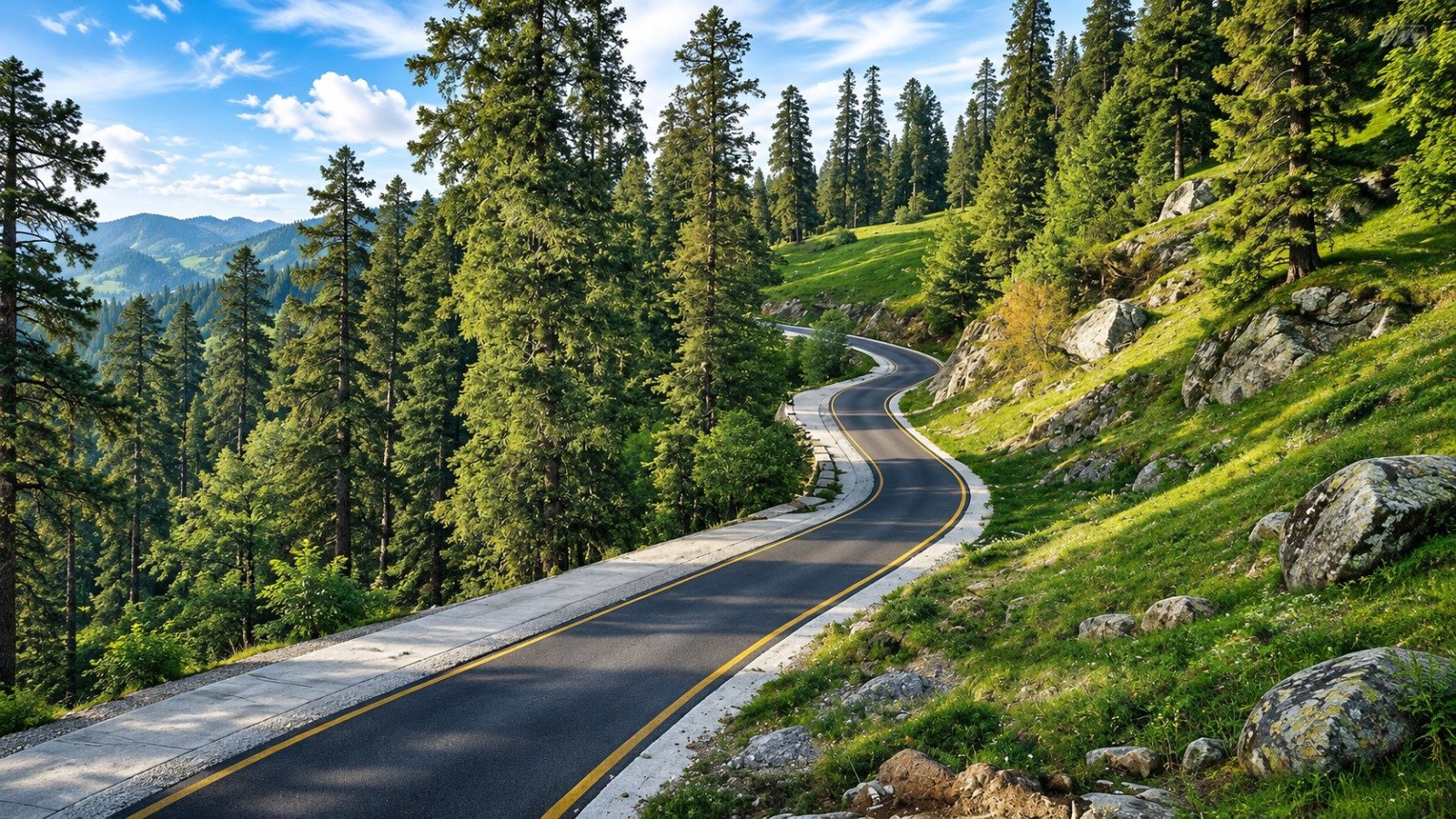
The Senate subcommittee’s review of forest management in Gilgit Baltistan is not limited to timber cutting or the pending cases of licensed contractors. It highlights a wider policy challenge involving land use, natural resource protection, local economic activity, public safety and the future of construction and urban development in the mountain region.
Licensed forest contractors have raised concerns about long delays in legal timber harvesting, complicated government procedures, security risks and disputes that have remained unresolved for decades. These complaints cannot simply be ignored, as every lawful business requires an administrative system that is transparent, efficient and predictable.
When permits, contracts and legal disputes remain pending for years or even decades, confidence in both business and government institutions is weakened. In this context, the subcommittee’s decision to review pending cases, re examine forest working plans and remove unnecessary obstacles to lawful activity is a welcome step.
However, business facilitation must not come at the cost of weakening the protections needed to preserve one of Pakistan’s most limited and valuable natural resources. The forests of Gilgit Baltistan cannot be viewed only as a source of commercial timber. They help stabilise mountain land, reduce soil erosion, protect water catchment areas and regulate the flow of water from rain and melting snow.
These natural functions are also essential for protecting residential settlements, agricultural land, roads, bridges, hotels, tourism destinations and other construction projects across the region. Tree roots hold mountain soil together and provide support to vulnerable slopes. When forests are removed, the soil gradually loses stability, increasing the danger of landslides, falling rocks, flash floods and land subsidence.
These risks directly affect the real estate market. A house, shop, hotel or residential project cannot be considered safe merely because its structure is strong. Even an expensive building may face serious danger if it is located near an unstable slope, a blocked natural drainage channel or an area where forest cover is rapidly disappearing.
The expansion of tourism and construction activity in Gilgit Baltistan is increasing demand for land. Hotels, guest houses, resorts, residential buildings and commercial properties are being developed in different valleys and towns. In this environment, unplanned or excessive tree cutting can make land use risks even more serious.
When trees are removed from a valley or mountain slope, the consequences are not limited to the natural environment. The development potential, market value and long term safety of nearby land may also be affected. Forest policy, therefore, cannot be separated from real estate regulation and regional planning.
Many forests in Gilgit Baltistan are privately or collectively owned by local communities. Their ownership rights must be respected, and they should not be denied lawful economic benefits from forest resources. However, private ownership does not mean that forests and land can be used without regulation.
An individual or community may benefit from its property, but an activity that creates risks for an entire valley, settlement, river, road or neighbouring population cannot be treated as a purely private matter. The state has a responsibility to establish scientifically determined limits for forest use and ensure that legal harvesting does not exceed the environmental capacity of an area.
Every forest area should have a clear and updated working plan. Such a plan should record the number and condition of trees, identify how much timber may be harvested safely, specify areas where cutting must be completely prohibited and explain how new trees will be planted after harvesting.
These plans must not remain limited to paperwork. Environmental specialists, forest officials, local communities, district administrations, land use planners and construction experts should all be involved in their preparation.
Before tree cutting is approved, authorities should assess its possible effects on nearby settlements, roads, rivers, mountain slopes and proposed construction projects. Decisions about forests must be based on the wider safety and development needs of the entire area.
The complaints raised by contractors regarding security threats, administrative barriers and excessive delays require urgent attention. Clear deadlines should be introduced for the approval of contracts, permits and dispute resolution.
A digital record of applications, permissions, approved timber quantities and transportation could also improve transparency. Contractors, local communities and government departments should have access to consistent and verifiable information.
Local residents should also be consulted while contracts and forest management plans are prepared. Communities that have lived near forests for generations possess valuable knowledge about the area’s land, water channels, access routes and natural hazards.
Their involvement could improve decision making and strengthen local monitoring of illegal activities. It would also reduce the risk of policies being imposed without considering the needs and experience of the people most directly affected.
Administrative reform should make lawful business easier, but it must not become an excuse to increase tree cutting or weaken oversight. Faster decisions are necessary, but every approval must remain subject to environmental limits and land safety requirements.
The subcommittee was informed that people involved in illegal tree cutting may face penalties of up to three times the market value of the timber. Several vehicles allegedly used for timber smuggling also remain in government custody.
These measures appear strict, but the true effectiveness of any law depends on consistent and impartial enforcement. If action is taken only against a limited number of individuals while influential operators, facilitators or officials involved in possible collusion remain protected, penalties will fail to control illegal activity.
Illegal tree cutting is rarely limited to the person who physically removes the timber. It may involve organised networks responsible for transportation, storage, purchasing and sale. Effective enforcement must therefore target the entire chain rather than isolated offenders.
Closed circuit television cameras, digital vehicle tracking, identification marks on approved timber and online permits can strengthen monitoring. However, technology cannot replace institutional integrity, accountability and political commitment.
The future of Gilgit Baltistan’s forests is not only a matter for the forest department. It is directly connected with housing, tourism, highways, water resources, agriculture, power projects, disaster management and land values.
When forests are protected, mountain soil, water channels, residential settlements and buildings receive greater natural protection. Forest conservation should therefore be treated as an essential part of real estate planning and public infrastructure policy.
Future regulations should maintain a complete record of every tree approved for cutting, the legal authority under which it is removed and the responsibility for planting replacement trees.
Authorities should identify high risk zones where commercial harvesting is prohibited because of the danger of landslides, flooding, soil erosion or damage to water catchment areas.
Similarly, approval for new housing, hotels and tourism developments should depend on a proper assessment of whether the project affects forest land, natural drains, unstable slopes or water channels.
In mountain regions, building permission should be linked with environmental and forest clearances. This approach may prevent costly damage to lives, property and public infrastructure in the future.
Pakistan already has limited forest cover, while climate change is making mountain regions more vulnerable to floods, extreme rainfall and unstable slopes. Under these conditions, the country cannot afford further regulatory neglect, illegal harvesting or poorly planned construction.
Facilitating lawful business, protecting community rights, resolving disputes on time and conserving forests are not conflicting goals. They can support one another when policy is based on scientific planning, transparent administration and equal enforcement of the law.
The guiding principle must remain clear: the economic benefit obtained from timber may be temporary, but the damage caused by forest loss to land, settlements and buildings can continue for generations.
Every decision regarding the forests of Gilgit Baltistan should therefore be made with long term environmental sustainability, land safety and the protection of human settlements as its highest priorities.
Punjab's Plan to Develop 120 Model Villages: A New Approach to Rural Infrastructure

Punjab's Plan to Develop 120 Model Villages: A New Approach to Rural Infrastructure

▫️ Muhammad Faisal Sulehria

The Punjab government's decision to approve a pilot programme for developing 120 model villages represents a significant policy initiative aimed at improving rural infrastructure, sanitation and basic public facilities.

World Habitat Day: Three Billion People Worldwide Deprived of Adequate Housing. Why?

World Habitat Day: Three Billion People Worldwide Deprived of Adequate Housing. Why?

▫️ Muhammad Faisal Sulehria

World Habitat Day 2026 has been observed against the backdrop of a deepening global housing crisis in which safe, adequate and affordable shelter remains beyond the reach of billions of people.

10 Years Since Panama Papers, Offshore Secrecy Infrastructure Still Remains

10 Years Since Panama Papers, Offshore Secrecy Infrastructure Still Remains

▫️ Muhammad Faisal Sulehria

Ten years have passed since the Panama Papers exposed the scale and complexity of the global offshore financial system, yet the basic infrastructure that enables financial secrecy and anonymous ownership has not been completely dismantled.

New Provinces or Stronger Local Government? Pakistan Must Fix Governance Before Redrawing Its Map

New Provinces or Stronger Local Government? Pakistan Must Fix Governance Before Redrawing Its Map

▫️Muhammad Faisal Sulehria

Smaller provinces may improve administrative access, but without meaningful political, financial and administrative devolution, Pakistan risks creating more centres of power rather than bringing government closer to citizensPakistan’s go...

World Bank Downgrades Pakistan’s Barrage Project Over Weak Institutional Performance

World Bank Downgrades Pakistan’s Barrage Project Over Weak Institutional Performance

▫️ Muhammad Faisal Sulehria

The $314.93 million Sindh Barrages Improvement Project has made substantial progress on physical rehabilitation and modernisation works at Guddu and Sukkur barrages. Yet the World Bank has downgraded the project’s development objective a...

Indus Waters Treaty : A Legal Boost for Pakistan’s Position and Growing Questions for India

Indus Waters Treaty : A Legal Boost for Pakistan’s Position and Growing Questions for India

▫️Muhammad Faisal Sulehria

The Hague arbitration findings reinforce the treaty’s legal status and underline the importance of international agreements in managing water disputes between Pakistan and IndiaThe Indus Waters Treaty is far more than an agreement dividi...

Why Do We Still Prefer Thermal Power When Hydropower Is Cheaper and Available?

Why Do We Still Prefer Thermal Power When Hydropower Is Cheaper and Available?

▫️Muhammad Faisal Sulehria

Pakistan’s power sector is facing a striking contradiction. On one side, hydropower generation has crossed 7,000 MW during the monsoon as higher river flows have improved water availability. On the other, Punjab is reportedly facing a po...

Solar Power Reaches 27% of Total Generation, Transforming the Traditional Infrastructure Model

Solar Power Reaches 27% of Total Generation, Transforming the Traditional Infrastructure Model

▫️Muhammad Faisal Sulehria

Pakistan’s rapidly expanding rooftop and distributed solar market is beginning to reshape not only the country’s energy system but also the economics of residential, commercial and industrial property. According to new analysis by the Pa...

Punjab’s Idle Public Assets: Can Government Property Become a New Source of Revenue and Development?

Punjab’s Idle Public Assets: Can Government Property Become a New Source of Revenue and Development?

▫️Muhammad Faisal Sulehria

Punjab’s decision to establish a dedicated authority for identifying, managing and generating value from underused public assets could represent an important development for both the province’s real estate sector and its public finances....

Gilgit Baltistan’s Forests: A Test of Balance Between Land Protection and Safe Settlements

Gilgit Baltistan’s Forests: A Test of Balance Between Land Protection and Safe Settlements

▫️Muhammad Faisal Sulehria

The Senate subcommittee’s review of forest management in Gilgit Baltistan is not limited to timber cutting or the pending cases of licensed contractors. It highlights a wider policy challenge involving land use, natural resource protecti...


The Senate subcommittee’s review of forest management in Gilgit Baltistan is not limited to timber cutting or the pending cases of licensed contractors. It highlights a wider policy challenge involving land use, natural resource protection, local economic activity, public safety and the future of construction and urban development in the mountain region.
Licensed forest contractors have raised concerns about long delays in legal timber harvesting, complicated government procedures, security risks and disputes that have remained unresolved for decades. These complaints cannot simply be ignored, as every lawful business requires an administrative system that is transparent, efficient and predictable.
When permits, contracts and legal disputes remain pending for years or even decades, confidence in both business and government institutions is weakened. In this context, the subcommittee’s decision to review pending cases, re examine forest working plans and remove unnecessary obstacles to lawful activity is a welcome step.
However, business facilitation must not come at the cost of weakening the protections needed to preserve one of Pakistan’s most limited and valuable natural resources. The forests of Gilgit Baltistan cannot be viewed only as a source of commercial timber. They help stabilise mountain land, reduce soil erosion, protect water catchment areas and regulate the flow of water from rain and melting snow.
These natural functions are also essential for protecting residential settlements, agricultural land, roads, bridges, hotels, tourism destinations and other construction projects across the region. Tree roots hold mountain soil together and provide support to vulnerable slopes. When forests are removed, the soil gradually loses stability, increasing the danger of landslides, falling rocks, flash floods and land subsidence.
These risks directly affect the real estate market. A house, shop, hotel or residential project cannot be considered safe merely because its structure is strong. Even an expensive building may face serious danger if it is located near an unstable slope, a blocked natural drainage channel or an area where forest cover is rapidly disappearing.
The expansion of tourism and construction activity in Gilgit Baltistan is increasing demand for land. Hotels, guest houses, resorts, residential buildings and commercial properties are being developed in different valleys and towns. In this environment, unplanned or excessive tree cutting can make land use risks even more serious.
When trees are removed from a valley or mountain slope, the consequences are not limited to the natural environment. The development potential, market value and long term safety of nearby land may also be affected. Forest policy, therefore, cannot be separated from real estate regulation and regional planning.
Many forests in Gilgit Baltistan are privately or collectively owned by local communities. Their ownership rights must be respected, and they should not be denied lawful economic benefits from forest resources. However, private ownership does not mean that forests and land can be used without regulation.
An individual or community may benefit from its property, but an activity that creates risks for an entire valley, settlement, river, road or neighbouring population cannot be treated as a purely private matter. The state has a responsibility to establish scientifically determined limits for forest use and ensure that legal harvesting does not exceed the environmental capacity of an area.
Every forest area should have a clear and updated working plan. Such a plan should record the number and condition of trees, identify how much timber may be harvested safely, specify areas where cutting must be completely prohibited and explain how new trees will be planted after harvesting.
These plans must not remain limited to paperwork. Environmental specialists, forest officials, local communities, district administrations, land use planners and construction experts should all be involved in their preparation.
Before tree cutting is approved, authorities should assess its possible effects on nearby settlements, roads, rivers, mountain slopes and proposed construction projects. Decisions about forests must be based on the wider safety and development needs of the entire area.
The complaints raised by contractors regarding security threats, administrative barriers and excessive delays require urgent attention. Clear deadlines should be introduced for the approval of contracts, permits and dispute resolution.
A digital record of applications, permissions, approved timber quantities and transportation could also improve transparency. Contractors, local communities and government departments should have access to consistent and verifiable information.
Local residents should also be consulted while contracts and forest management plans are prepared. Communities that have lived near forests for generations possess valuable knowledge about the area’s land, water channels, access routes and natural hazards.
Their involvement could improve decision making and strengthen local monitoring of illegal activities. It would also reduce the risk of policies being imposed without considering the needs and experience of the people most directly affected.
Administrative reform should make lawful business easier, but it must not become an excuse to increase tree cutting or weaken oversight. Faster decisions are necessary, but every approval must remain subject to environmental limits and land safety requirements.
The subcommittee was informed that people involved in illegal tree cutting may face penalties of up to three times the market value of the timber. Several vehicles allegedly used for timber smuggling also remain in government custody.
These measures appear strict, but the true effectiveness of any law depends on consistent and impartial enforcement. If action is taken only against a limited number of individuals while influential operators, facilitators or officials involved in possible collusion remain protected, penalties will fail to control illegal activity.
Illegal tree cutting is rarely limited to the person who physically removes the timber. It may involve organised networks responsible for transportation, storage, purchasing and sale. Effective enforcement must therefore target the entire chain rather than isolated offenders.
Closed circuit television cameras, digital vehicle tracking, identification marks on approved timber and online permits can strengthen monitoring. However, technology cannot replace institutional integrity, accountability and political commitment.
The future of Gilgit Baltistan’s forests is not only a matter for the forest department. It is directly connected with housing, tourism, highways, water resources, agriculture, power projects, disaster management and land values.
When forests are protected, mountain soil, water channels, residential settlements and buildings receive greater natural protection. Forest conservation should therefore be treated as an essential part of real estate planning and public infrastructure policy.
Future regulations should maintain a complete record of every tree approved for cutting, the legal authority under which it is removed and the responsibility for planting replacement trees.
Authorities should identify high risk zones where commercial harvesting is prohibited because of the danger of landslides, flooding, soil erosion or damage to water catchment areas.
Similarly, approval for new housing, hotels and tourism developments should depend on a proper assessment of whether the project affects forest land, natural drains, unstable slopes or water channels.
In mountain regions, building permission should be linked with environmental and forest clearances. This approach may prevent costly damage to lives, property and public infrastructure in the future.
Pakistan already has limited forest cover, while climate change is making mountain regions more vulnerable to floods, extreme rainfall and unstable slopes. Under these conditions, the country cannot afford further regulatory neglect, illegal harvesting or poorly planned construction.
Facilitating lawful business, protecting community rights, resolving disputes on time and conserving forests are not conflicting goals. They can support one another when policy is based on scientific planning, transparent administration and equal enforcement of the law.
The guiding principle must remain clear: the economic benefit obtained from timber may be temporary, but the damage caused by forest loss to land, settlements and buildings can continue for generations.
Every decision regarding the forests of Gilgit Baltistan should therefore be made with long term environmental sustainability, land safety and the protection of human settlements as its highest priorities.
Punjab's Plan to Develop 120 Model Villages: A New Approach to Rural Infrastructure

Punjab's Plan to Develop 120 Model Villages: A New Approach to Rural Infrastructure

▫️ Muhammad Faisal Sulehria

The Punjab government's decision to approve a pilot programme for developing 120 model villages represents a significant policy initiative aimed at improving rural infrastructure, sanitation and basic public facilities.

World Habitat Day: Three Billion People Worldwide Deprived of Adequate Housing. Why?

World Habitat Day: Three Billion People Worldwide Deprived of Adequate Housing. Why?

▫️ Muhammad Faisal Sulehria

World Habitat Day 2026 has been observed against the backdrop of a deepening global housing crisis in which safe, adequate and affordable shelter remains beyond the reach of billions of people.

10 Years Since Panama Papers, Offshore Secrecy Infrastructure Still Remains

10 Years Since Panama Papers, Offshore Secrecy Infrastructure Still Remains

▫️ Muhammad Faisal Sulehria

Ten years have passed since the Panama Papers exposed the scale and complexity of the global offshore financial system, yet the basic infrastructure that enables financial secrecy and anonymous ownership has not been completely dismantled.

New Provinces or Stronger Local Government? Pakistan Must Fix Governance Before Redrawing Its Map

New Provinces or Stronger Local Government? Pakistan Must Fix Governance Before Redrawing Its Map

▫️Muhammad Faisal Sulehria

Smaller provinces may improve administrative access, but without meaningful political, financial and administrative devolution, Pakistan risks creating more centres of power rather than bringing government closer to citizensPakistan’s go...

World Bank Downgrades Pakistan’s Barrage Project Over Weak Institutional Performance

World Bank Downgrades Pakistan’s Barrage Project Over Weak Institutional Performance

▫️ Muhammad Faisal Sulehria

The $314.93 million Sindh Barrages Improvement Project has made substantial progress on physical rehabilitation and modernisation works at Guddu and Sukkur barrages. Yet the World Bank has downgraded the project’s development objective a...

Indus Waters Treaty : A Legal Boost for Pakistan’s Position and Growing Questions for India

Indus Waters Treaty : A Legal Boost for Pakistan’s Position and Growing Questions for India

▫️Muhammad Faisal Sulehria

The Hague arbitration findings reinforce the treaty’s legal status and underline the importance of international agreements in managing water disputes between Pakistan and IndiaThe Indus Waters Treaty is far more than an agreement dividi...

Why Do We Still Prefer Thermal Power When Hydropower Is Cheaper and Available?

Why Do We Still Prefer Thermal Power When Hydropower Is Cheaper and Available?

▫️Muhammad Faisal Sulehria

Pakistan’s power sector is facing a striking contradiction. On one side, hydropower generation has crossed 7,000 MW during the monsoon as higher river flows have improved water availability. On the other, Punjab is reportedly facing a po...

Solar Power Reaches 27% of Total Generation, Transforming the Traditional Infrastructure Model

Solar Power Reaches 27% of Total Generation, Transforming the Traditional Infrastructure Model

▫️Muhammad Faisal Sulehria

Pakistan’s rapidly expanding rooftop and distributed solar market is beginning to reshape not only the country’s energy system but also the economics of residential, commercial and industrial property. According to new analysis by the Pa...

Punjab’s Idle Public Assets: Can Government Property Become a New Source of Revenue and Development?

Punjab’s Idle Public Assets: Can Government Property Become a New Source of Revenue and Development?

▫️Muhammad Faisal Sulehria

Punjab’s decision to establish a dedicated authority for identifying, managing and generating value from underused public assets could represent an important development for both the province’s real estate sector and its public finances....

More Real Estate News

National Real Estate News

See All →

City and District Real Estate News

See All →

Global Real Estate News

See All →

Corporate Real Estate News

See All →

Social Real Estate News

See All →

Arazi Nama

See All →