ReNews Pakistan
← Back to home

Real Estate Insights

27 news articles

Growing Use of Solar Energy Leaves Pakistan’s Power System Facing a New Challenge

Growing Use of Solar Energy Leaves Pakistan’s Power System Facing a New Challenge

▫️Muhammad Faisal Sulehria

Pakistan’s electricity challenge is no longer limited to how much power the country can produce. The more pressing questions are when that electricity is available, which source produces it and how quickly generation can respond when dem...

Pakistan’s electricity challenge is no longer limited to how much power the country can produce. The more pressing questions are when that electricity is available, which source produces it and how quickly generation can respond when demand rises.
Nearly 125 billion units of electricity were generated for the national grid during the financial year 2025-26, an increase of only 1.5 percent over the previous year. The overall number appears relatively stable, but the generation mix reveals a major change taking place inside the electricity system.
Hydropower generation reached a record level of nearly 40 billion units and contributed about 31 percent of total grid electricity. This large supply of low-cost power helped contain average generation costs, but it could not fully resolve the new challenge emerging during evening hours.
The challenge is timing, not only supply
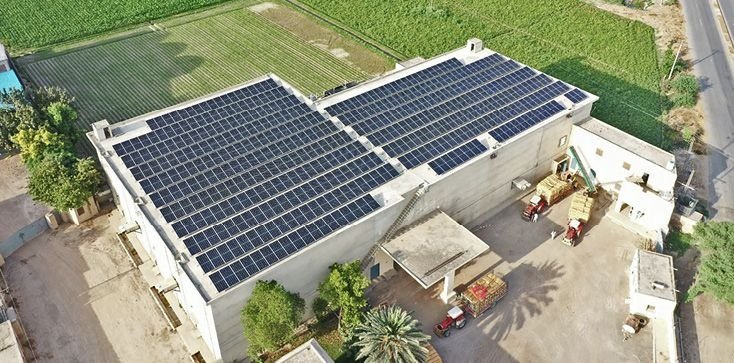
Solar systems are spreading rapidly across homes, shops, offices, farms and industrial facilities. During daylight hours, many consumers produce a significant portion of the electricity they need through their own solar panels.
This does not necessarily mean that electricity consumption has disappeared. It means that part of the consumption has moved away from the national grid and behind the consumer’s electricity meter.
Government estimates indicate that rooftop solar installations across Pakistan have exceeded 20,000 megawatts. Behind-the-meter solar capacity has been estimated at around 12,000 to 14,000MW and could be even higher. This rapidly growing capacity has significantly reduced the electricity consumers draw from the grid during sunny hours.
The position changes after sunset. Homes continue using lights, fans and air conditioners, while shops and commercial activities remain operational. Solar generation, however, falls rapidly and eventually stops.
A large volume of demand then returns to the national grid within a relatively short period. This pattern of weak daytime grid demand followed by a steep evening increase is commonly described as the “duck curve”.
Why was more coal needed despite record hydropower?
An important question arises from the annual generation figures. If hydropower production was at a record level, why did Pakistan have to generate substantially more electricity from imported coal?
One major reason was the shortfall in electricity generated from imported liquefied natural gas, or RLNG.
RLNG-based generation ended the year around 19 percent below the planned reference level, leaving a shortfall of almost four billion units.
Modern RLNG plants can play an important role in meeting changes in grid demand because their output can generally be adjusted more easily than that of traditional baseload plants. However, limited fuel availability prevented the system from obtaining the planned level of RLNG generation.
Imported-coal generation was increased to fill the gap. It finished approximately 43 percent above the planned reference level, producing almost four billion additional units.
Coal plants are not simply switched on when the sun sets. Instead, they may have to remain operational for longer periods so that dependable thermal generation is available when evening and nighttime demand rises.
What the economic merit order shows
The Independent System and Market Operator, or ISMO, arranges available power plants according to their incremental generation cost. This ranking is known as the economic merit order.
In simple terms, the system first attempts to obtain electricity from plants with lower variable costs. As electricity demand rises, plants placed further down the list, with higher generation costs, may also have to be dispatched.
ISMO’s website lists economic merit orders for July 2026, including separate publications for July 5 and July 12. Its market data section also provides 2026 datasets comparing marginal prices with electricity demand, along with separate marginal-price information.
The marginal price can be understood as the cost associated with the final generating plant needed to meet demand during a particular period. When evening demand requires a higher-cost plant to enter the system, the marginal cost of electricity for that period may rise.
A costly plant is not always an off-merit plant
It would be misleading to assume that every expensive power plant is operated unnecessarily or in violation of the merit order.
The system operator may have to dispatch a particular plant to maintain voltage, manage a transmission limitation, replace an unavailable generator or protect the stability of the grid in a specific region.
ISMO therefore publishes system reports alongside the economic merit order, including information on plants operated for system security and under security-constrained dispatch. These reports are essential for distinguishing between a plant dispatched because of its cost ranking and one operated because of a technical or grid-security requirement.
Solar is lowering costs, but the grid needs flexibility
It would be wrong to describe solar power itself as the problem.
Solar is providing consumers with lower-cost daytime electricity, reducing their reliance on imported fuels and easing pressure on the grid during sunny hours.
The real difficulty is that Pakistan’s electricity system was largely designed for a period when consumer demand was more predictable and most electricity was supplied directly through the national grid.
Today, grid sales decline during the day, but sufficient generation capacity must still be kept available to serve consumers after sunset. The system must therefore maintain coal, gas, RLNG, hydropower and other plants even though consumers may purchase fewer grid units during daylight hours.
The question that matters to consumers
The increased use of imported coal despite record hydropower shows that producing cheap electricity is not enough. The electricity must also be available at the time consumers need it.
If abundant solar and hydropower are available during the day but cannot be stored for evening use, the system must return to conventional thermal plants after sunset.
Possible responses include battery storage, pumped hydropower, better forecasting of distributed solar production, cheaper daytime electricity for industry, incentives for consumers to shift demand and sufficient flexible generation to respond to the evening increase.
Why greater data transparency matters
Publishing total demand and marginal prices is an important start, but a complete public record should also show hourly gross demand, demand remaining after distributed solar, the fuel mix, the plant setting the marginal price and the reason for operating any plant outside the normal merit order.
This would allow consumers and researchers to identify the hour in which demand rose most sharply, the higher-cost plant that entered the system and whether its operation was caused by fuel shortages, transmission restrictions, technical requirements or weak planning.
The central lesson from the financial year 2025-26 is clear. Pakistan is moving from a simple electricity-supply problem towards a challenge involving timing, flexibility and storage.
Even record hydropower generation cannot eliminate imported-fuel dependence unless low-cost daytime electricity can be shifted to the evening.
Slowing the solar transition is not the answer. Pakistan needs a grid capable of storing cheap daytime power, delivering it after sunset and using expensive imported fuels only when no lower-cost alternative is available.
Punjab's Plan to Develop 120 Model Villages: A New Approach to Rural Infrastructure

Punjab's Plan to Develop 120 Model Villages: A New Approach to Rural Infrastructure

▫️ Muhammad Faisal Sulehria

The Punjab government's decision to approve a pilot programme for developing 120 model villages represents a significant policy initiative aimed at improving rural infrastructure, sanitation and basic public facilities.

World Habitat Day: Three Billion People Worldwide Deprived of Adequate Housing. Why?

World Habitat Day: Three Billion People Worldwide Deprived of Adequate Housing. Why?

▫️ Muhammad Faisal Sulehria

World Habitat Day 2026 has been observed against the backdrop of a deepening global housing crisis in which safe, adequate and affordable shelter remains beyond the reach of billions of people.

10 Years Since Panama Papers, Offshore Secrecy Infrastructure Still Remains

10 Years Since Panama Papers, Offshore Secrecy Infrastructure Still Remains

▫️ Muhammad Faisal Sulehria

Ten years have passed since the Panama Papers exposed the scale and complexity of the global offshore financial system, yet the basic infrastructure that enables financial secrecy and anonymous ownership has not been completely dismantled.

New Provinces or Stronger Local Government? Pakistan Must Fix Governance Before Redrawing Its Map

New Provinces or Stronger Local Government? Pakistan Must Fix Governance Before Redrawing Its Map

▫️Muhammad Faisal Sulehria

Smaller provinces may improve administrative access, but without meaningful political, financial and administrative devolution, Pakistan risks creating more centres of power rather than bringing government closer to citizensPakistan’s go...

World Bank Downgrades Pakistan’s Barrage Project Over Weak Institutional Performance

World Bank Downgrades Pakistan’s Barrage Project Over Weak Institutional Performance

▫️ Muhammad Faisal Sulehria

The $314.93 million Sindh Barrages Improvement Project has made substantial progress on physical rehabilitation and modernisation works at Guddu and Sukkur barrages. Yet the World Bank has downgraded the project’s development objective a...

Indus Waters Treaty : A Legal Boost for Pakistan’s Position and Growing Questions for India

Indus Waters Treaty : A Legal Boost for Pakistan’s Position and Growing Questions for India

▫️Muhammad Faisal Sulehria

The Hague arbitration findings reinforce the treaty’s legal status and underline the importance of international agreements in managing water disputes between Pakistan and IndiaThe Indus Waters Treaty is far more than an agreement dividi...

Why Do We Still Prefer Thermal Power When Hydropower Is Cheaper and Available?

Why Do We Still Prefer Thermal Power When Hydropower Is Cheaper and Available?

▫️Muhammad Faisal Sulehria

Pakistan’s power sector is facing a striking contradiction. On one side, hydropower generation has crossed 7,000 MW during the monsoon as higher river flows have improved water availability. On the other, Punjab is reportedly facing a po...

Solar Power Reaches 27% of Total Generation, Transforming the Traditional Infrastructure Model

Solar Power Reaches 27% of Total Generation, Transforming the Traditional Infrastructure Model

▫️Muhammad Faisal Sulehria

Pakistan’s rapidly expanding rooftop and distributed solar market is beginning to reshape not only the country’s energy system but also the economics of residential, commercial and industrial property. According to new analysis by the Pa...

Punjab’s Idle Public Assets: Can Government Property Become a New Source of Revenue and Development?

Punjab’s Idle Public Assets: Can Government Property Become a New Source of Revenue and Development?

▫️Muhammad Faisal Sulehria

Punjab’s decision to establish a dedicated authority for identifying, managing and generating value from underused public assets could represent an important development for both the province’s real estate sector and its public finances....

Growing Use of Solar Energy Leaves Pakistan’s Power System Facing a New Challenge

Growing Use of Solar Energy Leaves Pakistan’s Power System Facing a New Challenge

▫️Muhammad Faisal Sulehria

Pakistan’s electricity challenge is no longer limited to how much power the country can produce. The more pressing questions are when that electricity is available, which source produces it and how quickly generation can respond when dem...


Pakistan’s electricity challenge is no longer limited to how much power the country can produce. The more pressing questions are when that electricity is available, which source produces it and how quickly generation can respond when demand rises.
Nearly 125 billion units of electricity were generated for the national grid during the financial year 2025-26, an increase of only 1.5 percent over the previous year. The overall number appears relatively stable, but the generation mix reveals a major change taking place inside the electricity system.
Hydropower generation reached a record level of nearly 40 billion units and contributed about 31 percent of total grid electricity. This large supply of low-cost power helped contain average generation costs, but it could not fully resolve the new challenge emerging during evening hours.
The challenge is timing, not only supply
Solar systems are spreading rapidly across homes, shops, offices, farms and industrial facilities. During daylight hours, many consumers produce a significant portion of the electricity they need through their own solar panels.
This does not necessarily mean that electricity consumption has disappeared. It means that part of the consumption has moved away from the national grid and behind the consumer’s electricity meter.
Government estimates indicate that rooftop solar installations across Pakistan have exceeded 20,000 megawatts. Behind-the-meter solar capacity has been estimated at around 12,000 to 14,000MW and could be even higher. This rapidly growing capacity has significantly reduced the electricity consumers draw from the grid during sunny hours.
The position changes after sunset. Homes continue using lights, fans and air conditioners, while shops and commercial activities remain operational. Solar generation, however, falls rapidly and eventually stops.
A large volume of demand then returns to the national grid within a relatively short period. This pattern of weak daytime grid demand followed by a steep evening increase is commonly described as the “duck curve”.
Why was more coal needed despite record hydropower?
An important question arises from the annual generation figures. If hydropower production was at a record level, why did Pakistan have to generate substantially more electricity from imported coal?
One major reason was the shortfall in electricity generated from imported liquefied natural gas, or RLNG.
RLNG-based generation ended the year around 19 percent below the planned reference level, leaving a shortfall of almost four billion units.
Modern RLNG plants can play an important role in meeting changes in grid demand because their output can generally be adjusted more easily than that of traditional baseload plants. However, limited fuel availability prevented the system from obtaining the planned level of RLNG generation.
Imported-coal generation was increased to fill the gap. It finished approximately 43 percent above the planned reference level, producing almost four billion additional units.
Coal plants are not simply switched on when the sun sets. Instead, they may have to remain operational for longer periods so that dependable thermal generation is available when evening and nighttime demand rises.
What the economic merit order shows
The Independent System and Market Operator, or ISMO, arranges available power plants according to their incremental generation cost. This ranking is known as the economic merit order.
In simple terms, the system first attempts to obtain electricity from plants with lower variable costs. As electricity demand rises, plants placed further down the list, with higher generation costs, may also have to be dispatched.
ISMO’s website lists economic merit orders for July 2026, including separate publications for July 5 and July 12. Its market data section also provides 2026 datasets comparing marginal prices with electricity demand, along with separate marginal-price information.
The marginal price can be understood as the cost associated with the final generating plant needed to meet demand during a particular period. When evening demand requires a higher-cost plant to enter the system, the marginal cost of electricity for that period may rise.
A costly plant is not always an off-merit plant
It would be misleading to assume that every expensive power plant is operated unnecessarily or in violation of the merit order.
The system operator may have to dispatch a particular plant to maintain voltage, manage a transmission limitation, replace an unavailable generator or protect the stability of the grid in a specific region.
ISMO therefore publishes system reports alongside the economic merit order, including information on plants operated for system security and under security-constrained dispatch. These reports are essential for distinguishing between a plant dispatched because of its cost ranking and one operated because of a technical or grid-security requirement.
Solar is lowering costs, but the grid needs flexibility
It would be wrong to describe solar power itself as the problem.
Solar is providing consumers with lower-cost daytime electricity, reducing their reliance on imported fuels and easing pressure on the grid during sunny hours.
The real difficulty is that Pakistan’s electricity system was largely designed for a period when consumer demand was more predictable and most electricity was supplied directly through the national grid.
Today, grid sales decline during the day, but sufficient generation capacity must still be kept available to serve consumers after sunset. The system must therefore maintain coal, gas, RLNG, hydropower and other plants even though consumers may purchase fewer grid units during daylight hours.
The question that matters to consumers
The increased use of imported coal despite record hydropower shows that producing cheap electricity is not enough. The electricity must also be available at the time consumers need it.
If abundant solar and hydropower are available during the day but cannot be stored for evening use, the system must return to conventional thermal plants after sunset.
Possible responses include battery storage, pumped hydropower, better forecasting of distributed solar production, cheaper daytime electricity for industry, incentives for consumers to shift demand and sufficient flexible generation to respond to the evening increase.
Why greater data transparency matters
Publishing total demand and marginal prices is an important start, but a complete public record should also show hourly gross demand, demand remaining after distributed solar, the fuel mix, the plant setting the marginal price and the reason for operating any plant outside the normal merit order.
This would allow consumers and researchers to identify the hour in which demand rose most sharply, the higher-cost plant that entered the system and whether its operation was caused by fuel shortages, transmission restrictions, technical requirements or weak planning.
The central lesson from the financial year 2025-26 is clear. Pakistan is moving from a simple electricity-supply problem towards a challenge involving timing, flexibility and storage.
Even record hydropower generation cannot eliminate imported-fuel dependence unless low-cost daytime electricity can be shifted to the evening.
Slowing the solar transition is not the answer. Pakistan needs a grid capable of storing cheap daytime power, delivering it after sunset and using expensive imported fuels only when no lower-cost alternative is available.
Punjab's Plan to Develop 120 Model Villages: A New Approach to Rural Infrastructure

Punjab's Plan to Develop 120 Model Villages: A New Approach to Rural Infrastructure

▫️ Muhammad Faisal Sulehria

The Punjab government's decision to approve a pilot programme for developing 120 model villages represents a significant policy initiative aimed at improving rural infrastructure, sanitation and basic public facilities.

World Habitat Day: Three Billion People Worldwide Deprived of Adequate Housing. Why?

World Habitat Day: Three Billion People Worldwide Deprived of Adequate Housing. Why?

▫️ Muhammad Faisal Sulehria

World Habitat Day 2026 has been observed against the backdrop of a deepening global housing crisis in which safe, adequate and affordable shelter remains beyond the reach of billions of people.

10 Years Since Panama Papers, Offshore Secrecy Infrastructure Still Remains

10 Years Since Panama Papers, Offshore Secrecy Infrastructure Still Remains

▫️ Muhammad Faisal Sulehria

Ten years have passed since the Panama Papers exposed the scale and complexity of the global offshore financial system, yet the basic infrastructure that enables financial secrecy and anonymous ownership has not been completely dismantled.

New Provinces or Stronger Local Government? Pakistan Must Fix Governance Before Redrawing Its Map

New Provinces or Stronger Local Government? Pakistan Must Fix Governance Before Redrawing Its Map

▫️Muhammad Faisal Sulehria

Smaller provinces may improve administrative access, but without meaningful political, financial and administrative devolution, Pakistan risks creating more centres of power rather than bringing government closer to citizensPakistan’s go...

World Bank Downgrades Pakistan’s Barrage Project Over Weak Institutional Performance

World Bank Downgrades Pakistan’s Barrage Project Over Weak Institutional Performance

▫️ Muhammad Faisal Sulehria

The $314.93 million Sindh Barrages Improvement Project has made substantial progress on physical rehabilitation and modernisation works at Guddu and Sukkur barrages. Yet the World Bank has downgraded the project’s development objective a...

Indus Waters Treaty : A Legal Boost for Pakistan’s Position and Growing Questions for India

Indus Waters Treaty : A Legal Boost for Pakistan’s Position and Growing Questions for India

▫️Muhammad Faisal Sulehria

The Hague arbitration findings reinforce the treaty’s legal status and underline the importance of international agreements in managing water disputes between Pakistan and IndiaThe Indus Waters Treaty is far more than an agreement dividi...

Why Do We Still Prefer Thermal Power When Hydropower Is Cheaper and Available?

Why Do We Still Prefer Thermal Power When Hydropower Is Cheaper and Available?

▫️Muhammad Faisal Sulehria

Pakistan’s power sector is facing a striking contradiction. On one side, hydropower generation has crossed 7,000 MW during the monsoon as higher river flows have improved water availability. On the other, Punjab is reportedly facing a po...

Solar Power Reaches 27% of Total Generation, Transforming the Traditional Infrastructure Model

Solar Power Reaches 27% of Total Generation, Transforming the Traditional Infrastructure Model

▫️Muhammad Faisal Sulehria

Pakistan’s rapidly expanding rooftop and distributed solar market is beginning to reshape not only the country’s energy system but also the economics of residential, commercial and industrial property. According to new analysis by the Pa...

Punjab’s Idle Public Assets: Can Government Property Become a New Source of Revenue and Development?

Punjab’s Idle Public Assets: Can Government Property Become a New Source of Revenue and Development?

▫️Muhammad Faisal Sulehria

Punjab’s decision to establish a dedicated authority for identifying, managing and generating value from underused public assets could represent an important development for both the province’s real estate sector and its public finances....

More Real Estate News

National Real Estate News

See All →

City and District Real Estate News

See All →

Global Real Estate News

See All →

Corporate Real Estate News

See All →

Social Real Estate News

See All →

Arazi Nama

See All →