ReNews Pakistan
← Back to home

Real Estate Insights

27 news articles

High Electricity Costs and Changing Solar Policy: Monthly Power Bills and Energy Self Sufficiency Are Becoming as Important as the Price of a Home

High Electricity Costs and Changing Solar Policy: Monthly Power Bills and Energy Self Sufficiency Are Becoming as Important as the Price of a Home

▫️Muhammad Faisal Sulehria

The financial calculation behind buying or building a home in Pakistan is no longer limited to land prices, construction costs, location and available amenities. Persistently high electricity tariffs have turned the monthly cost of runni...

The financial calculation behind buying or building a home in Pakistan is no longer limited to land prices, construction costs, location and available amenities. Persistently high electricity tariffs have turned the monthly cost of running a home into an important financial consideration. As a result, rooftop solar systems are gradually becoming part of residential property economics and the wider investment made in a home, particularly in major cities.
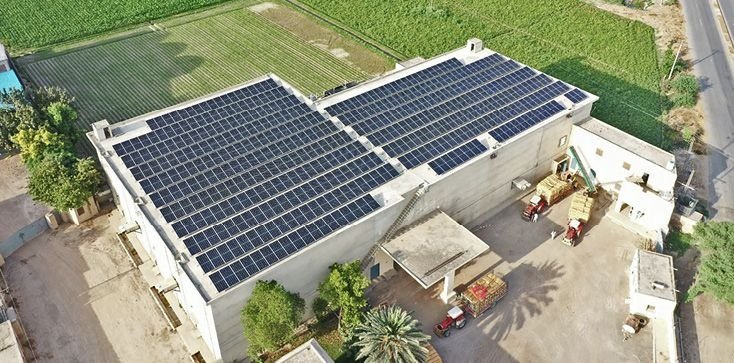
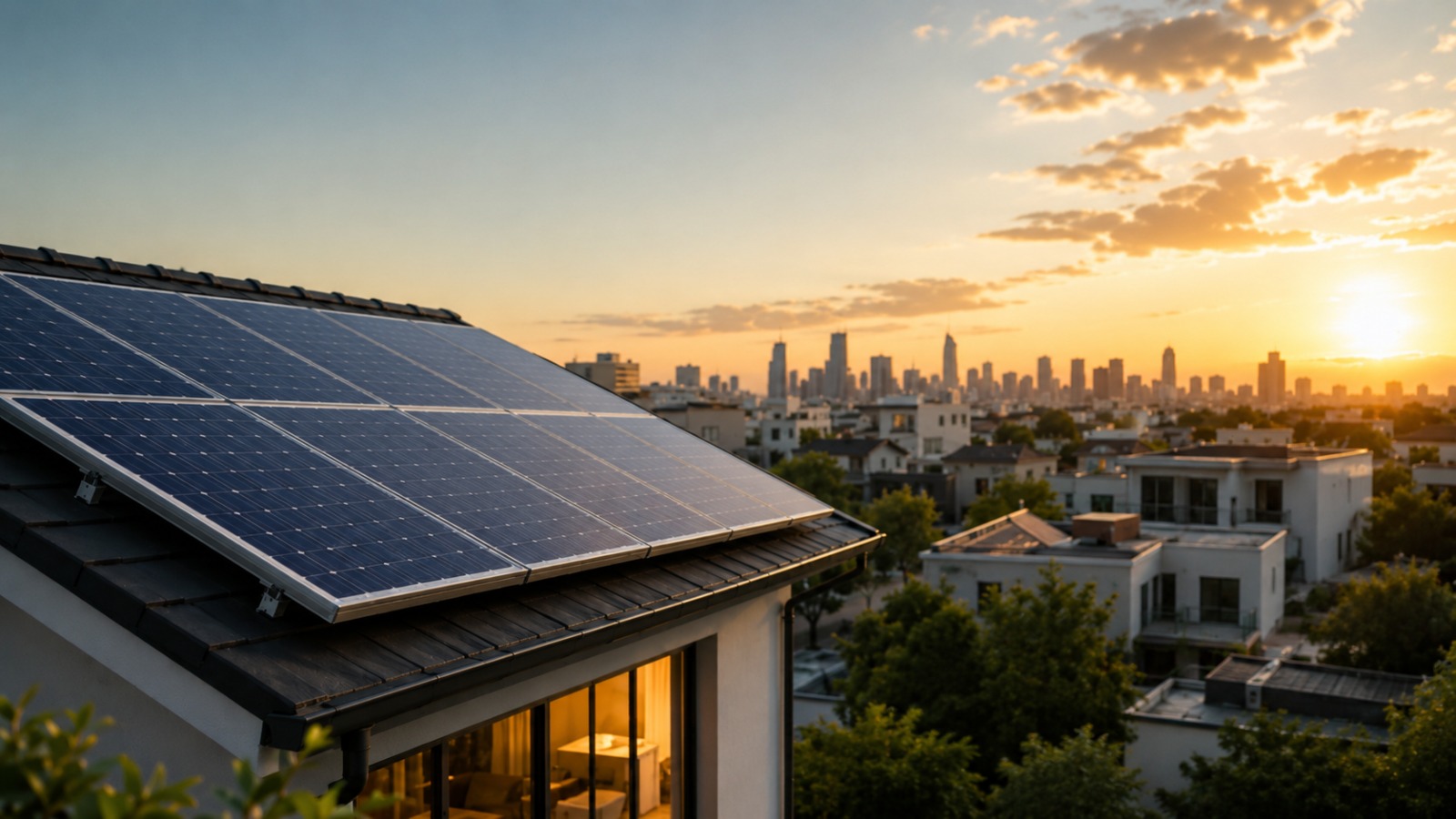
Amid rising electricity tariffs and growing pressure on household budgets, a 10 kilowatt solar system is emerging as a financially viable option for families that can afford the initial cost. According to industry estimates, a 10kW system in Pakistan can generate around 1,200 to 1,500 units of electricity per month, depending on location, weather conditions and the availability of sunlight.
This level of generation is particularly significant for larger homes where air conditioners, water pumps, refrigerators and other electrical appliances result in relatively high electricity consumption. Using solar electricity generated at home reduces the need to purchase expensive power from the national grid and can therefore significantly lower monthly electricity bills.
Current estimates suggest that some consumers paying electricity costs of between Rs45 and Rs60 per unit may save around Rs50,000 to Rs90,000 per month by consuming the electricity they generate themselves. Surplus electricity supplied to the national grid can provide an additional financial benefit, although the price paid for such electricity is determined under rules set by the government and the National Electric Power Regulatory Authority, and may change in the future.
For example, if a household consumes around 1,200 units of electricity per month and its 10kW solar system generates approximately 1,400 units, some surplus electricity may be supplied to the grid after meeting daytime household requirements. Estimates suggest that such a household could receive a combined monthly financial benefit of around Rs55,000 to Rs60,000 through direct savings on electricity consumption and compensation for surplus power.
The central question, however, is not simply the price of a solar system, but how long it takes for the investment to recover its cost. The current initial cost of a standard 10kW solar system is estimated at around Rs1.5 million to Rs2.2 million, depending on the quality of panels, inverter, other equipment and installation standards. At prevailing electricity tariffs, the investment could potentially recover its cost through savings on electricity bills within approximately two and a half to four years.
It is this payback period that makes solar energy particularly relevant from a real estate perspective. Not every costly improvement made to a house necessarily recovers its full value when the property is sold. A functioning solar system, however, can reduce monthly electricity expenses over many years, improving both the practical utility and overall financial appeal of a home.
If two otherwise similar homes are compared, the property with substantially lower monthly electricity expenses may prove more attractive to a buyer. Tenants may also prefer a house where monthly power bills are relatively lower. This does not mean, however, that every rupee spent on solar equipment will automatically translate into an equivalent increase in the property's sale price. The age of the panels and inverter, equipment quality, warranties, maintenance, battery condition and future government policy will all influence the system's actual value.
Pakistan's rapid expansion of solar energy has also created new challenges for the national electricity system. According to analysts, solar capacity connected through net metering had reached approximately 7,000 megawatts by June 2026, representing an almost 37 fold increase over six years. Estimates have also placed the combined generation capacity of net metering and solar systems operating independently of the national grid at around 20,000 megawatts.
During daylight hours, when large numbers of households and businesses use their own solar electricity, demand from the national grid can fall sharply. After sunset, however, that demand rises again. This pattern of reduced daytime demand followed by a rapid increase in the evening creates technical and financial challenges for electricity generation and transmission. The government's move to revise net metering conditions and shift towards net billing is also being viewed in this context.
NEPRA introduced new regulations for consumers who generate and use solar electricity in 2026, making it increasingly important to calculate the financial benefits of residential solar systems with greater caution. It would be risky for a homebuyer or investor to estimate returns over the next 20 years solely on the basis of today's rate for surplus electricity supplied to the grid, as official purchase rates, billing methods and other regulations may change in the future.
These changes have also increased the importance of batteries in residential solar installations. Pakistani consumers are increasingly moving away from relatively small batteries towards larger storage systems in the 14 to 16 kilowatt hour range. Falling battery prices, growing consumer confidence and the desire to use self generated electricity rather than export it to the grid are among the main factors driving this trend.
In simple terms, a battery energy storage system uses a large battery to store surplus electricity generated by solar panels during the day so that it can be used later in the evening or at night. This can further reduce a household's dependence on electricity drawn from the national grid. The government is also encouraging energy storage as a way to better manage the difference between daytime and nighttime electricity demand caused by the rapid growth of solar power.
If the financial benefit of supplying surplus solar electricity to the national grid declines further in the future, storing electricity in batteries for personal use could become increasingly important. In that scenario, adequate battery capacity alongside solar panels could become an important financial and practical feature of residential properties.
This transformation also carries an important message for real estate developers, builders, investors and homebuyers. New residential projects could benefit from incorporating adequate rooftop space, suitable orientation for solar panels, appropriate electrical wiring, secure locations for inverters and provision for larger batteries at the initial planning and construction stage.
Similarly, when buying a house that already has a solar system installed, simply counting the number of panels on the roof will not be enough. Buyers may increasingly need to examine the system's generation capacity, the age of its panels and inverter, remaining warranty coverage, actual electricity production over previous months and the standard of maintenance.
Pakistan's rapid solar expansion has not resulted solely from government policy or growing interest in environmentally friendly energy. Between fiscal years 2021 and 2025, the rupee depreciated by around 75 percent, electricity tariffs increased by nearly 140 percent and imported solar panel prices fell by approximately 60 percent. Together, these developments fundamentally changed the financial calculation for residential solar. Expensive grid electricity combined with relatively cheaper solar panels has made household solar systems more financially practical for families that can provide the initial investment.
Some estimates suggest that a quality solar system with a potential life of 20 to 25 years could generate total savings of between Rs15 million and Rs25 million. These figures, however, are long term projections. Actual savings will depend on future electricity tariffs, system performance, equipment replacement and maintenance costs, battery life and government policy.
The most important lesson for the real estate sector is that the financial value of a home may increasingly be judged by more than its price per marla or square foot. Homebuyers are also likely to consider how much the property will cost to operate every month. A house that generates a substantial share of its own electricity, reduces energy expenses during the summer and has the capacity to store power for future use may have greater practical appeal than a conventional home.
Even so, solar energy should be viewed less as an investment promising guaranteed returns and more as an asset capable of reducing the long term operating cost of a home. Electricity prices, net billing regulations, battery technology and solar equipment costs will continue to evolve. For homeowners and buyers, the more sensible decision will therefore be one based on actual electricity consumption, available rooftop space, the quality of the solar system, investment capacity and the possibility of future changes in energy policy.
Punjab's Plan to Develop 120 Model Villages: A New Approach to Rural Infrastructure

Punjab's Plan to Develop 120 Model Villages: A New Approach to Rural Infrastructure

▫️ Muhammad Faisal Sulehria

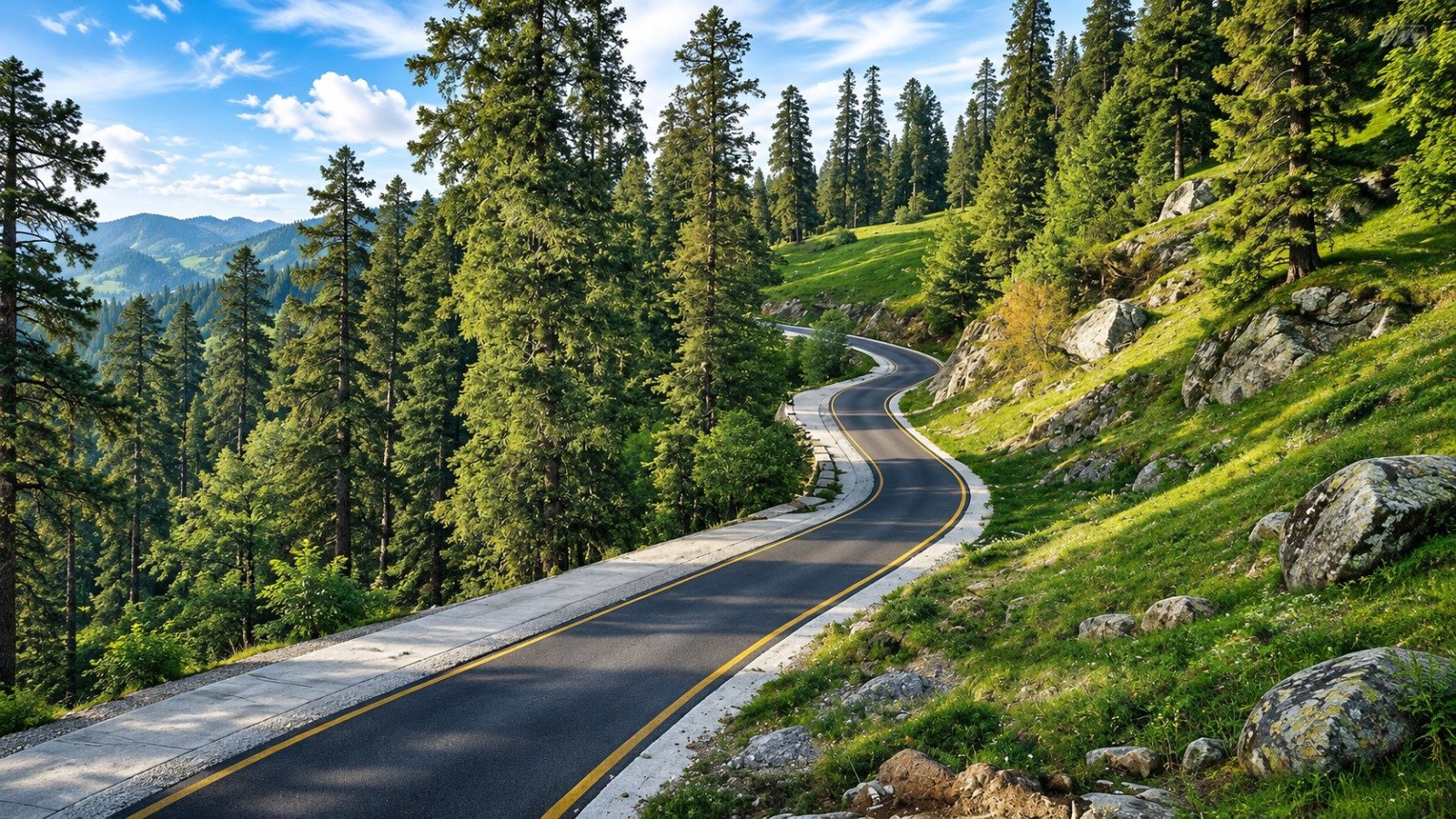
The Punjab government's decision to approve a pilot programme for developing 120 model villages represents a significant policy initiative aimed at improving rural infrastructure, sanitation and basic public facilities.

World Habitat Day: Three Billion People Worldwide Deprived of Adequate Housing. Why?

World Habitat Day: Three Billion People Worldwide Deprived of Adequate Housing. Why?

▫️ Muhammad Faisal Sulehria

World Habitat Day 2026 has been observed against the backdrop of a deepening global housing crisis in which safe, adequate and affordable shelter remains beyond the reach of billions of people.

10 Years Since Panama Papers, Offshore Secrecy Infrastructure Still Remains

10 Years Since Panama Papers, Offshore Secrecy Infrastructure Still Remains

▫️ Muhammad Faisal Sulehria

Ten years have passed since the Panama Papers exposed the scale and complexity of the global offshore financial system, yet the basic infrastructure that enables financial secrecy and anonymous ownership has not been completely dismantled.

New Provinces or Stronger Local Government? Pakistan Must Fix Governance Before Redrawing Its Map

New Provinces or Stronger Local Government? Pakistan Must Fix Governance Before Redrawing Its Map

▫️Muhammad Faisal Sulehria

Smaller provinces may improve administrative access, but without meaningful political, financial and administrative devolution, Pakistan risks creating more centres of power rather than bringing government closer to citizensPakistan’s go...

World Bank Downgrades Pakistan’s Barrage Project Over Weak Institutional Performance

World Bank Downgrades Pakistan’s Barrage Project Over Weak Institutional Performance

▫️ Muhammad Faisal Sulehria

The $314.93 million Sindh Barrages Improvement Project has made substantial progress on physical rehabilitation and modernisation works at Guddu and Sukkur barrages. Yet the World Bank has downgraded the project’s development objective a...

Indus Waters Treaty : A Legal Boost for Pakistan’s Position and Growing Questions for India

Indus Waters Treaty : A Legal Boost for Pakistan’s Position and Growing Questions for India

▫️Muhammad Faisal Sulehria

The Hague arbitration findings reinforce the treaty’s legal status and underline the importance of international agreements in managing water disputes between Pakistan and IndiaThe Indus Waters Treaty is far more than an agreement dividi...

Why Do We Still Prefer Thermal Power When Hydropower Is Cheaper and Available?

Why Do We Still Prefer Thermal Power When Hydropower Is Cheaper and Available?

▫️Muhammad Faisal Sulehria

Pakistan’s power sector is facing a striking contradiction. On one side, hydropower generation has crossed 7,000 MW during the monsoon as higher river flows have improved water availability. On the other, Punjab is reportedly facing a po...

Solar Power Reaches 27% of Total Generation, Transforming the Traditional Infrastructure Model

Solar Power Reaches 27% of Total Generation, Transforming the Traditional Infrastructure Model

▫️Muhammad Faisal Sulehria

Pakistan’s rapidly expanding rooftop and distributed solar market is beginning to reshape not only the country’s energy system but also the economics of residential, commercial and industrial property. According to new analysis by the Pa...

Punjab’s Idle Public Assets: Can Government Property Become a New Source of Revenue and Development?

Punjab’s Idle Public Assets: Can Government Property Become a New Source of Revenue and Development?

▫️Muhammad Faisal Sulehria

Punjab’s decision to establish a dedicated authority for identifying, managing and generating value from underused public assets could represent an important development for both the province’s real estate sector and its public finances....

High Electricity Costs and Changing Solar Policy: Monthly Power Bills and Energy Self Sufficiency Are Becoming as Important as the Price of a Home

High Electricity Costs and Changing Solar Policy: Monthly Power Bills and Energy Self Sufficiency Are Becoming as Important as the Price of a Home

▫️Muhammad Faisal Sulehria

The financial calculation behind buying or building a home in Pakistan is no longer limited to land prices, construction costs, location and available amenities. Persistently high electricity tariffs have turned the monthly cost of runni...


The financial calculation behind buying or building a home in Pakistan is no longer limited to land prices, construction costs, location and available amenities. Persistently high electricity tariffs have turned the monthly cost of running a home into an important financial consideration. As a result, rooftop solar systems are gradually becoming part of residential property economics and the wider investment made in a home, particularly in major cities.
Amid rising electricity tariffs and growing pressure on household budgets, a 10 kilowatt solar system is emerging as a financially viable option for families that can afford the initial cost. According to industry estimates, a 10kW system in Pakistan can generate around 1,200 to 1,500 units of electricity per month, depending on location, weather conditions and the availability of sunlight.
This level of generation is particularly significant for larger homes where air conditioners, water pumps, refrigerators and other electrical appliances result in relatively high electricity consumption. Using solar electricity generated at home reduces the need to purchase expensive power from the national grid and can therefore significantly lower monthly electricity bills.
Current estimates suggest that some consumers paying electricity costs of between Rs45 and Rs60 per unit may save around Rs50,000 to Rs90,000 per month by consuming the electricity they generate themselves. Surplus electricity supplied to the national grid can provide an additional financial benefit, although the price paid for such electricity is determined under rules set by the government and the National Electric Power Regulatory Authority, and may change in the future.
For example, if a household consumes around 1,200 units of electricity per month and its 10kW solar system generates approximately 1,400 units, some surplus electricity may be supplied to the grid after meeting daytime household requirements. Estimates suggest that such a household could receive a combined monthly financial benefit of around Rs55,000 to Rs60,000 through direct savings on electricity consumption and compensation for surplus power.
The central question, however, is not simply the price of a solar system, but how long it takes for the investment to recover its cost. The current initial cost of a standard 10kW solar system is estimated at around Rs1.5 million to Rs2.2 million, depending on the quality of panels, inverter, other equipment and installation standards. At prevailing electricity tariffs, the investment could potentially recover its cost through savings on electricity bills within approximately two and a half to four years.
It is this payback period that makes solar energy particularly relevant from a real estate perspective. Not every costly improvement made to a house necessarily recovers its full value when the property is sold. A functioning solar system, however, can reduce monthly electricity expenses over many years, improving both the practical utility and overall financial appeal of a home.
If two otherwise similar homes are compared, the property with substantially lower monthly electricity expenses may prove more attractive to a buyer. Tenants may also prefer a house where monthly power bills are relatively lower. This does not mean, however, that every rupee spent on solar equipment will automatically translate into an equivalent increase in the property's sale price. The age of the panels and inverter, equipment quality, warranties, maintenance, battery condition and future government policy will all influence the system's actual value.
Pakistan's rapid expansion of solar energy has also created new challenges for the national electricity system. According to analysts, solar capacity connected through net metering had reached approximately 7,000 megawatts by June 2026, representing an almost 37 fold increase over six years. Estimates have also placed the combined generation capacity of net metering and solar systems operating independently of the national grid at around 20,000 megawatts.
During daylight hours, when large numbers of households and businesses use their own solar electricity, demand from the national grid can fall sharply. After sunset, however, that demand rises again. This pattern of reduced daytime demand followed by a rapid increase in the evening creates technical and financial challenges for electricity generation and transmission. The government's move to revise net metering conditions and shift towards net billing is also being viewed in this context.
NEPRA introduced new regulations for consumers who generate and use solar electricity in 2026, making it increasingly important to calculate the financial benefits of residential solar systems with greater caution. It would be risky for a homebuyer or investor to estimate returns over the next 20 years solely on the basis of today's rate for surplus electricity supplied to the grid, as official purchase rates, billing methods and other regulations may change in the future.
These changes have also increased the importance of batteries in residential solar installations. Pakistani consumers are increasingly moving away from relatively small batteries towards larger storage systems in the 14 to 16 kilowatt hour range. Falling battery prices, growing consumer confidence and the desire to use self generated electricity rather than export it to the grid are among the main factors driving this trend.
In simple terms, a battery energy storage system uses a large battery to store surplus electricity generated by solar panels during the day so that it can be used later in the evening or at night. This can further reduce a household's dependence on electricity drawn from the national grid. The government is also encouraging energy storage as a way to better manage the difference between daytime and nighttime electricity demand caused by the rapid growth of solar power.
If the financial benefit of supplying surplus solar electricity to the national grid declines further in the future, storing electricity in batteries for personal use could become increasingly important. In that scenario, adequate battery capacity alongside solar panels could become an important financial and practical feature of residential properties.
This transformation also carries an important message for real estate developers, builders, investors and homebuyers. New residential projects could benefit from incorporating adequate rooftop space, suitable orientation for solar panels, appropriate electrical wiring, secure locations for inverters and provision for larger batteries at the initial planning and construction stage.
Similarly, when buying a house that already has a solar system installed, simply counting the number of panels on the roof will not be enough. Buyers may increasingly need to examine the system's generation capacity, the age of its panels and inverter, remaining warranty coverage, actual electricity production over previous months and the standard of maintenance.
Pakistan's rapid solar expansion has not resulted solely from government policy or growing interest in environmentally friendly energy. Between fiscal years 2021 and 2025, the rupee depreciated by around 75 percent, electricity tariffs increased by nearly 140 percent and imported solar panel prices fell by approximately 60 percent. Together, these developments fundamentally changed the financial calculation for residential solar. Expensive grid electricity combined with relatively cheaper solar panels has made household solar systems more financially practical for families that can provide the initial investment.
Some estimates suggest that a quality solar system with a potential life of 20 to 25 years could generate total savings of between Rs15 million and Rs25 million. These figures, however, are long term projections. Actual savings will depend on future electricity tariffs, system performance, equipment replacement and maintenance costs, battery life and government policy.
The most important lesson for the real estate sector is that the financial value of a home may increasingly be judged by more than its price per marla or square foot. Homebuyers are also likely to consider how much the property will cost to operate every month. A house that generates a substantial share of its own electricity, reduces energy expenses during the summer and has the capacity to store power for future use may have greater practical appeal than a conventional home.
Even so, solar energy should be viewed less as an investment promising guaranteed returns and more as an asset capable of reducing the long term operating cost of a home. Electricity prices, net billing regulations, battery technology and solar equipment costs will continue to evolve. For homeowners and buyers, the more sensible decision will therefore be one based on actual electricity consumption, available rooftop space, the quality of the solar system, investment capacity and the possibility of future changes in energy policy.
Punjab's Plan to Develop 120 Model Villages: A New Approach to Rural Infrastructure

Punjab's Plan to Develop 120 Model Villages: A New Approach to Rural Infrastructure

▫️ Muhammad Faisal Sulehria

The Punjab government's decision to approve a pilot programme for developing 120 model villages represents a significant policy initiative aimed at improving rural infrastructure, sanitation and basic public facilities.

World Habitat Day: Three Billion People Worldwide Deprived of Adequate Housing. Why?

World Habitat Day: Three Billion People Worldwide Deprived of Adequate Housing. Why?

▫️ Muhammad Faisal Sulehria

World Habitat Day 2026 has been observed against the backdrop of a deepening global housing crisis in which safe, adequate and affordable shelter remains beyond the reach of billions of people.

10 Years Since Panama Papers, Offshore Secrecy Infrastructure Still Remains

10 Years Since Panama Papers, Offshore Secrecy Infrastructure Still Remains

▫️ Muhammad Faisal Sulehria

Ten years have passed since the Panama Papers exposed the scale and complexity of the global offshore financial system, yet the basic infrastructure that enables financial secrecy and anonymous ownership has not been completely dismantled.

New Provinces or Stronger Local Government? Pakistan Must Fix Governance Before Redrawing Its Map

New Provinces or Stronger Local Government? Pakistan Must Fix Governance Before Redrawing Its Map

▫️Muhammad Faisal Sulehria

Smaller provinces may improve administrative access, but without meaningful political, financial and administrative devolution, Pakistan risks creating more centres of power rather than bringing government closer to citizensPakistan’s go...

World Bank Downgrades Pakistan’s Barrage Project Over Weak Institutional Performance

World Bank Downgrades Pakistan’s Barrage Project Over Weak Institutional Performance

▫️ Muhammad Faisal Sulehria

The $314.93 million Sindh Barrages Improvement Project has made substantial progress on physical rehabilitation and modernisation works at Guddu and Sukkur barrages. Yet the World Bank has downgraded the project’s development objective a...

Indus Waters Treaty : A Legal Boost for Pakistan’s Position and Growing Questions for India

Indus Waters Treaty : A Legal Boost for Pakistan’s Position and Growing Questions for India

▫️Muhammad Faisal Sulehria

The Hague arbitration findings reinforce the treaty’s legal status and underline the importance of international agreements in managing water disputes between Pakistan and IndiaThe Indus Waters Treaty is far more than an agreement dividi...

Why Do We Still Prefer Thermal Power When Hydropower Is Cheaper and Available?

Why Do We Still Prefer Thermal Power When Hydropower Is Cheaper and Available?

▫️Muhammad Faisal Sulehria

Pakistan’s power sector is facing a striking contradiction. On one side, hydropower generation has crossed 7,000 MW during the monsoon as higher river flows have improved water availability. On the other, Punjab is reportedly facing a po...

Solar Power Reaches 27% of Total Generation, Transforming the Traditional Infrastructure Model

Solar Power Reaches 27% of Total Generation, Transforming the Traditional Infrastructure Model

▫️Muhammad Faisal Sulehria

Pakistan’s rapidly expanding rooftop and distributed solar market is beginning to reshape not only the country’s energy system but also the economics of residential, commercial and industrial property. According to new analysis by the Pa...

Punjab’s Idle Public Assets: Can Government Property Become a New Source of Revenue and Development?

Punjab’s Idle Public Assets: Can Government Property Become a New Source of Revenue and Development?

▫️Muhammad Faisal Sulehria

Punjab’s decision to establish a dedicated authority for identifying, managing and generating value from underused public assets could represent an important development for both the province’s real estate sector and its public finances....

More Real Estate News

National Real Estate News

See All →

City and District Real Estate News

See All →

Global Real Estate News

See All →

Corporate Real Estate News

See All →

Social Real Estate News

See All →

Arazi Nama

See All →