← Back to home

Real Estate Insights

27 news articles

The Real Test of DISCO Privatisation Is Not Finding Buyers, but Restoring Trust in Pakistan’s Contracts

The Real Test of DISCO Privatisation Is Not Finding Buyers, but Restoring Trust in Pakistan’s Contracts

▫️Muhammad Faisal Salharia

The proposed privatisation of FESCO, GEPCO and IESCO has reached a stage where the central question is no longer simply how the government will sell stakes in these companies or at what price. The more important question is: what kind of...

The proposed privatisation of FESCO, GEPCO and IESCO has reached a stage where the central question is no longer simply how the government will sell stakes in these companies or at what price. The more important question is: what kind of business, regulatory framework and electricity market will private investors actually inherit?
Interest from nearly a dozen domestic and foreign investors, including four overseas entities, is encouraging. It suggests that Pakistan’s electricity distribution business still has commercial appeal if the operating environment can be made sufficiently predictable.
But the conditions being sought by potential investors reveal another reality. They are not merely pricing normal commercial risk into their bids; they are also pricing Pakistan’s policy and contractual credibility risk.
Investors are seeking protection against the reopening of agreements, stronger regulatory safeguards, timely tariff adjustments, longer term tariff certainty and protection from arbitrary policy changes.
Given Pakistan’s history, these demands are hardly surprising.
Repeated renegotiation of agreements in the power and infrastructure sectors, sudden policy shifts and regulatory uncertainty have made investors cautious. Past renegotiations with independent power producers have also sent a clear message to outside investors: a legally binding agreement today may not necessarily remain untouched tomorrow.
The government must therefore distinguish between demands that provide legitimate commercial protection and those that merely transfer private sector risks to electricity consumers or the national exchequer.
A demand for transparent and predictable regulation, for instance, is entirely reasonable. If a private operator is expected to invest billions of rupees in a distribution network over many years, it needs to know how tariffs will be determined, how investment plans will be approved and whether political changes could suddenly disrupt previously approved business decisions.
The government could also consider political-risk guarantees backed by multilateral institutions. Such guarantees would not only protect investors; they could also impose greater discipline on the state by making it more difficult to casually alter policies or contractual commitments.
There must, however, be clear red lines.
If returns for privatised DISCOs are linked to the US dollar, exchange-rate risk would ultimately be transferred to Pakistani consumers or the government. For a country whose external account remains structurally vulnerable, this could create another long-term financial burden.
The same caution applies to demands for complete exemption from existing obligations to purchase expensive electricity.
A private DISCO should eventually have the ability to procure cheaper electricity and benefit from a more competitive power market. But privatisation cannot mean that profitable parts of the business are transferred to private operators while the state and consumers remain responsible for costly generation contracts and capacity payments.
Before privatisation, another question must therefore be answered clearly: what exactly is the buyer acquiring?
Which liabilities will move with the company? Who will be responsible for employee pensions? How will outstanding receivables be treated? What portion of accumulated circular debt will remain on the company’s books, and what portion will stay with the government?
If these issues are not settled before the sale, today’s privatisation could easily become tomorrow’s dispute.
This is particularly important because the financial burden of state-owned enterprises is already substantial. According to the State Bank of Pakistan, total liabilities of public-sector enterprises have reached around Rs3.11 trillion.
Privatisation, therefore, cannot be treated simply as the transfer of an inefficient public-sector company into private hands. For a new owner to operate commercially, the balance sheet must first be made reasonably workable.
Perhaps the most critical issue is the tariff framework.
Investors reportedly prefer a predictable tariff-control period of seven to ten years rather than five. In principle, this deserves serious consideration because investments in electricity distribution networks take years to recover.
But longer tariff certainty cannot become an unconditional guarantee of returns.
Any long term framework should be tied to measurable improvements in distribution losses, recoveries, service quality, complaint resolution, reliability of supply and actual investment in the network.
An operator that improves performance should be rewarded. But consumers should not be required to indefinitely compensate a private operator that fails to meet agreed standards.
Pakistan may also eventually need to reconsider its existing uniform national tariff structure. A system that treats efficient and inefficient distribution companies almost alike weakens incentives for improvement.
Any transition, however, will have to be carefully designed. Consumers should not suddenly face higher tariffs simply because they happen to live in a particular distribution area.
The more sustainable solution is to separate commercial performance from social policy.
If the government wants to subsidise poorer households or particular regions, those subsidies should be provided transparently through the national budget rather than hidden inside the balance sheets of distribution companies.
Private investors cannot reasonably be expected to operate as instruments of an unclear fiscal or social policy.
Ultimately, the objective of privatising FESCO, GEPCO and IESCO should not simply be to sell three distribution companies.
The stakes are much larger for Pakistan.
If the government can complete these transactions with clearly defined liabilities, predictable tariffs, strong regulation, consumer safeguards and contracts that are not reopened whenever the political climate changes, the impact will extend well beyond the electricity sector.
It could send a far more important message to international investors: Pakistan is not only capable of signing long-term commercial agreements; it is also capable of honouring them.
Punjab's Plan to Develop 120 Model Villages: A New Approach to Rural Infrastructure

Punjab's Plan to Develop 120 Model Villages: A New Approach to Rural Infrastructure

▫️ Muhammad Faisal Sulehria

The Punjab government's decision to approve a pilot programme for developing 120 model villages represents a significant policy initiative aimed at improving rural infrastructure, sanitation and basic public facilities.

World Habitat Day: Three Billion People Worldwide Deprived of Adequate Housing. Why?

World Habitat Day: Three Billion People Worldwide Deprived of Adequate Housing. Why?

▫️ Muhammad Faisal Sulehria

World Habitat Day 2026 has been observed against the backdrop of a deepening global housing crisis in which safe, adequate and affordable shelter remains beyond the reach of billions of people.

10 Years Since Panama Papers, Offshore Secrecy Infrastructure Still Remains

10 Years Since Panama Papers, Offshore Secrecy Infrastructure Still Remains

▫️ Muhammad Faisal Sulehria

Ten years have passed since the Panama Papers exposed the scale and complexity of the global offshore financial system, yet the basic infrastructure that enables financial secrecy and anonymous ownership has not been completely dismantled.

New Provinces or Stronger Local Government? Pakistan Must Fix Governance Before Redrawing Its Map

New Provinces or Stronger Local Government? Pakistan Must Fix Governance Before Redrawing Its Map

▫️Muhammad Faisal Sulehria

Smaller provinces may improve administrative access, but without meaningful political, financial and administrative devolution, Pakistan risks creating more centres of power rather than bringing government closer to citizensPakistan’s go...

World Bank Downgrades Pakistan’s Barrage Project Over Weak Institutional Performance

World Bank Downgrades Pakistan’s Barrage Project Over Weak Institutional Performance

▫️ Muhammad Faisal Sulehria

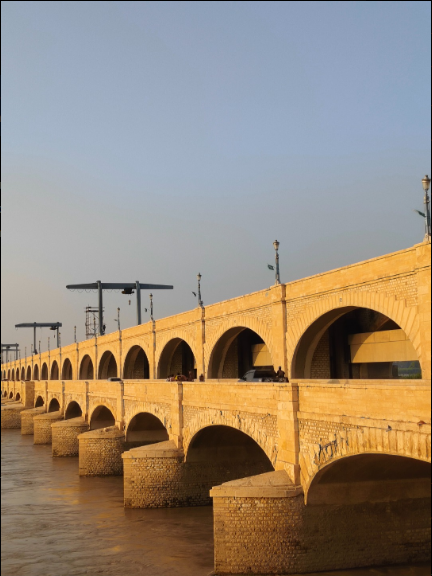
The $314.93 million Sindh Barrages Improvement Project has made substantial progress on physical rehabilitation and modernisation works at Guddu and Sukkur barrages. Yet the World Bank has downgraded the project’s development objective a...

Indus Waters Treaty : A Legal Boost for Pakistan’s Position and Growing Questions for India

Indus Waters Treaty : A Legal Boost for Pakistan’s Position and Growing Questions for India

▫️Muhammad Faisal Sulehria

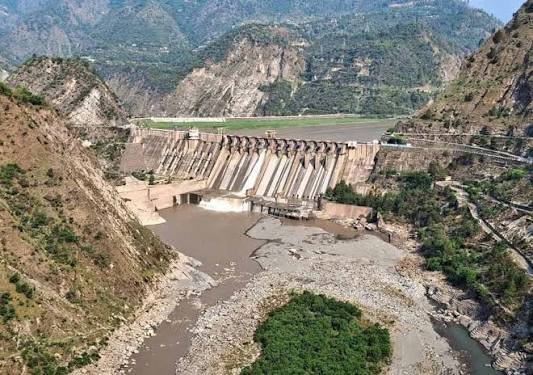
The Hague arbitration findings reinforce the treaty’s legal status and underline the importance of international agreements in managing water disputes between Pakistan and IndiaThe Indus Waters Treaty is far more than an agreement dividi...

Why Do We Still Prefer Thermal Power When Hydropower Is Cheaper and Available?

Why Do We Still Prefer Thermal Power When Hydropower Is Cheaper and Available?

▫️Muhammad Faisal Sulehria

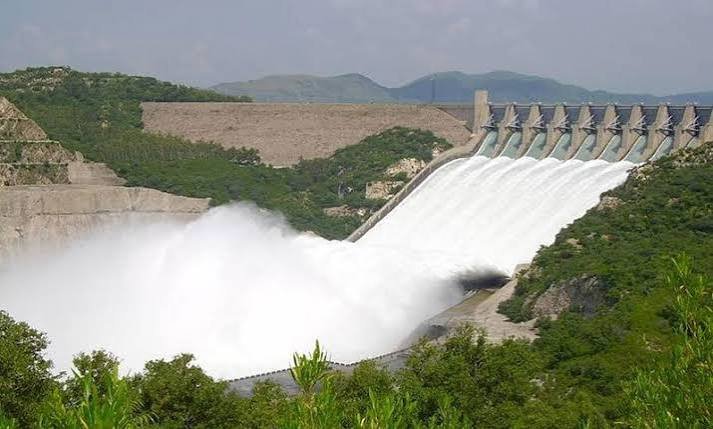
Pakistan’s power sector is facing a striking contradiction. On one side, hydropower generation has crossed 7,000 MW during the monsoon as higher river flows have improved water availability. On the other, Punjab is reportedly facing a po...

Solar Power Reaches 27% of Total Generation, Transforming the Traditional Infrastructure Model

Solar Power Reaches 27% of Total Generation, Transforming the Traditional Infrastructure Model

▫️Muhammad Faisal Sulehria

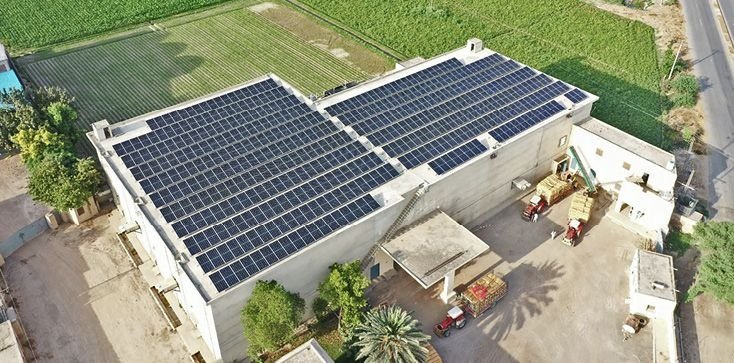
Pakistan’s rapidly expanding rooftop and distributed solar market is beginning to reshape not only the country’s energy system but also the economics of residential, commercial and industrial property. According to new analysis by the Pa...

Punjab’s Idle Public Assets: Can Government Property Become a New Source of Revenue and Development?

Punjab’s Idle Public Assets: Can Government Property Become a New Source of Revenue and Development?

▫️Muhammad Faisal Sulehria

Punjab’s decision to establish a dedicated authority for identifying, managing and generating value from underused public assets could represent an important development for both the province’s real estate sector and its public finances....

The Real Test of DISCO Privatisation Is Not Finding Buyers, but Restoring Trust in Pakistan’s Contracts

The Real Test of DISCO Privatisation Is Not Finding Buyers, but Restoring Trust in Pakistan’s Contracts

▫️Muhammad Faisal Salharia

The proposed privatisation of FESCO, GEPCO and IESCO has reached a stage where the central question is no longer simply how the government will sell stakes in these companies or at what price. The more important question is: what kind of...


The proposed privatisation of FESCO, GEPCO and IESCO has reached a stage where the central question is no longer simply how the government will sell stakes in these companies or at what price. The more important question is: what kind of business, regulatory framework and electricity market will private investors actually inherit?
Interest from nearly a dozen domestic and foreign investors, including four overseas entities, is encouraging. It suggests that Pakistan’s electricity distribution business still has commercial appeal if the operating environment can be made sufficiently predictable.
But the conditions being sought by potential investors reveal another reality. They are not merely pricing normal commercial risk into their bids; they are also pricing Pakistan’s policy and contractual credibility risk.
Investors are seeking protection against the reopening of agreements, stronger regulatory safeguards, timely tariff adjustments, longer term tariff certainty and protection from arbitrary policy changes.
Given Pakistan’s history, these demands are hardly surprising.
Repeated renegotiation of agreements in the power and infrastructure sectors, sudden policy shifts and regulatory uncertainty have made investors cautious. Past renegotiations with independent power producers have also sent a clear message to outside investors: a legally binding agreement today may not necessarily remain untouched tomorrow.
The government must therefore distinguish between demands that provide legitimate commercial protection and those that merely transfer private sector risks to electricity consumers or the national exchequer.
A demand for transparent and predictable regulation, for instance, is entirely reasonable. If a private operator is expected to invest billions of rupees in a distribution network over many years, it needs to know how tariffs will be determined, how investment plans will be approved and whether political changes could suddenly disrupt previously approved business decisions.
The government could also consider political-risk guarantees backed by multilateral institutions. Such guarantees would not only protect investors; they could also impose greater discipline on the state by making it more difficult to casually alter policies or contractual commitments.
There must, however, be clear red lines.
If returns for privatised DISCOs are linked to the US dollar, exchange-rate risk would ultimately be transferred to Pakistani consumers or the government. For a country whose external account remains structurally vulnerable, this could create another long-term financial burden.
The same caution applies to demands for complete exemption from existing obligations to purchase expensive electricity.
A private DISCO should eventually have the ability to procure cheaper electricity and benefit from a more competitive power market. But privatisation cannot mean that profitable parts of the business are transferred to private operators while the state and consumers remain responsible for costly generation contracts and capacity payments.
Before privatisation, another question must therefore be answered clearly: what exactly is the buyer acquiring?
Which liabilities will move with the company? Who will be responsible for employee pensions? How will outstanding receivables be treated? What portion of accumulated circular debt will remain on the company’s books, and what portion will stay with the government?
If these issues are not settled before the sale, today’s privatisation could easily become tomorrow’s dispute.
This is particularly important because the financial burden of state-owned enterprises is already substantial. According to the State Bank of Pakistan, total liabilities of public-sector enterprises have reached around Rs3.11 trillion.
Privatisation, therefore, cannot be treated simply as the transfer of an inefficient public-sector company into private hands. For a new owner to operate commercially, the balance sheet must first be made reasonably workable.
Perhaps the most critical issue is the tariff framework.
Investors reportedly prefer a predictable tariff-control period of seven to ten years rather than five. In principle, this deserves serious consideration because investments in electricity distribution networks take years to recover.
But longer tariff certainty cannot become an unconditional guarantee of returns.
Any long term framework should be tied to measurable improvements in distribution losses, recoveries, service quality, complaint resolution, reliability of supply and actual investment in the network.
An operator that improves performance should be rewarded. But consumers should not be required to indefinitely compensate a private operator that fails to meet agreed standards.
Pakistan may also eventually need to reconsider its existing uniform national tariff structure. A system that treats efficient and inefficient distribution companies almost alike weakens incentives for improvement.
Any transition, however, will have to be carefully designed. Consumers should not suddenly face higher tariffs simply because they happen to live in a particular distribution area.
The more sustainable solution is to separate commercial performance from social policy.
If the government wants to subsidise poorer households or particular regions, those subsidies should be provided transparently through the national budget rather than hidden inside the balance sheets of distribution companies.
Private investors cannot reasonably be expected to operate as instruments of an unclear fiscal or social policy.
Ultimately, the objective of privatising FESCO, GEPCO and IESCO should not simply be to sell three distribution companies.
The stakes are much larger for Pakistan.
If the government can complete these transactions with clearly defined liabilities, predictable tariffs, strong regulation, consumer safeguards and contracts that are not reopened whenever the political climate changes, the impact will extend well beyond the electricity sector.
It could send a far more important message to international investors: Pakistan is not only capable of signing long-term commercial agreements; it is also capable of honouring them.
Punjab's Plan to Develop 120 Model Villages: A New Approach to Rural Infrastructure

Punjab's Plan to Develop 120 Model Villages: A New Approach to Rural Infrastructure

▫️ Muhammad Faisal Sulehria

The Punjab government's decision to approve a pilot programme for developing 120 model villages represents a significant policy initiative aimed at improving rural infrastructure, sanitation and basic public facilities.

World Habitat Day: Three Billion People Worldwide Deprived of Adequate Housing. Why?

World Habitat Day: Three Billion People Worldwide Deprived of Adequate Housing. Why?

▫️ Muhammad Faisal Sulehria

World Habitat Day 2026 has been observed against the backdrop of a deepening global housing crisis in which safe, adequate and affordable shelter remains beyond the reach of billions of people.

10 Years Since Panama Papers, Offshore Secrecy Infrastructure Still Remains

10 Years Since Panama Papers, Offshore Secrecy Infrastructure Still Remains

▫️ Muhammad Faisal Sulehria

Ten years have passed since the Panama Papers exposed the scale and complexity of the global offshore financial system, yet the basic infrastructure that enables financial secrecy and anonymous ownership has not been completely dismantled.

New Provinces or Stronger Local Government? Pakistan Must Fix Governance Before Redrawing Its Map

New Provinces or Stronger Local Government? Pakistan Must Fix Governance Before Redrawing Its Map

▫️Muhammad Faisal Sulehria

Smaller provinces may improve administrative access, but without meaningful political, financial and administrative devolution, Pakistan risks creating more centres of power rather than bringing government closer to citizensPakistan’s go...

World Bank Downgrades Pakistan’s Barrage Project Over Weak Institutional Performance

World Bank Downgrades Pakistan’s Barrage Project Over Weak Institutional Performance

▫️ Muhammad Faisal Sulehria

The $314.93 million Sindh Barrages Improvement Project has made substantial progress on physical rehabilitation and modernisation works at Guddu and Sukkur barrages. Yet the World Bank has downgraded the project’s development objective a...

Indus Waters Treaty : A Legal Boost for Pakistan’s Position and Growing Questions for India

Indus Waters Treaty : A Legal Boost for Pakistan’s Position and Growing Questions for India

▫️Muhammad Faisal Sulehria

The Hague arbitration findings reinforce the treaty’s legal status and underline the importance of international agreements in managing water disputes between Pakistan and IndiaThe Indus Waters Treaty is far more than an agreement dividi...

Why Do We Still Prefer Thermal Power When Hydropower Is Cheaper and Available?

Why Do We Still Prefer Thermal Power When Hydropower Is Cheaper and Available?

▫️Muhammad Faisal Sulehria

Pakistan’s power sector is facing a striking contradiction. On one side, hydropower generation has crossed 7,000 MW during the monsoon as higher river flows have improved water availability. On the other, Punjab is reportedly facing a po...

Solar Power Reaches 27% of Total Generation, Transforming the Traditional Infrastructure Model

Solar Power Reaches 27% of Total Generation, Transforming the Traditional Infrastructure Model

▫️Muhammad Faisal Sulehria

Pakistan’s rapidly expanding rooftop and distributed solar market is beginning to reshape not only the country’s energy system but also the economics of residential, commercial and industrial property. According to new analysis by the Pa...

Punjab’s Idle Public Assets: Can Government Property Become a New Source of Revenue and Development?

Punjab’s Idle Public Assets: Can Government Property Become a New Source of Revenue and Development?

▫️Muhammad Faisal Sulehria

Punjab’s decision to establish a dedicated authority for identifying, managing and generating value from underused public assets could represent an important development for both the province’s real estate sector and its public finances....

More Real Estate News

National Real Estate News

See All →

City and District Real Estate News

See All →

Global Real Estate News

See All →

Corporate Real Estate News

See All →

Social Real Estate News

See All →

Arazi Nama

See All →