ReNews Pakistan
← Back to home

Real Estate Insights

27 news articles

Why Is Property Demand Rising in Pakistan and How Long Can the Recent Price Increase Continue?

Why Is Property Demand Rising in Pakistan and How Long Can the Recent Price Increase Continue?

▫️Muhammad Faisal Sulehria

Pakistan’s real estate market is showing renewed activity, with rising demand reported in Karachi, Lahore and Islamabad. Market observers estimate that residential property prices have increased by 10% to 15% in some locations, although ...

Pakistan’s real estate market is showing renewed activity, with rising demand reported in Karachi, Lahore and Islamabad. Market observers estimate that residential property prices have increased by 10% to 15% in some locations, although the trend does not appear to be uniform across every city, project or property category.
The recent movement is being driven by a combination of lower transaction taxes, geopolitical uncertainty in the Middle East, investment by overseas Pakistanis, limited housing supply and the gradual expansion of subsidised housing finance.
One of the most immediate factors is the reduction in withholding taxes on property transactions. Under the Finance Act 2025–26, the withholding tax on property purchases by tax filers was reduced from 2.5% to 1.25%, while the tax on property sales was cut from 5.5% to 2.75%.
These reductions have lowered the cost of completing property transactions for both buyers and sellers. Some investors who had postponed purchases because of high taxes and transaction expenses may now be returning to the market.
Limited supply is another important reason behind higher prices. In Karachi, the number of completed housing units in established and well serviced areas remains restricted compared with demand. Buyers are increasingly choosing completed homes and apartments instead of newly launched projects that may take several years to deliver.
Ready properties offer immediate possession, established infrastructure and fewer construction related risks. This explains why demand may rise sharply in selected localities even when the broader property market remains mixed.
A similar pattern is visible in Lahore and Islamabad, where investors are showing greater interest in developed housing schemes and completed high rise residential projects. Properties with existing roads, electricity, water, security and nearby commercial facilities are attracting more buyers than undeveloped plots or projects facing uncertain completion schedules.
This indicates that the current recovery is selective. Demand is not necessarily increasing across every category of land, housing scheme or apartment development. Projects with clear ownership, regulatory approvals, completed infrastructure and immediate usability are in a stronger position.
Geopolitical tensions in the Middle East have also influenced investment decisions. Some overseas Pakistanis are diversifying their assets by moving part of their capital into Pakistan’s property market. For them, domestic real estate may provide a long term asset, rental income or a future home in their country of origin.
The Prime Minister Apna Ghar housing finance programme is supporting another segment of the market: first time and middle income homebuyers. Banks have reportedly approved PKR 204 billion in housing finance under the programme, while around PKR 27 billion has been disbursed.
The difference between approved and disbursed financing is significant. It suggests that documentation requirements, property verification, bank conditions, processing delays and the shortage of affordable homes may still be limiting the programme’s practical reach.
The reported 10% to 15% increase in residential prices should also be interpreted carefully. Such estimates may reflect activity in particular neighbourhoods or completed projects rather than an equal rise across entire cities. A limited number of high value transactions can create the appearance of a wider price increase.
A sustainable recovery would require stronger evidence from registered property transactions, housing finance disbursements, construction activity, rental trends and the launch of new residential projects.
Pakistan’s property market cannot achieve long term stability through investor demand alone. Faster project approvals, transparent land records, improved access to construction finance, stronger buyer protection and a larger supply of affordable homes will also be necessary.
If demand continues to rise without a corresponding increase in supply, property prices may move further beyond the reach of first time buyers. This could benefit existing owners and short term investors while making the housing shortage more difficult for ordinary families.
However, if increased demand is matched by new construction, the current trend could support employment and growth in cement, steel, glass, tiles, paint, transportation, banking and other related industries.
The real test of the present market recovery is therefore not simply how much property prices rise. Its success will depend on whether new investment produces more homes, better urban infrastructure and affordable housing opportunities for a wider section of the population.
Punjab's Plan to Develop 120 Model Villages: A New Approach to Rural Infrastructure

Punjab's Plan to Develop 120 Model Villages: A New Approach to Rural Infrastructure

▫️ Muhammad Faisal Sulehria

The Punjab government's decision to approve a pilot programme for developing 120 model villages represents a significant policy initiative aimed at improving rural infrastructure, sanitation and basic public facilities.

World Habitat Day: Three Billion People Worldwide Deprived of Adequate Housing. Why?

World Habitat Day: Three Billion People Worldwide Deprived of Adequate Housing. Why?

▫️ Muhammad Faisal Sulehria

World Habitat Day 2026 has been observed against the backdrop of a deepening global housing crisis in which safe, adequate and affordable shelter remains beyond the reach of billions of people.

10 Years Since Panama Papers, Offshore Secrecy Infrastructure Still Remains

10 Years Since Panama Papers, Offshore Secrecy Infrastructure Still Remains

▫️ Muhammad Faisal Sulehria

Ten years have passed since the Panama Papers exposed the scale and complexity of the global offshore financial system, yet the basic infrastructure that enables financial secrecy and anonymous ownership has not been completely dismantled.

New Provinces or Stronger Local Government? Pakistan Must Fix Governance Before Redrawing Its Map

New Provinces or Stronger Local Government? Pakistan Must Fix Governance Before Redrawing Its Map

▫️Muhammad Faisal Sulehria

Smaller provinces may improve administrative access, but without meaningful political, financial and administrative devolution, Pakistan risks creating more centres of power rather than bringing government closer to citizensPakistan’s go...

World Bank Downgrades Pakistan’s Barrage Project Over Weak Institutional Performance

World Bank Downgrades Pakistan’s Barrage Project Over Weak Institutional Performance

▫️ Muhammad Faisal Sulehria

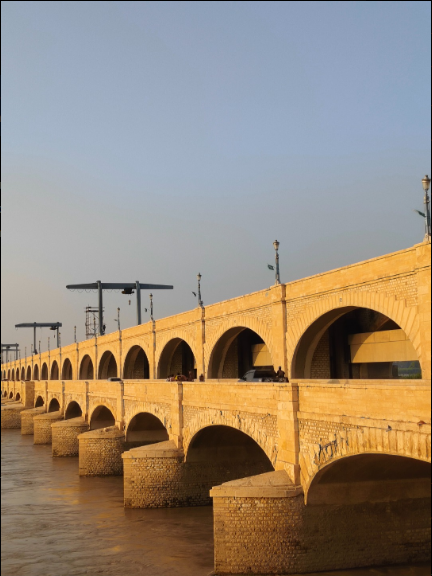
The $314.93 million Sindh Barrages Improvement Project has made substantial progress on physical rehabilitation and modernisation works at Guddu and Sukkur barrages. Yet the World Bank has downgraded the project’s development objective a...

Indus Waters Treaty : A Legal Boost for Pakistan’s Position and Growing Questions for India

Indus Waters Treaty : A Legal Boost for Pakistan’s Position and Growing Questions for India

▫️Muhammad Faisal Sulehria

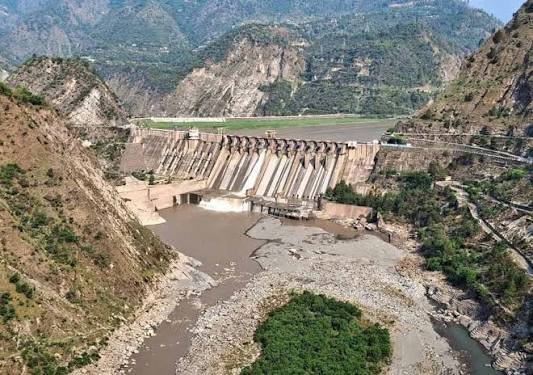
The Hague arbitration findings reinforce the treaty’s legal status and underline the importance of international agreements in managing water disputes between Pakistan and IndiaThe Indus Waters Treaty is far more than an agreement dividi...

Why Do We Still Prefer Thermal Power When Hydropower Is Cheaper and Available?

Why Do We Still Prefer Thermal Power When Hydropower Is Cheaper and Available?

▫️Muhammad Faisal Sulehria

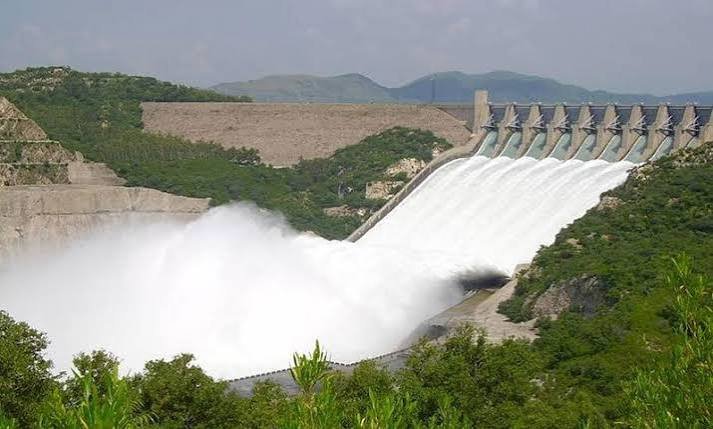
Pakistan’s power sector is facing a striking contradiction. On one side, hydropower generation has crossed 7,000 MW during the monsoon as higher river flows have improved water availability. On the other, Punjab is reportedly facing a po...

Solar Power Reaches 27% of Total Generation, Transforming the Traditional Infrastructure Model

Solar Power Reaches 27% of Total Generation, Transforming the Traditional Infrastructure Model

▫️Muhammad Faisal Sulehria

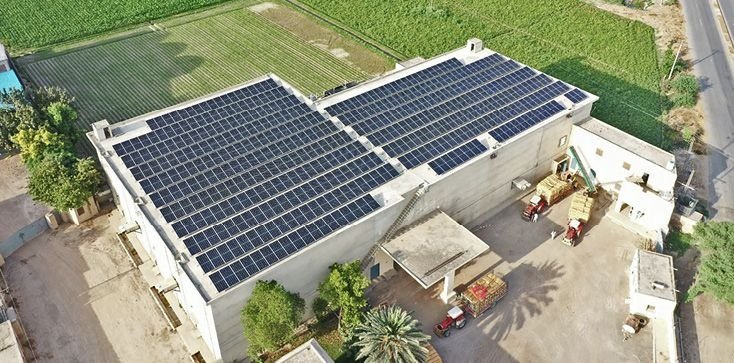
Pakistan’s rapidly expanding rooftop and distributed solar market is beginning to reshape not only the country’s energy system but also the economics of residential, commercial and industrial property. According to new analysis by the Pa...

Punjab’s Idle Public Assets: Can Government Property Become a New Source of Revenue and Development?

Punjab’s Idle Public Assets: Can Government Property Become a New Source of Revenue and Development?

▫️Muhammad Faisal Sulehria

Punjab’s decision to establish a dedicated authority for identifying, managing and generating value from underused public assets could represent an important development for both the province’s real estate sector and its public finances....

Why Is Property Demand Rising in Pakistan and How Long Can the Recent Price Increase Continue?

Why Is Property Demand Rising in Pakistan and How Long Can the Recent Price Increase Continue?

▫️Muhammad Faisal Sulehria

Pakistan’s real estate market is showing renewed activity, with rising demand reported in Karachi, Lahore and Islamabad. Market observers estimate that residential property prices have increased by 10% to 15% in some locations, although ...


Pakistan’s real estate market is showing renewed activity, with rising demand reported in Karachi, Lahore and Islamabad. Market observers estimate that residential property prices have increased by 10% to 15% in some locations, although the trend does not appear to be uniform across every city, project or property category.
The recent movement is being driven by a combination of lower transaction taxes, geopolitical uncertainty in the Middle East, investment by overseas Pakistanis, limited housing supply and the gradual expansion of subsidised housing finance.
One of the most immediate factors is the reduction in withholding taxes on property transactions. Under the Finance Act 2025–26, the withholding tax on property purchases by tax filers was reduced from 2.5% to 1.25%, while the tax on property sales was cut from 5.5% to 2.75%.
These reductions have lowered the cost of completing property transactions for both buyers and sellers. Some investors who had postponed purchases because of high taxes and transaction expenses may now be returning to the market.
Limited supply is another important reason behind higher prices. In Karachi, the number of completed housing units in established and well serviced areas remains restricted compared with demand. Buyers are increasingly choosing completed homes and apartments instead of newly launched projects that may take several years to deliver.
Ready properties offer immediate possession, established infrastructure and fewer construction related risks. This explains why demand may rise sharply in selected localities even when the broader property market remains mixed.
A similar pattern is visible in Lahore and Islamabad, where investors are showing greater interest in developed housing schemes and completed high rise residential projects. Properties with existing roads, electricity, water, security and nearby commercial facilities are attracting more buyers than undeveloped plots or projects facing uncertain completion schedules.
This indicates that the current recovery is selective. Demand is not necessarily increasing across every category of land, housing scheme or apartment development. Projects with clear ownership, regulatory approvals, completed infrastructure and immediate usability are in a stronger position.
Geopolitical tensions in the Middle East have also influenced investment decisions. Some overseas Pakistanis are diversifying their assets by moving part of their capital into Pakistan’s property market. For them, domestic real estate may provide a long term asset, rental income or a future home in their country of origin.
The Prime Minister Apna Ghar housing finance programme is supporting another segment of the market: first time and middle income homebuyers. Banks have reportedly approved PKR 204 billion in housing finance under the programme, while around PKR 27 billion has been disbursed.
The difference between approved and disbursed financing is significant. It suggests that documentation requirements, property verification, bank conditions, processing delays and the shortage of affordable homes may still be limiting the programme’s practical reach.
The reported 10% to 15% increase in residential prices should also be interpreted carefully. Such estimates may reflect activity in particular neighbourhoods or completed projects rather than an equal rise across entire cities. A limited number of high value transactions can create the appearance of a wider price increase.
A sustainable recovery would require stronger evidence from registered property transactions, housing finance disbursements, construction activity, rental trends and the launch of new residential projects.
Pakistan’s property market cannot achieve long term stability through investor demand alone. Faster project approvals, transparent land records, improved access to construction finance, stronger buyer protection and a larger supply of affordable homes will also be necessary.
If demand continues to rise without a corresponding increase in supply, property prices may move further beyond the reach of first time buyers. This could benefit existing owners and short term investors while making the housing shortage more difficult for ordinary families.
However, if increased demand is matched by new construction, the current trend could support employment and growth in cement, steel, glass, tiles, paint, transportation, banking and other related industries.
The real test of the present market recovery is therefore not simply how much property prices rise. Its success will depend on whether new investment produces more homes, better urban infrastructure and affordable housing opportunities for a wider section of the population.
Punjab's Plan to Develop 120 Model Villages: A New Approach to Rural Infrastructure

Punjab's Plan to Develop 120 Model Villages: A New Approach to Rural Infrastructure

▫️ Muhammad Faisal Sulehria

The Punjab government's decision to approve a pilot programme for developing 120 model villages represents a significant policy initiative aimed at improving rural infrastructure, sanitation and basic public facilities.

World Habitat Day: Three Billion People Worldwide Deprived of Adequate Housing. Why?

World Habitat Day: Three Billion People Worldwide Deprived of Adequate Housing. Why?

▫️ Muhammad Faisal Sulehria

World Habitat Day 2026 has been observed against the backdrop of a deepening global housing crisis in which safe, adequate and affordable shelter remains beyond the reach of billions of people.

10 Years Since Panama Papers, Offshore Secrecy Infrastructure Still Remains

10 Years Since Panama Papers, Offshore Secrecy Infrastructure Still Remains

▫️ Muhammad Faisal Sulehria

Ten years have passed since the Panama Papers exposed the scale and complexity of the global offshore financial system, yet the basic infrastructure that enables financial secrecy and anonymous ownership has not been completely dismantled.

New Provinces or Stronger Local Government? Pakistan Must Fix Governance Before Redrawing Its Map

New Provinces or Stronger Local Government? Pakistan Must Fix Governance Before Redrawing Its Map

▫️Muhammad Faisal Sulehria

Smaller provinces may improve administrative access, but without meaningful political, financial and administrative devolution, Pakistan risks creating more centres of power rather than bringing government closer to citizensPakistan’s go...

World Bank Downgrades Pakistan’s Barrage Project Over Weak Institutional Performance

World Bank Downgrades Pakistan’s Barrage Project Over Weak Institutional Performance

▫️ Muhammad Faisal Sulehria

The $314.93 million Sindh Barrages Improvement Project has made substantial progress on physical rehabilitation and modernisation works at Guddu and Sukkur barrages. Yet the World Bank has downgraded the project’s development objective a...

Indus Waters Treaty : A Legal Boost for Pakistan’s Position and Growing Questions for India

Indus Waters Treaty : A Legal Boost for Pakistan’s Position and Growing Questions for India

▫️Muhammad Faisal Sulehria

The Hague arbitration findings reinforce the treaty’s legal status and underline the importance of international agreements in managing water disputes between Pakistan and IndiaThe Indus Waters Treaty is far more than an agreement dividi...

Why Do We Still Prefer Thermal Power When Hydropower Is Cheaper and Available?

Why Do We Still Prefer Thermal Power When Hydropower Is Cheaper and Available?

▫️Muhammad Faisal Sulehria

Pakistan’s power sector is facing a striking contradiction. On one side, hydropower generation has crossed 7,000 MW during the monsoon as higher river flows have improved water availability. On the other, Punjab is reportedly facing a po...

Solar Power Reaches 27% of Total Generation, Transforming the Traditional Infrastructure Model

Solar Power Reaches 27% of Total Generation, Transforming the Traditional Infrastructure Model

▫️Muhammad Faisal Sulehria

Pakistan’s rapidly expanding rooftop and distributed solar market is beginning to reshape not only the country’s energy system but also the economics of residential, commercial and industrial property. According to new analysis by the Pa...

Punjab’s Idle Public Assets: Can Government Property Become a New Source of Revenue and Development?

Punjab’s Idle Public Assets: Can Government Property Become a New Source of Revenue and Development?

▫️Muhammad Faisal Sulehria

Punjab’s decision to establish a dedicated authority for identifying, managing and generating value from underused public assets could represent an important development for both the province’s real estate sector and its public finances....

More Real Estate News

National Real Estate News

See All →

City and District Real Estate News

See All →

Global Real Estate News

See All →

Corporate Real Estate News

See All →

Social Real Estate News

See All →

Arazi Nama

See All →