ReNews Pakistan
← Back to home

Real Estate Insights

27 news articles

Patwari Registers and Digital Land Records: Understanding Pakistan’s Changing Revenue System

Patwari Registers and Digital Land Records: Understanding Pakistan’s Changing Revenue System

▫️From khasra, khata, khatooni and Jamabandi to Fard and Shajra maps, agricultural land records remain central to ownership, possession and dispute resolution

Lahore | Renews PakistanAgricultural land records involve far more than simply writing down the owner’s name. They form a complete administrative and legal system in which the geographical identity of land, its area, ownership share, cro...

Lahore | Renews Pakistan
Agricultural land records involve far more than simply writing down the owner’s name. They form a complete administrative and legal system in which the geographical identity of land, its area, ownership share, crops, possession, mutation and maps are all interconnected. In Pakistan, particularly in rural Punjab, these records have traditionally been maintained through the Patwari system. They are now gradually being computerised and linked with Geographic Information Systems, or GIS.
Legally, a Record of Rights is prepared for every mouza, or revenue estate. It includes the rights of landowners, tenants and cultivators, their respective shares, liabilities and a map of the mouza. To understand land records, it is important to be familiar with several basic terms.
A mouza is the village or revenue area in whose name the official land record is maintained, while the hadbast number is the official identification number of that mouza. Each agricultural parcel generally has a khasra number. This can be understood as the land’s identifying number, showing where a particular field or parcel is located on the map.
A single owner, or a group of co owners, may hold land spread across several khasra numbers. Such ownership is generally recorded through a khata or khewat in the revenue record. The khata records the owner’s name, share and the khasra numbers falling under that ownership account. If someone other than the owner cultivates the land as a tenant or sharecropper, that person may be recorded in the khatooni. In simple terms, the khata provides details of ownership, while the khatooni generally reflects cultivation or possession.
Khasra Girdawari is the record in which the Patwari enters details of the crop, cultivated area and the actual cultivator after inspecting the field. It is not conclusive proof of ownership. Rather, it is an official record of land use and cultivation status.
Jamabandi is the comprehensive Record of Rights for a mouza. It may include the name of the owner, ownership share, khasra number, area of land, cultivator, type of land and certain revenue liabilities. When a person needs official proof of the entry relating to their land, they obtain a certified extract from the Jamabandi, known as a Fard. A Fard shows the current entry relating to a particular owner, khata or khasra number.
The Shajra or Latha is used to connect the written record with the actual location on the ground. It is a map of the mouza showing khasra numbers and the position of land parcels. This map becomes especially important in boundary demarcation, partition and land disputes.
The process of changing an entry in a Patwari register also follows a formal procedure. When land is purchased, inherited, gifted, mortgaged or affected by a court order, the change is first reported to the revenue authorities. This initial report is entered in the Roznamcha Waqiati, the daily diary that records important revenue events.
After this, a mutation, locally known as Intiqal, is entered. Mutation is the recording of a change in the revenue record, such as transferring land to legal heirs after the death of an owner or recording the buyer’s name after a sale. The relevant revenue officer verifies the parties, documents and the claim to the right before approving the mutation. Once approved, the change is reflected in the subsequent Jamabandi and Fard.
One important legal point must be understood clearly: mutation and Fard are significant official records, but mutation by itself does not create ownership. In a disputed case, the registered sale deed, inheritance documents, gift deed, court order and other evidence must also be examined. A mutation is primarily a revenue entry and is not automatically a title document.
Under the traditional system, the Patwari maintained records of the mouzas within his jurisdiction in the form of Jamabandi, Khasra Girdawari, mutation registers, Roznamcha and Shajra maps. Record rooms at the tehsil and district levels also played an important role in preserving these documents. A key strength of this system was that it allowed continuous recording of crops, possession and local land conditions. However, manual records also created risks of delays, errors, restricted access and possible manipulation.
This is why Punjab moved towards computerisation of land records. Under the Punjab Land Records Authority, Arazi Record Centres provide services such as the issuance of Fard, ownership verification and certain mutation services through a one window system. The aim is to reduce reliance on manual processes and create a more transparent, centralised and GIS linked land record system.
However, digitisation does not automatically resolve all issues involving old maps, joint ownership, boundary demarcation or possession disputes. For example, a co owner’s share may be recorded in a joint khata, but a specific physical parcel is not considered separately owned until a formal partition, measurement and mapping process has taken place.
Other countries have modernised land records in different ways. India has a historically similar system, where concepts such as Record of Rights, khasra and khatooni are widely used. Several Indian states are now connecting ownership records with digital cadastral maps so that maps can also be updated promptly after mutation or partition.
In England and Wales, the central land record is maintained through a Title Register and Title Plan. The Title Register records the legal owner, mortgages, rights of way and other legal restrictions, while the Title Plan shows the general boundaries of the land. Ownership and legal burdens can therefore be accessed through a central registry in a relatively clear manner.
New Zealand has maintained land titles, survey plans and property transactions through an electronic system since 2002. There, legal boundaries are connected to accurate survey plans, and new titles are issued following the subdivision of land.
For Pakistan, an effective system would be one in which registered deeds, mutations, Fards, khasra numbers, Shajra maps, court orders, mortgages and GIS maps are all available through one integrated digital platform. If maps and land areas are updated immediately with every mutation, and citizens can access verifiable historical records, land disputes and fraudulent transactions can be reduced significantly.
Finally, before buying agricultural land or dividing inherited property, no one should rely on a Fard alone. A current Fard, Jamabandi, khasra number, Shajra map, mutation record, registered deed, possession status, possible mortgage and the status of joint ownership must all be carefully checked.
Punjab's Plan to Develop 120 Model Villages: A New Approach to Rural Infrastructure

Punjab's Plan to Develop 120 Model Villages: A New Approach to Rural Infrastructure

▫️ Muhammad Faisal Sulehria

The Punjab government's decision to approve a pilot programme for developing 120 model villages represents a significant policy initiative aimed at improving rural infrastructure, sanitation and basic public facilities.

World Habitat Day: Three Billion People Worldwide Deprived of Adequate Housing. Why?

World Habitat Day: Three Billion People Worldwide Deprived of Adequate Housing. Why?

▫️ Muhammad Faisal Sulehria

World Habitat Day 2026 has been observed against the backdrop of a deepening global housing crisis in which safe, adequate and affordable shelter remains beyond the reach of billions of people.

10 Years Since Panama Papers, Offshore Secrecy Infrastructure Still Remains

10 Years Since Panama Papers, Offshore Secrecy Infrastructure Still Remains

▫️ Muhammad Faisal Sulehria

Ten years have passed since the Panama Papers exposed the scale and complexity of the global offshore financial system, yet the basic infrastructure that enables financial secrecy and anonymous ownership has not been completely dismantled.

New Provinces or Stronger Local Government? Pakistan Must Fix Governance Before Redrawing Its Map

New Provinces or Stronger Local Government? Pakistan Must Fix Governance Before Redrawing Its Map

▫️Muhammad Faisal Sulehria

Smaller provinces may improve administrative access, but without meaningful political, financial and administrative devolution, Pakistan risks creating more centres of power rather than bringing government closer to citizensPakistan’s go...

World Bank Downgrades Pakistan’s Barrage Project Over Weak Institutional Performance

World Bank Downgrades Pakistan’s Barrage Project Over Weak Institutional Performance

▫️ Muhammad Faisal Sulehria

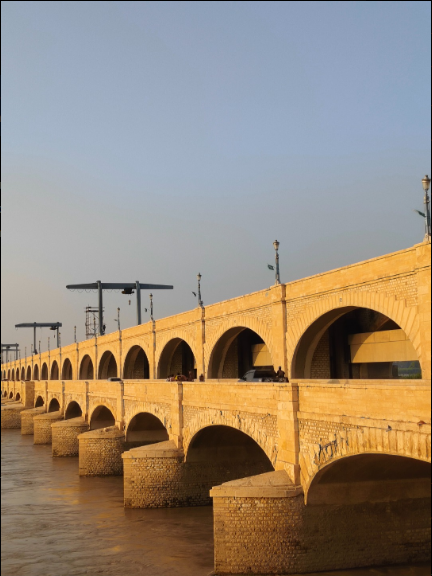
The $314.93 million Sindh Barrages Improvement Project has made substantial progress on physical rehabilitation and modernisation works at Guddu and Sukkur barrages. Yet the World Bank has downgraded the project’s development objective a...

Indus Waters Treaty : A Legal Boost for Pakistan’s Position and Growing Questions for India

Indus Waters Treaty : A Legal Boost for Pakistan’s Position and Growing Questions for India

▫️Muhammad Faisal Sulehria

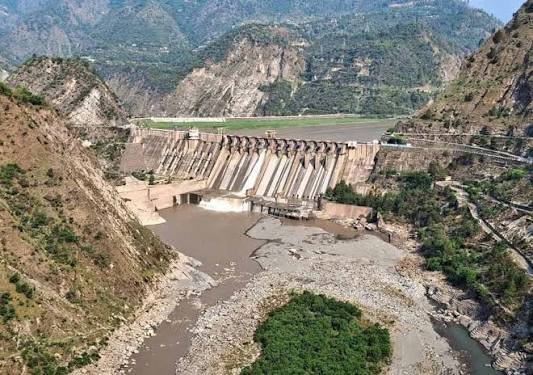
The Hague arbitration findings reinforce the treaty’s legal status and underline the importance of international agreements in managing water disputes between Pakistan and IndiaThe Indus Waters Treaty is far more than an agreement dividi...

Why Do We Still Prefer Thermal Power When Hydropower Is Cheaper and Available?

Why Do We Still Prefer Thermal Power When Hydropower Is Cheaper and Available?

▫️Muhammad Faisal Sulehria

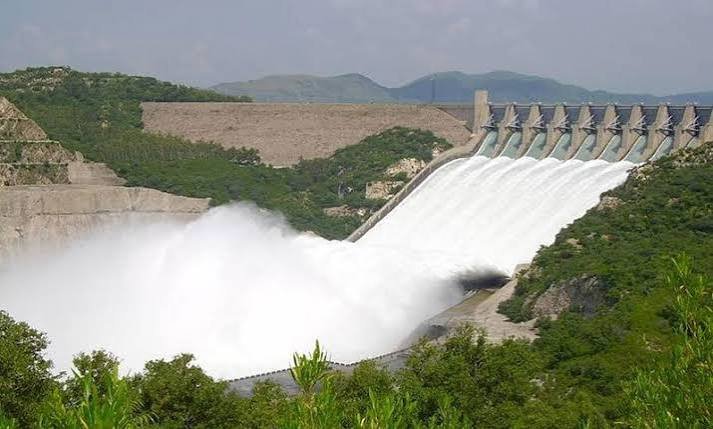
Pakistan’s power sector is facing a striking contradiction. On one side, hydropower generation has crossed 7,000 MW during the monsoon as higher river flows have improved water availability. On the other, Punjab is reportedly facing a po...

Solar Power Reaches 27% of Total Generation, Transforming the Traditional Infrastructure Model

Solar Power Reaches 27% of Total Generation, Transforming the Traditional Infrastructure Model

▫️Muhammad Faisal Sulehria

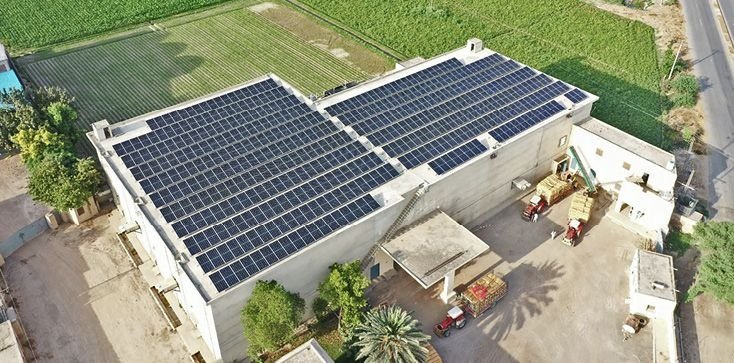
Pakistan’s rapidly expanding rooftop and distributed solar market is beginning to reshape not only the country’s energy system but also the economics of residential, commercial and industrial property. According to new analysis by the Pa...

Punjab’s Idle Public Assets: Can Government Property Become a New Source of Revenue and Development?

Punjab’s Idle Public Assets: Can Government Property Become a New Source of Revenue and Development?

▫️Muhammad Faisal Sulehria

Punjab’s decision to establish a dedicated authority for identifying, managing and generating value from underused public assets could represent an important development for both the province’s real estate sector and its public finances....

Patwari Registers and Digital Land Records: Understanding Pakistan’s Changing Revenue System

Patwari Registers and Digital Land Records: Understanding Pakistan’s Changing Revenue System

▫️From khasra, khata, khatooni and Jamabandi to Fard and Shajra maps, agricultural land records remain central to ownership, possession and dispute resolution

Lahore | Renews PakistanAgricultural land records involve far more than simply writing down the owner’s name. They form a complete administrative and legal system in which the geographical identity of land, its area, ownership share, cro...


Lahore | Renews Pakistan
Agricultural land records involve far more than simply writing down the owner’s name. They form a complete administrative and legal system in which the geographical identity of land, its area, ownership share, crops, possession, mutation and maps are all interconnected. In Pakistan, particularly in rural Punjab, these records have traditionally been maintained through the Patwari system. They are now gradually being computerised and linked with Geographic Information Systems, or GIS.
Legally, a Record of Rights is prepared for every mouza, or revenue estate. It includes the rights of landowners, tenants and cultivators, their respective shares, liabilities and a map of the mouza. To understand land records, it is important to be familiar with several basic terms.
A mouza is the village or revenue area in whose name the official land record is maintained, while the hadbast number is the official identification number of that mouza. Each agricultural parcel generally has a khasra number. This can be understood as the land’s identifying number, showing where a particular field or parcel is located on the map.
A single owner, or a group of co owners, may hold land spread across several khasra numbers. Such ownership is generally recorded through a khata or khewat in the revenue record. The khata records the owner’s name, share and the khasra numbers falling under that ownership account. If someone other than the owner cultivates the land as a tenant or sharecropper, that person may be recorded in the khatooni. In simple terms, the khata provides details of ownership, while the khatooni generally reflects cultivation or possession.
Khasra Girdawari is the record in which the Patwari enters details of the crop, cultivated area and the actual cultivator after inspecting the field. It is not conclusive proof of ownership. Rather, it is an official record of land use and cultivation status.
Jamabandi is the comprehensive Record of Rights for a mouza. It may include the name of the owner, ownership share, khasra number, area of land, cultivator, type of land and certain revenue liabilities. When a person needs official proof of the entry relating to their land, they obtain a certified extract from the Jamabandi, known as a Fard. A Fard shows the current entry relating to a particular owner, khata or khasra number.
The Shajra or Latha is used to connect the written record with the actual location on the ground. It is a map of the mouza showing khasra numbers and the position of land parcels. This map becomes especially important in boundary demarcation, partition and land disputes.
The process of changing an entry in a Patwari register also follows a formal procedure. When land is purchased, inherited, gifted, mortgaged or affected by a court order, the change is first reported to the revenue authorities. This initial report is entered in the Roznamcha Waqiati, the daily diary that records important revenue events.
After this, a mutation, locally known as Intiqal, is entered. Mutation is the recording of a change in the revenue record, such as transferring land to legal heirs after the death of an owner or recording the buyer’s name after a sale. The relevant revenue officer verifies the parties, documents and the claim to the right before approving the mutation. Once approved, the change is reflected in the subsequent Jamabandi and Fard.
One important legal point must be understood clearly: mutation and Fard are significant official records, but mutation by itself does not create ownership. In a disputed case, the registered sale deed, inheritance documents, gift deed, court order and other evidence must also be examined. A mutation is primarily a revenue entry and is not automatically a title document.
Under the traditional system, the Patwari maintained records of the mouzas within his jurisdiction in the form of Jamabandi, Khasra Girdawari, mutation registers, Roznamcha and Shajra maps. Record rooms at the tehsil and district levels also played an important role in preserving these documents. A key strength of this system was that it allowed continuous recording of crops, possession and local land conditions. However, manual records also created risks of delays, errors, restricted access and possible manipulation.
This is why Punjab moved towards computerisation of land records. Under the Punjab Land Records Authority, Arazi Record Centres provide services such as the issuance of Fard, ownership verification and certain mutation services through a one window system. The aim is to reduce reliance on manual processes and create a more transparent, centralised and GIS linked land record system.
However, digitisation does not automatically resolve all issues involving old maps, joint ownership, boundary demarcation or possession disputes. For example, a co owner’s share may be recorded in a joint khata, but a specific physical parcel is not considered separately owned until a formal partition, measurement and mapping process has taken place.
Other countries have modernised land records in different ways. India has a historically similar system, where concepts such as Record of Rights, khasra and khatooni are widely used. Several Indian states are now connecting ownership records with digital cadastral maps so that maps can also be updated promptly after mutation or partition.
In England and Wales, the central land record is maintained through a Title Register and Title Plan. The Title Register records the legal owner, mortgages, rights of way and other legal restrictions, while the Title Plan shows the general boundaries of the land. Ownership and legal burdens can therefore be accessed through a central registry in a relatively clear manner.
New Zealand has maintained land titles, survey plans and property transactions through an electronic system since 2002. There, legal boundaries are connected to accurate survey plans, and new titles are issued following the subdivision of land.
For Pakistan, an effective system would be one in which registered deeds, mutations, Fards, khasra numbers, Shajra maps, court orders, mortgages and GIS maps are all available through one integrated digital platform. If maps and land areas are updated immediately with every mutation, and citizens can access verifiable historical records, land disputes and fraudulent transactions can be reduced significantly.
Finally, before buying agricultural land or dividing inherited property, no one should rely on a Fard alone. A current Fard, Jamabandi, khasra number, Shajra map, mutation record, registered deed, possession status, possible mortgage and the status of joint ownership must all be carefully checked.
Punjab's Plan to Develop 120 Model Villages: A New Approach to Rural Infrastructure

Punjab's Plan to Develop 120 Model Villages: A New Approach to Rural Infrastructure

▫️ Muhammad Faisal Sulehria

The Punjab government's decision to approve a pilot programme for developing 120 model villages represents a significant policy initiative aimed at improving rural infrastructure, sanitation and basic public facilities.

World Habitat Day: Three Billion People Worldwide Deprived of Adequate Housing. Why?

World Habitat Day: Three Billion People Worldwide Deprived of Adequate Housing. Why?

▫️ Muhammad Faisal Sulehria

World Habitat Day 2026 has been observed against the backdrop of a deepening global housing crisis in which safe, adequate and affordable shelter remains beyond the reach of billions of people.

10 Years Since Panama Papers, Offshore Secrecy Infrastructure Still Remains

10 Years Since Panama Papers, Offshore Secrecy Infrastructure Still Remains

▫️ Muhammad Faisal Sulehria

Ten years have passed since the Panama Papers exposed the scale and complexity of the global offshore financial system, yet the basic infrastructure that enables financial secrecy and anonymous ownership has not been completely dismantled.

New Provinces or Stronger Local Government? Pakistan Must Fix Governance Before Redrawing Its Map

New Provinces or Stronger Local Government? Pakistan Must Fix Governance Before Redrawing Its Map

▫️Muhammad Faisal Sulehria

Smaller provinces may improve administrative access, but without meaningful political, financial and administrative devolution, Pakistan risks creating more centres of power rather than bringing government closer to citizensPakistan’s go...

World Bank Downgrades Pakistan’s Barrage Project Over Weak Institutional Performance

World Bank Downgrades Pakistan’s Barrage Project Over Weak Institutional Performance

▫️ Muhammad Faisal Sulehria

The $314.93 million Sindh Barrages Improvement Project has made substantial progress on physical rehabilitation and modernisation works at Guddu and Sukkur barrages. Yet the World Bank has downgraded the project’s development objective a...

Indus Waters Treaty : A Legal Boost for Pakistan’s Position and Growing Questions for India

Indus Waters Treaty : A Legal Boost for Pakistan’s Position and Growing Questions for India

▫️Muhammad Faisal Sulehria

The Hague arbitration findings reinforce the treaty’s legal status and underline the importance of international agreements in managing water disputes between Pakistan and IndiaThe Indus Waters Treaty is far more than an agreement dividi...

Why Do We Still Prefer Thermal Power When Hydropower Is Cheaper and Available?

Why Do We Still Prefer Thermal Power When Hydropower Is Cheaper and Available?

▫️Muhammad Faisal Sulehria

Pakistan’s power sector is facing a striking contradiction. On one side, hydropower generation has crossed 7,000 MW during the monsoon as higher river flows have improved water availability. On the other, Punjab is reportedly facing a po...

Solar Power Reaches 27% of Total Generation, Transforming the Traditional Infrastructure Model

Solar Power Reaches 27% of Total Generation, Transforming the Traditional Infrastructure Model

▫️Muhammad Faisal Sulehria

Pakistan’s rapidly expanding rooftop and distributed solar market is beginning to reshape not only the country’s energy system but also the economics of residential, commercial and industrial property. According to new analysis by the Pa...

Punjab’s Idle Public Assets: Can Government Property Become a New Source of Revenue and Development?

Punjab’s Idle Public Assets: Can Government Property Become a New Source of Revenue and Development?

▫️Muhammad Faisal Sulehria

Punjab’s decision to establish a dedicated authority for identifying, managing and generating value from underused public assets could represent an important development for both the province’s real estate sector and its public finances....

More Real Estate News

National Real Estate News

See All →

City and District Real Estate News

See All →

Global Real Estate News

See All →

Corporate Real Estate News

See All →

Social Real Estate News

See All →

Arazi Nama

See All →